
Colombia Presidential Runoff Could Reset U.S. Ties
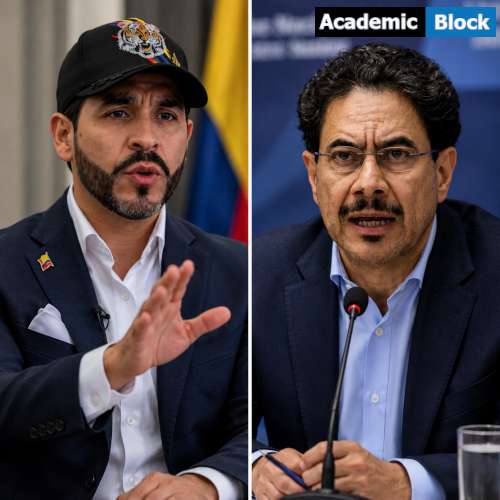
Colombia will return to the polls on June 21 for a runoff that could reshape its political direction. Right-wing outsider Abelardo de la Espriella and leftist Senator Iván Cepeda now face a tight and decisive contest. De la Espriella led the first round with 43.7% of the vote, while Cepeda followed close behind.The race remains highly competitive, however, and centrist voters could play a key role in deciding the final outcome.

A victory for de la Espriella could bring Colombia closer to Washington. He has promised stronger security cooperation, deeper military support, and tougher action against armed groups and drug trafficking. He also supports economic liberalization and expanded oil exploration. This would mark a shift after recent tensions between President Gustavo Petro and the United States. The next president will inherit a divided country, with rising security pressure and political uncertainty shaping the national agenda.
De la Espriella and Cepeda Head Into Tight June 21 Runoff
Colombia enters a runoff after no candidate secured a majority in the first round. De la Espriella emerged as the frontrunner with 43.7%, while Cepeda remained close behind at about 41% . The narrow gap has turned the election into a direct clash between two opposing political visions. Cepeda has raised concerns over early counting, while de la Espriella has rejected fraud allegations. The contest remains open and highly unpredictable, and centrist voters are now seen as a key deciding force.
The runoff now carries major weight for Colombia’s future stability, economy, and foreign relations. De la Espriella has centered his campaign on stronger law enforcement, closer ties with the United States, and tougher action against drug trafficking groups. He also supports pro-market reforms, tax cuts, and increased oil production to attract investment and boost growth. Cepeda, however, backs continued social reforms, peace efforts with armed groups, land reform policies, and stronger social inclusion programs. He also emphasizes human rights and reducing inequality, in addition to strengthening the state’s role in social protection. In addition, the winner will face rising crime concerns, economic uncertainty, and deep political polarization that continues to divide Colombian society.
The outcome of this runoff will go beyond domestic politics and directly influence Colombia’s global positioning. A victory for de la Espriella could push the country toward a tighter security partnership with Washington and a more aggressive anti-crime strategy. A win for Cepeda could maintain a more balanced regional approach focused on social peacebuilding and gradual reforms. However, both leaders will face the same core challenge restoring public trust, stabilizing the economy, and addressing long-standing security issues. Ultimately, this election will decide not just the next president, but also the direction of Colombia’s democracy in a critical moment.
Web Resources on Colombia Presidential Runoff Could Reset U.S. Relations
1. CNN.com : Colombian presidency goes to runoff election that could redefine relations with the US.
2. BBC.com : Colombia presidential runoff pits leftist senator against pro-Trump rival.
3. Reuters.com : Colombian right-wing candidate De La Espriella, leftist Cepeda head to presidential runoff.