

Keir Starmer Resigns as UK PM After Two Years
Keir Starmer has resigned as Labour leader and UK prime minister, bringing a dramatic end to his two-year tenure in Downing Street and triggering a race to choose Britain’s next leader. He said he will stay on until Labour chooses a successor. Nominations will open on 9 July, and the party will then decide its next leader. There is no need for a general election. The new Labour leader will also become prime minister, because Labour has a strong majority in the House of Commons. However, the handover now has to happen in a fast and orderly way.
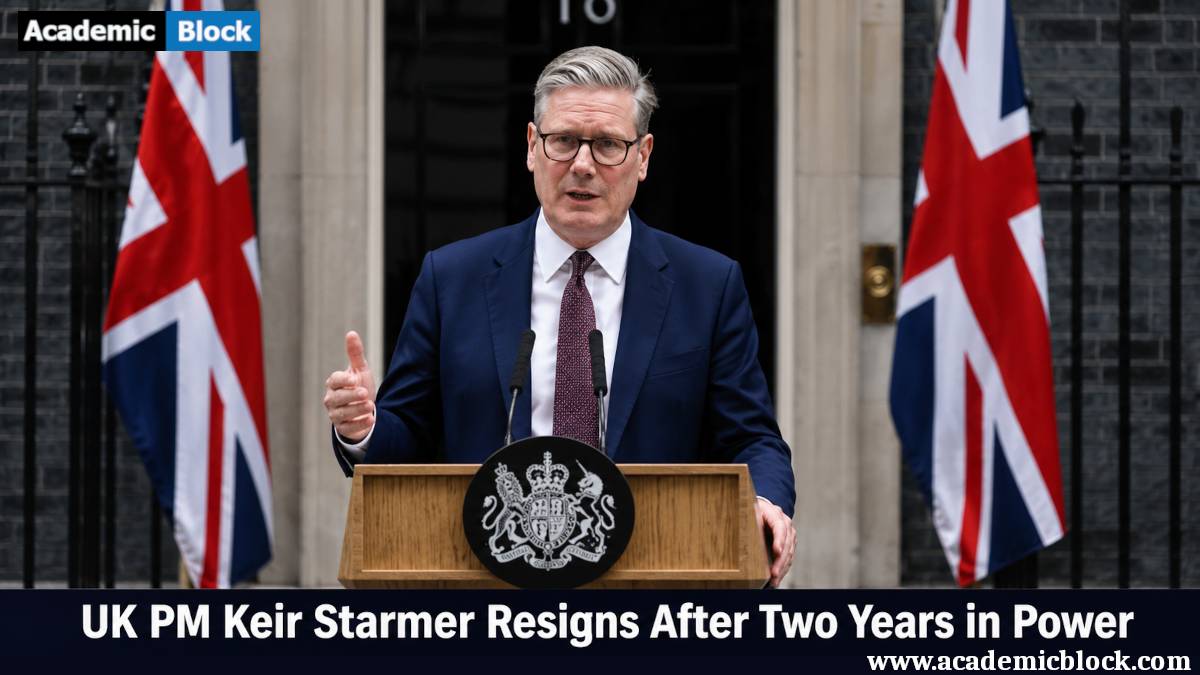
Starmer’s exit follows mounting pressure over weak polling, voter frustration, and a series of policy setbacks. Many voters had expected change, however they did not feel it in their daily lives. Also, high living costs, strained public services, and political unrest had already damaged trust. In addition, the wider climate of modern politics has made it harder for leaders to deliver clear results. Now Labour faces a sharp test, and the race to lead the UK has begun.
What Caused the Fall of Keir Starmer
Keir Starmer’s fall had several causes, however they all came together in one political crisis. He won the 2024 general election with a promise of stability and change, but many voters did not feel a real improvement in daily life. Also, weak economic growth, high food prices, rising housing costs, and tight public finances had made it hard for his government to deliver quick results. Public services, especially health care, had stayed under pressure, and that had hurt public confidence. In addition, policy U-turns and the controversy over Peter Mandelson’s appointment as US ambassador damaged his credibility and made his leadership look less firm.
The pressure then built inside the Labour Party itself. More than 80 Labour MPs had questioned whether he was still the right leader, and poor local election results made that doubt much stronger. Also, the resignations of Wes Streeting and John Healey showed deep splits at the top of government. Reform UK had gained ground by tapping anger over living costs, immigration, and public services, while Andy Burnham’s rise had given Labour MPs a possible alternative. In the end, Starmer no longer had enough support in his own party, and the wider climate of political distrust across Western democracies had made his position even harder to save.With Starmer stepping aside, attention has quickly shifted from the causes of his downfall to the battle over who will lead Labour and the country next. Some of the issues that irritated the people most and caused downfall in his popularity are:
Pro Immigration image, especially from Islamic Counties
Right wing opponents have cited Keir Starmer’s stand on Immigration from Islamic Counties as a deliberate choice to alter the voter dynamic in his party’s favor. Under his administration many localities have become Muslim majority constituencies, permanently altering the voter demography against the native population. Below is the table showing drastic increase in the immigration from countries like Pakistan and Bangladesh, in last 6 years. The 2025 data shows nearly 5 fold unexplained increase from the 2020
Soft on crime, no action against grooming gangs
In public there is a perception that Keir Starmer’s government did almost nothing to stop the grooming gangs and their abuses. It is widely claimed that most of the Perpetrator belongs to Muslim communities from Pakistan and Bangladesh. A section of the UK natives, saw the inaction on the grooming gangs as the appeasement of Muslim voters, this inturn also tarnished the Labour party’s reputation. Huge crowd gathering in Tommy Robinson’s meetings is a clear indication of changing mood of natives in UK.
Who Will Lead the UK Next
The race to choose Britain’s next prime minister has opened after Keir Starmer’s resignation. There is no need for a general election, because Labour still has a strong majority in the House of Commons. So, the next Labour leader will also become prime minister. Starmer has said he will remain in office until the party completes the leadership process. Nominations are due to open on 9 July, and the winner is expected before Parliament returns from summer recess. Under Labour rules, a contender must secure support from 20% of Labour MPs to get on the ballot. If more than one candidate clears that bar, party members and affiliated supporters will vote. If only one does, that person wins unopposed.
Andy Burnham now stands as the early front-runner. He has strong backing from Labour MPs, and Wes Streeting has already endorsed him. His recent Makerfield by-election win has raised his profile, while many in the party see him as a fresh start after Starmer’s exit. However, the contest is still open. Other names, including Angela Rayner, Ed Miliband, Shabana Mahmood, and Darren Jones, have also been mentioned. Burnham must now prove that he can deliver growth, ease the cost-of-living crisis, improve housing and public services, and unite a divided party. He also faces questions over defence, foreign policy, and how he would govern on a UK-wide stage.For Labour, the leadership contest now represents more than a change of faces. It will determine whether the party can rebuild public trust and regain momentum before the next general election.
Web resources on UK PM Keir Starmer Resigns
1. BBC.com : Why did Keir Starmer resign and what could happen next?
2. CNN.com : Why the forces that felled Keir Starmer threaten so many Western leaders.
3. Chris Mason : Questions multiply for the man tipped to replace Starmer
4. New York Times : Starmer Announces Resignation, Burnham Wins Key Endorsement
5. Reuters.com : UK’s Starmer resigns, paving way for orderly transfer of power
6. Office of National Statistics : Long-term international immigration.