
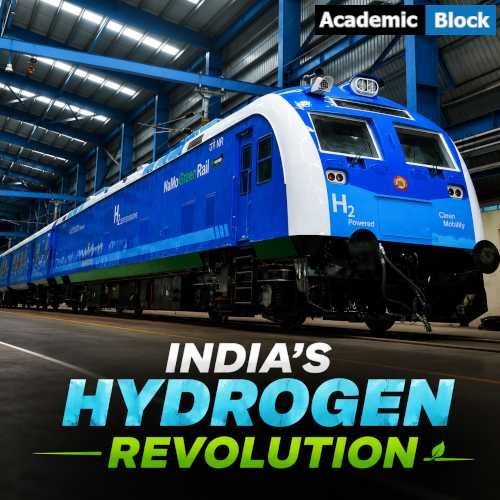
PM Modi Flags Off India’s First Hydrogen-Powered Train
Prime Minister Narendra Modi flagged off India’s first hydrogen-powered passenger train from Jind railway station in Haryana on July 17, marking India’s entry into the small group of nations developing hydrogen-powered rail technology. The train will operate on the 89-km Jind–Sonipat route. The launch also places India among a select group of countries, including Germany, Japan, China, and the United States, that are developing or operating hydrogen-powered passenger trains.
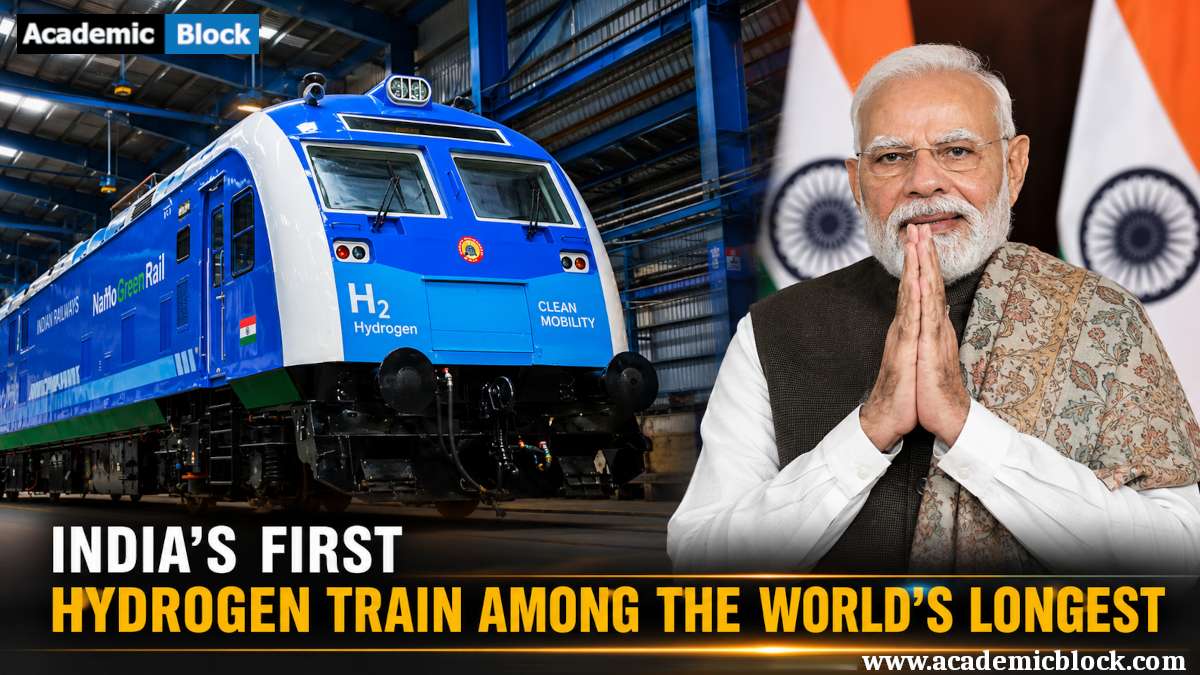
Developed and manufactured using indigenous technology, the train showcases the country’s growing expertise in advanced railway engineering. Globally, most hydrogen-powered passenger trains currently in service consist of just two or three coaches and primarily operate on short regional routes. In contrast, Indian Railways has introduced a 10-coach hydrogen-powered passenger train, making it one of the longest hydrogen trainsets developed for passenger operations and a significant milestone in the country’s clean rail ambitions.
How India’s First Hydrogen Train Uses Hydrogen Fuel Cell Technology
India’s first hydrogen-powered train generates electricity onboard through hydrogen fuel cell technology. Inside the fuel cells, hydrogen reacts with oxygen to produce electricity, which powers the train’s traction motors. The only direct by-product is water vapour, making the system a near-zero-emission alternative to diesel-powered trains. Moreover, the train operates with lower noise levels and does not require continuous overhead electric wires, making it suitable for routes where full electrification remains challenging.
The train features 10 coaches, including two hydrogen-powered driving cars and eight passenger coaches. Together, the power cars produce 2,400 kW (around 3,200 HP) of propulsion. The train has an operational speed of 75 kmph, a design speed of 110 kmph, and a capacity of around 2,600 passengers. Indian Railways has also established a dedicated hydrogen storage and refuelling facility at Jind. In addition, advanced safety systems monitor hydrogen leaks, temperature, fire, and smoke throughout operations.
Hydrogen for Heritage Project Shapes Indian Railways’ Green Future
The Jind–Sonipat service is the first project under Indian Railways’ “Hydrogen for Heritage” initiative, announced by the Railway Ministry in 2023. The programme aims to introduce hydrogen-powered trains on selected heritage and hill railway routes while reducing dependence on fossil fuels. Indian Railways plans to deploy 35 hydrogen trainsets, with each train estimated to cost about ₹80 crore. The government has also proposed nearly ₹70 crore for hydrogen infrastructure on each route and allocated around ₹600 crore to develop the supporting hydrogen ecosystem.
Railway officials have said that operating costs may initially remain higher than those of diesel trains. However, they expect costs to decline as the technology expands and larger fleets enter service. The experience gained from the Jind–Sonipat project will also guide future hydrogen rail operations across India. During his Haryana visit, Prime Minister Modi laid the foundation for national highway projects worth more than ₹12,470 crore and inaugurated several infrastructure projects in Chandigarh and Jalandhar. The Jind–Sonipat corridor now provides a platform to evaluate how hydrogen technology can support cleaner rail operations on a larger scale.
Web Resources On India’s First Hydrogen-Powered Train
1. NDTV.com : India Gets Its 1st Hydrogen-Powered Train, Will Run On 89 Km Route In Haryana.
2. The Hindu.com : PM Modi to flag off India’s first hydrogen-powered train in Haryana.
3. Times of India : India’s First Hydrogen-Powered Train Flagged Off by PM Modi: 10 Facts & Photos You Shouldn’t Miss.