
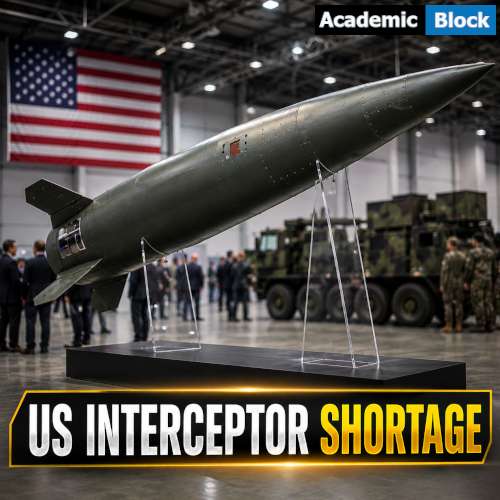
US Military Running “Dangerously Low” on Its Interceptors for Missile Defense
The Pentagon has significantly reduced its missile defense stockpiles after months of military operations linked to the Iran conflict. Senior US military commanders have warned that several critical interceptor inventories have reached “dangerously low” levels, raising fresh concerns about the country’s air defense capacity and long-term military readiness.
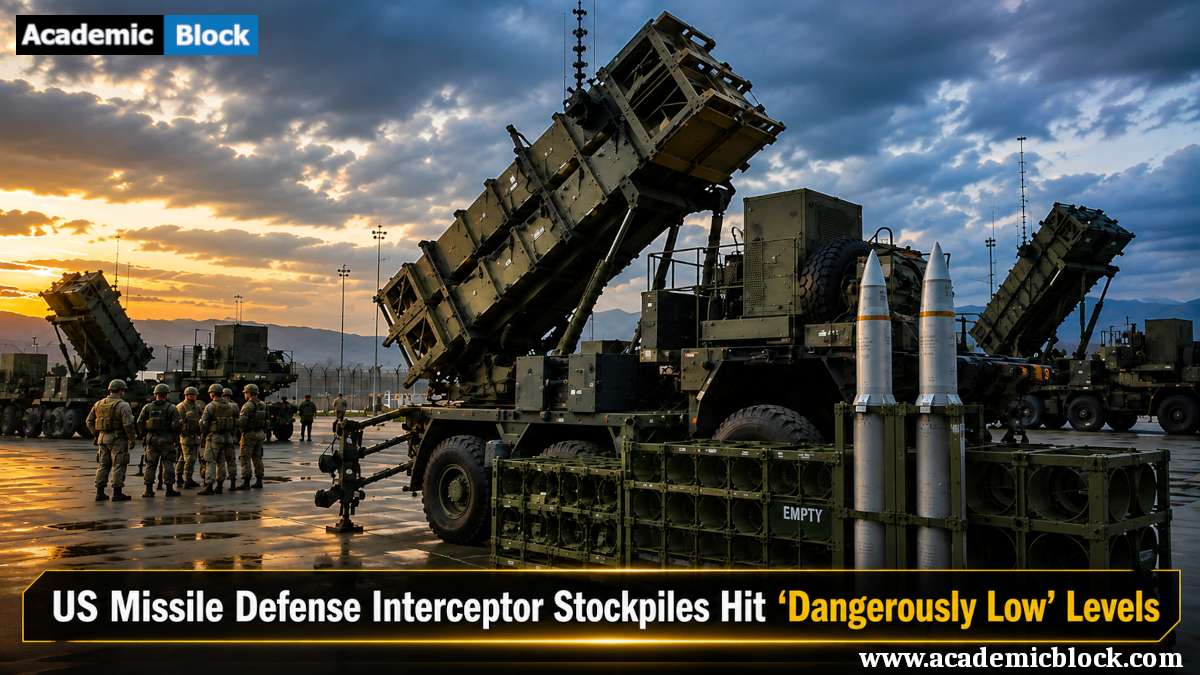
The shortages affect both defensive interceptors and long-range precision strike weapons, reflecting the scale of recent combat operations. Although US defense officials say the military remains capable of meeting current operational demands, analysts believe replenishing these advanced weapons will require years of sustained production because manufacturing cannot expand overnight.
THAAD, Patriot and Precision Missiles Face Heavy Wartime Depletion
The Iran conflict has placed exceptional pressure on America’s missile defense network. The US military has used nearly 80% of its THAAD (Terminal High Altitude Area Defense) interceptors and around half of its Patriot interceptor missiles since the war began. Before the conflict, the Center for Strategic and International Studies (CSIS) estimated that the United States possessed about 452 THAAD interceptors and 2,200 Patriot interceptors across its two most modern variants.
In addition, reports indicate that the US Army has expended virtually all of its Army Tactical Missile Systems (ATACMS) and Precision Strike Missiles (PrSM), while slightly less than half of its global Tomahawk cruise missile inventory has also been used. As a result, Gulf allies that depend on US missile defense systems have expressed growing concern about their ability to defend against future missile and drone attacks if regional tensions escalate.
Slow Replenishment Raises Long-Term Readiness Concerns
Defense analysts describe the interceptor shortage as a “mathematical problem” because the United States has relied on multi-million-dollar THAAD interceptors to destroy far cheaper Iranian ballistic missiles and drones. They say this cost imbalance has increased operational costs while rapidly depleting high-end missile inventories. Reports also suggest that shrinking stockpiles influenced military planning, including President Donald Trump’s decision to pause or cancel expanded strikes on Iran in order to preserve critical air defense assets. Analysts also warn that lower interceptor inventories could reduce US readiness if another major conflict emerges, particularly in regions where advanced missile defense capabilities are essential.
Meanwhile, the Pentagon has accelerated efforts to rebuild its missile stockpiles by expanding THAAD and Patriot rocket motor production through new contracts. The US military currently receives about 20 Patriot missiles and 15 Tomahawk cruise missiles each month. However, the Center for Strategic and International Studies (CSIS) estimates that restoring THAAD inventories to pre-war levels could take three years or more. While Pentagon spokesperson Sean Parnell and Defense Secretary Pete Hegseth have said the military has the resources needed to meet current operational requirements, defense experts believe the pace of replenishment will play a decisive role in restoring America’s long-term missile defense readiness.
Web Resources on US Missile Interceptor Shortage
1. CNN.com : Nearly 80% of interceptors for a key missile defense system depleted.
2. Reuters.com : US has used ‘virtually all’ of its long-range precision missiles during Iran war.
3. AcademicBlock.com : Is America Running Out of Weapons?