
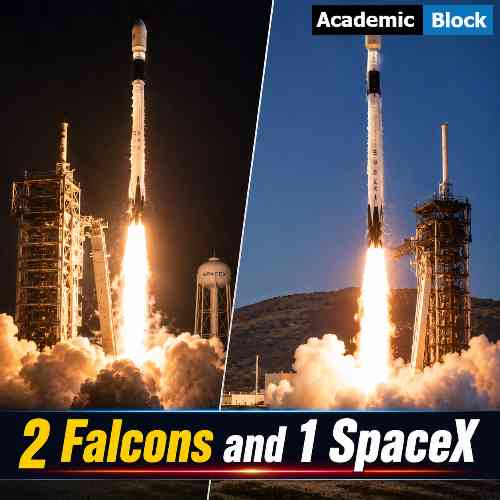
Back to Back Launch of two Falcon 9 rockets by SpaceX
SpaceX, Falcon 9, rocket launch, back-to-back launches, launch record, Globalstar, satellite constellation, USSF-366, U.S. Space Force, Cape Canaveral, Vandenberg Space Force Base, launch record,
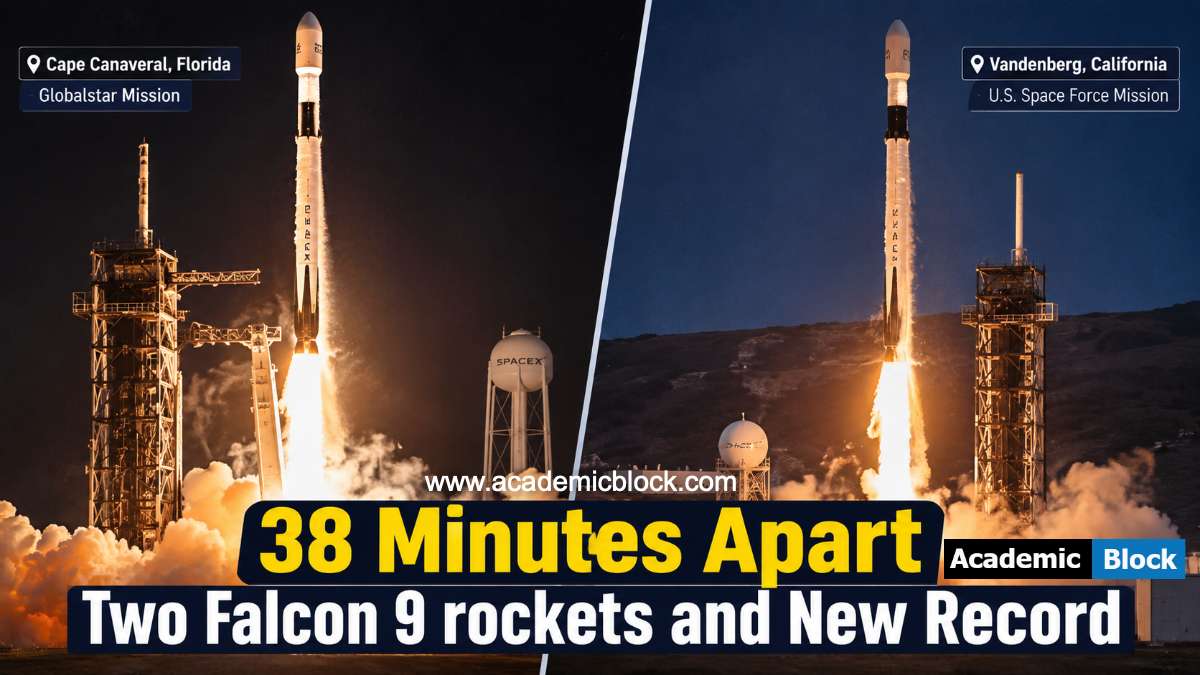
SpaceX has set another milestone in the rapid-fire era of commercial spaceflight, launching two Falcon 9 rockets from opposite sides of the United States just 38 minutes apart. The two missions lifted off on Saturday evening, August 15, 2026. The first rocket departed from Cape Canaveral Space Force Station in Florida with eight satellites for Globalstar. 38 minutes later, another Falcon 9 rose from Vandenberg Space Force Base in California carrying the classified USSF-366 mission for the U.S. Space Force.
First Falcon Launch From Florida
The first Falcon 9 lifted off from Launch Complex 40 at Cape Canaveral at 9:12 p.m. Eastern time. Its mission was relatively open and commercial. The rocket carried eight satellites for Globalstar, a Louisiana-based telecommunications company that is replenishing its low-Earth-orbit constellation. The spacecraft were successfully deployed after reaching orbit.
The Falcon 9’s first-stage booster, designated B1090, was flying for the 14th time. About eight minutes after liftoff, it returned to Cape Canaveral and landed at Landing Zone 40, close to the launch site.
Amazon has announced plans to acquire Globalstar, a deal that is expected to close in 2027. The acquisition is intended to support Amazon’s satellite ambitions, including direct-to-device capabilities. That places Globalstar’s network in a broader race involving companies such as SpaceX and AST SpaceMobile.
Second Falcon Launch From California
The second launch was different in almost every respect. At 9:50 p.m. Eastern time, another Falcon 9 lifted off from Vandenberg Space Force Base on California’s central coast. It carried USSF-366, a national-security mission for the U.S. Space Force.
USSF-366 was conducted for the U.S. Space Force, but the nature of its payload remains classified. SpaceX’s public mission information did not identify the spacecraft or provide details about its deployment. The company also ended its public livestream shortly after the Falcon 9’s first stage landed, which is customary for national-security missions.
There has been speculation among spaceflight observers about the possible nature of the payload. However, those interpretations have not been officially confirmed. The mission should therefore be viewed primarily through the information released by the Space Force and SpaceX.
SpaceX’s Launch Tempo Continues to Accelerate
The dual launches raised SpaceX’s Falcon 9 tally for 2026 to 96 flights. Roughly three-quarters of those missions have carried Starlink satellites. The Florida launch also counted as the 52nd orbital flight from the Space Coast this year.
SpaceX continues to demonstrate rapid turnaround and high launch cadence. The short gap between these two missions highlights the company’s growing operational efficiency across both coasts.
Web Resources on Rogue AIs
1. SpaceX: Launch Missions
2. SpaceFlight Now: SpaceX launches record-breaking back-to-back Falcon 9 rockets
3. Space.com : New record! SpaceX launches 2 Falcon 9 rockets just 38 minutes apart