
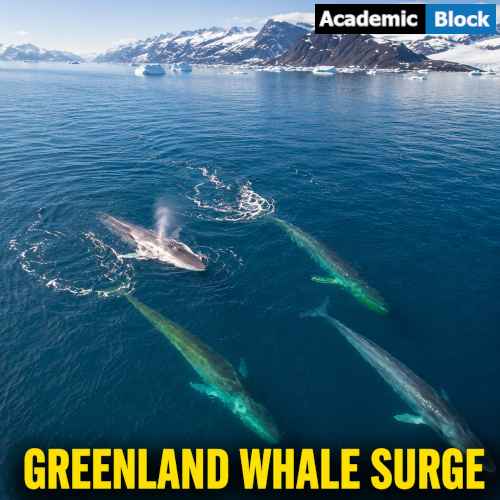
Sea Ice Loss Brings Giant Whales to East Greenland
A new study has found a major shift in East Greenland’s marine ecosystem as warmer seas and shrinking summer sea ice open coastal waters once restricted by pack ice. Fin, humpback and minke whales now feed regularly in the region. Published in Frontiers in Marine Science on August 20, 2026, the study examined waters between 60°N and 70°N using aerial surveys from 2015 and 2024, ship sightings, satellite tracking and observations from local hunters between 2023 and 2025. Researchers tracked 15 whales and found a sharp rise in whale activity.
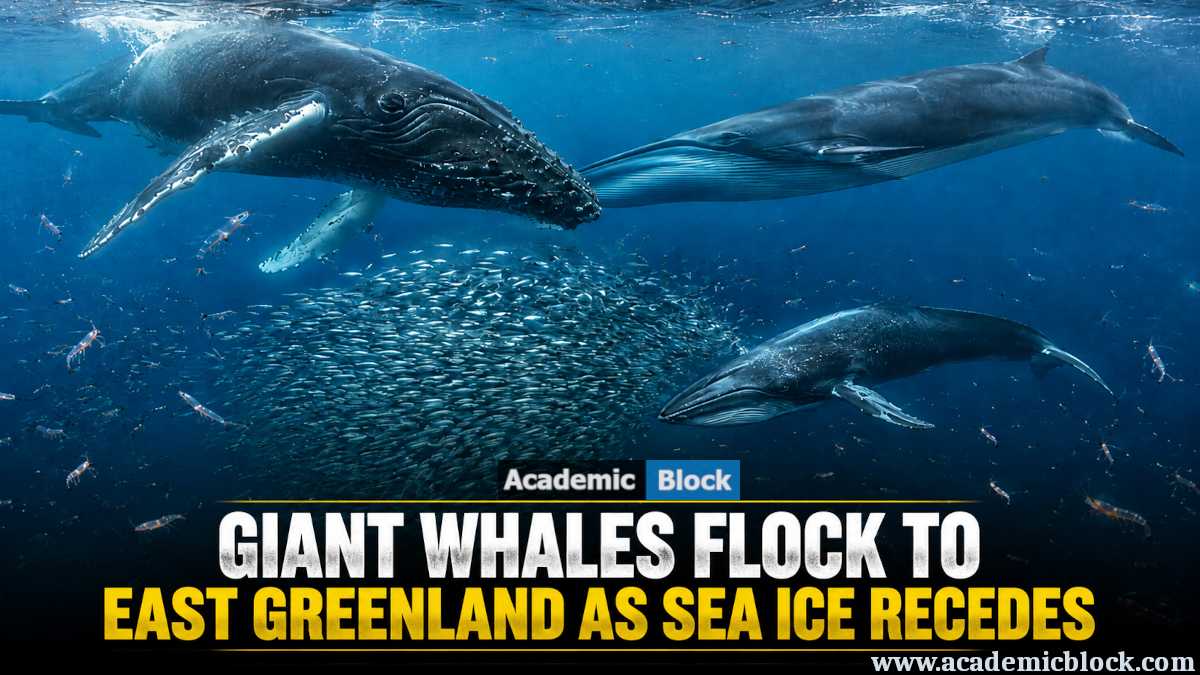
Humpback sightings rose from zero before 2007 to seven in 2007, 26 in 2015 and more than 150 in 2024. Minke whale sightings also increased, with 10 to 20 observations recorded after 2001. In 2025, researchers observed groups of up to 50 humpback whales near 70°N. They estimated that about 4,000 humpback, 6,000 fin and 4,500 minke whales were present in the East Greenland study area during summer 2024. The findings highlight the region’s rapid emergence as an important seasonal feeding area for baleen whales.
Why Giant Whales Are Moving to Greenland
Climate change is warming the Arctic, including the waters around East Greenland. Sea-surface temperatures in the region shifted noticeably in the late 1990s and then increased by about 1°C. At the same time, summer sea ice has declined markedly since around 2000. As pack ice retreats, coastal waters that once remained difficult for large whales to reach have become more accessible. Fin, humpback and minke whales are now using these waters as seasonal feeding grounds.
Food availability has also helped drive the whales’ movement. Capelin, a small cold-water fish, has shifted toward the East Greenland shelf as ocean conditions have changed. Researchers have found capelin in minke whale stomachs and believe fin and humpback whales are also feeding on capelin and krill. The study estimates that the three whale species can consume about 1 million tonnes of prey each year during their roughly four-month seasonal stay. However, the change could create new pressure on species that depend on sea ice. The whales’ arrival is more than a feeding opportunity; it is a sign of a rapidly changing Arctic food web.
How Giant Whales Could Reshape the Arctic Ecosystem
The arrival of thousands of fin, humpback and minke whales could put greater pressure on shared food sources such as Capelin and krill. At the same time, declining sea ice is changing the habitats of narwhals, bowhead whales and ringed seals, which depend heavily on icy conditions. As the new whale species use the same waters, competition for food and suitable habitat could increase. Warmer conditions may also allow more warm-water marine species to expand into Arctic waters. Scientists describe this broader shift as “borealization,” which can change where species live and feed and alter predator-prey relationships.
The effects could spread through the wider Arctic food web. If warming waters push Capelin and other fish into new areas, seabirds, fish and other marine animals may follow them. That movement could reshape species distribution, feeding patterns and predator-prey relationships across the region. It could also challenge existing marine conservation plans. Fixed Marine Protected Areas may not always cover the feeding and migration grounds that animals use as ocean conditions change. The growing presence of giant whales in East Greenland therefore offers a clear example of how a warming Arctic can rapidly reshape its marine ecosystem.
Web Resources On Sea Ice Loss Brings Whales to East Greenland
1. BBC : Giant whales move into Greenland waters as ice disappears.
2. AZ Animals : How Climate Change Is Creating Massive Whale “Feeding Frenzies” in the Arctic.
3. Times of India : Gigantic whales move towards Greenland waters after the glacier melts.
4. A News.com : Melting sea ice brings whale ‘feeding frenzies’ to East Greenland, study finds.