
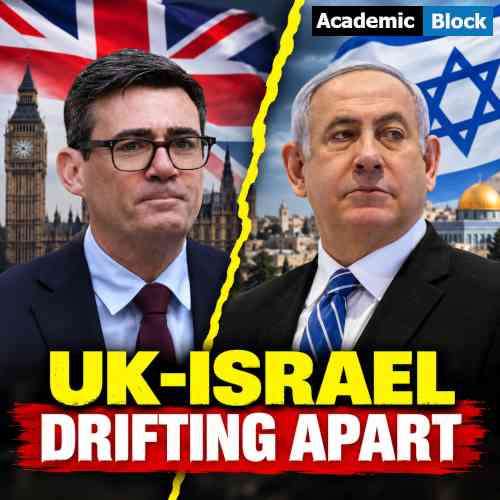
British-Israeli Relations Plunge to Lowest Ebb in Decades Amid Diplomatic Fallout
British-Israeli relations have plunged to their lowest point in decades after Britain imposed new sanctions on Israeli settlements. The measures target trade linked to settlements in the occupied West Bank. Britain announced the action alongside 11 other countries, including France, Canada, Spain and Sweden. The coordinated move has added pressure on Israel over its settlement policy. However, the decision has also created a serious diplomatic dispute between two long-standing allies.
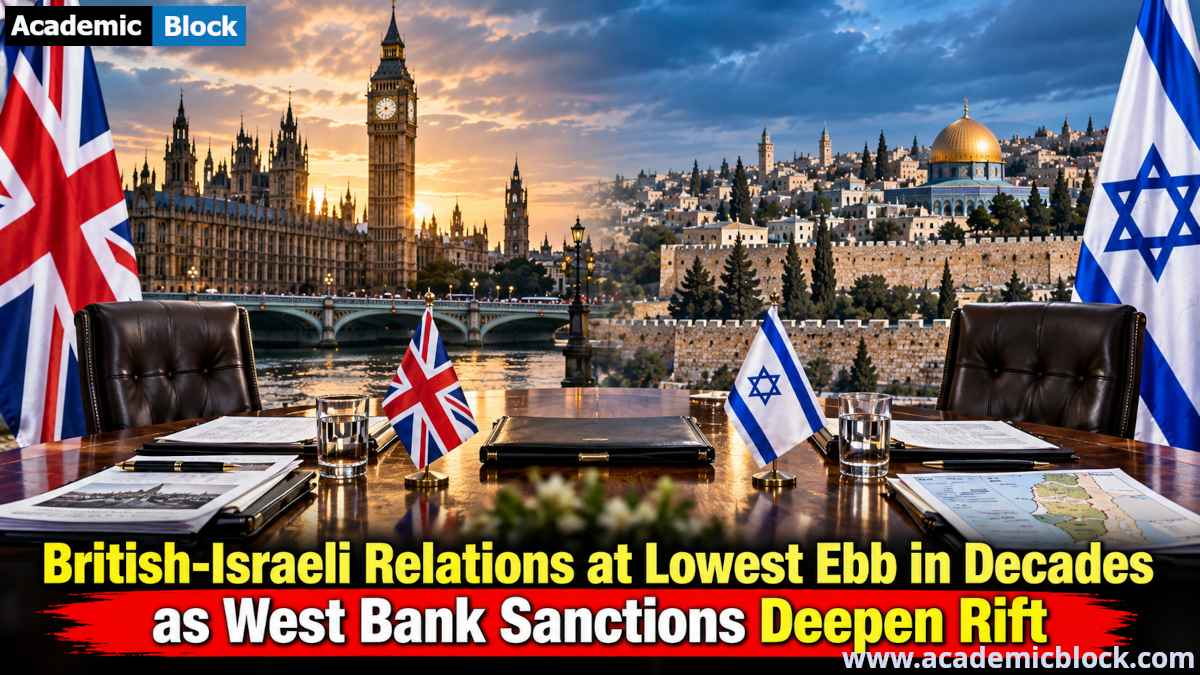
Israel has strongly rejected the British government’s decision and has described the measures as unacceptable interference. Foreign Minister Gideon Sa’ar called the British move “morally distorted” and accused London of interfering in Israel’s domestic affairs. In response, Israel has taken several diplomatic measures against Britain. The escalating dispute has therefore moved beyond a disagreement over trade and settlements. It has now created a major new strain in UK-Israel relations, with both sides facing growing diplomatic tensions.
UK Sanctions Deepen Rift as Israel Rejects Unilateral Pressure
The UK has imposed several measures targeting Israeli settlements and related activities in the West Bank. These include restrictions on settlement goods, as well as sanctions on businesses and individuals linked to construction, infrastructure, finance and real estate. Britain has also tightened arms export restrictions where exports could materially contribute to the occupation. In addition, the UK has targeted some extremist settlers over alleged violence against Palestinian communities. However, the measures do not amount to a broad trade embargo on Israel, as normal trade within the Green Line continues. London says the policy aims to curb settlement expansion and protect the prospects of a two-state solution.
Israel, however, has rejected the sanctions as unfair and one-sided. Israeli officials argue that such pressure could make diplomacy harder and unfairly single out Israel. Jerusalem maintains that disputed issues should instead be resolved through direct negotiations. It also argues that outside economic pressure cannot deliver a lasting political agreement. The dispute therefore highlights a widening gap between Britain’s tougher approach to settlement activity and Israel’s preference for negotiations over unilateral pressure.
Israel Responds Sharply as UK Diplomatic Row Deepens
Israel has responded swiftly to Britain’s sanctions with a series of diplomatic countermeasures. Foreign Minister Gideon Sa’ar said Israel will close Britain’s consulate in East Jerusalem and remove British representatives from a US-led Gaza coordination mission. In addition, Jerusalem will end Britain’s training role for Palestinian Authority security forces in the West Bank. Israel has also imposed entry restrictions on several British nationals, including former Labour leader Jeremy Corbyn. Sa’ar said the response had been coordinated with Prime Minister Benjamin Netanyahu and argued that Israel could not ignore what he called hostile British policies. These measures mark a sharp escalation in the diplomatic dispute between the two countries.
However, the response has not ended all UK-Israel cooperation. Security and intelligence ties remain important despite the political fallout. Israel’s Foreign Ministry has described the consulate closure as part of a broader response to Britain’s policy shift. At the same time, the crisis has exposed a growing divide between London and Jerusalem over settlement policy. The latest confrontation has therefore widened the diplomatic rift while leaving key areas of cooperation intact.
Web Resources on British-Israeli Relations Plunge to Lowest Ebb in Decades
1. Reuters : Britain must ‘stand against injustice’ over West Bank settlements, PM Burnham says.
2. BBC : British-Israeli relations at lowest ebb in decades.
3. AP News : UK government bans goods from Israeli settlements and accuses settlers of ‘ethnic cleansing’.