
Trump Administration Probes 9 Elite Universities Over Alleged J-1 Visa Abuse
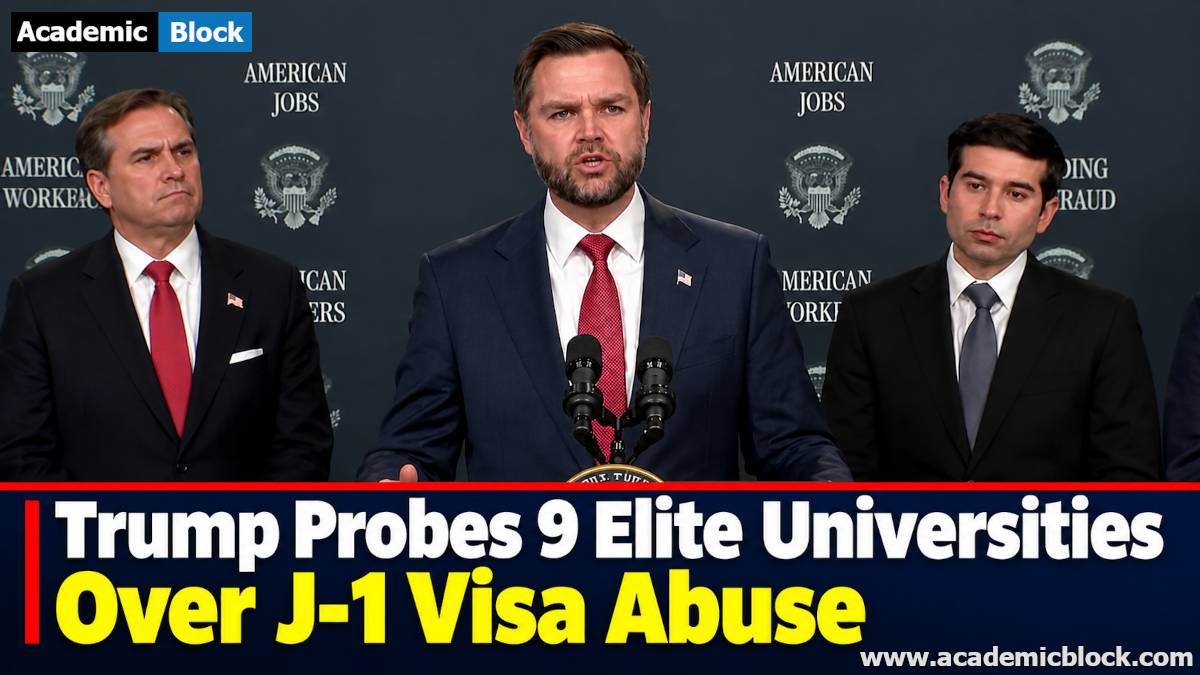
The Trump administration has opened an investigation into 9 elite universities over possible misuse of the J-1 visa. Vice President JD Vance announced the probe on Thursday during a press conference on work visa fraud. Labor Department Inspector General Anthony D’Esposito said subpoenas have been served and investigations are underway at the schools. Together, the officials accused elite schools of using the visa to bring in cheaper labor and undercut American workers. The move places some of the country’s best-known campuses under direct federal scrutiny. The announcement adds to a growing list of administration actions aimed at colleges and international students.
The universities include Harvard, Yale, Stanford, Brown, MIT, Caltech, UC Davis, Arizona State and the University of Pittsburgh. Vance said the administration believes these nine schools merit a closer look. The J-1 Exchange Visitor Program lets foreign nationals study, teach or do research in the United States temporarily. Participation runs through exchange programs that the State Department has approved. Universities use this category to bring international researchers and scholars into their labs and classrooms. The administration now frames the case around protecting American graduate students and researchers from lower-paid competition. Investigators are also checking whether foreign influence or improper financial ties have compromised federally funded research.
Why the White House Says Schools Misused the J-1 Program
The J-1 Exchange Visitor Program lets foreign nationals come to the U.S. temporarily to study, teach or do research. It runs through State Department-approved exchange programs, and universities are common sponsors. Unlike the H-1B work visa, it is built around exchange and training, not permanent employment. Vance centered his argument on numbers to make his case. He said J-1 holders fill 61% of job positions tied to federally funded grants at these universities. The national average, he said, stands at 38%. He also argued that J-1 holders are paid far less than American graduate students and researchers. He said an American in such a role earns about $20,000 more than a J-1 holder. In his view, those numbers show the universities are leaning too heavily on the visa. However, he did not say where the figures came from, so they remain his claims.
D’Esposito framed the probe as a matter of national security as well as fair pay by pointing to concerns about Chinese influence on American campuses. He warned that cutting costs while exposing American research to a foreign adversary. The comment was aimed at concerns about China’s influence at American universities and federally funded research. Officials also raised concerns about Chinese scholars and the Chinese government during the announcement. D’Esposito says investigators are looking at foreign influence, improper financial ties and visa abuse in federally funded research. For now, no findings have been announced, so the allegations remain unproven.
Universities Vow to Cooperate as the Visa Crackdown on Students Widens
Brown confirmed it received a subpoena and said its international scholars, students and employees contribute to research that advances American innovation and also make essential contributions to campus. Stanford said it follows all applicable visa laws and will cooperate with the investigation. Yale said it is committed to following federal visa rules and will review the documents once it receives them. MIT is reviewing what its spokesperson called a very broad subpoena and added that federal authorities had vetted and authorized every J-1 holder on campus. Arizona State said it employs one of the largest technical and scientific workforces in the country and added that they hired the talent its research requires and complies with fully under U.S. policy and law.
The probe follows earlier efforts to tighten rules for international students. The Trump administration attempted to strip Harvard of its power to enroll international students, but a federal court blocked the effort last year. The administration has proposed significantly higher fees to be charged to certified educational institutions for a popular work authorization program for international students, proposing a $70,000 fee for initial OPT (Optional Practical Training) program participation. Under the proposal, schools could pass the $70,000 fee to students or employers. A subsequent OPT recommendation would carry a separate proposed fee of $30,000. That means international students could ultimately face the financial burden of the proposed fee, raising concerns over the cost of U.S. work authorization.
Web resources on Trump administration J-1 visa Probe
1. Reuters : Trump administration freezes green cards for Microsoft, IT firms, probes universities.
2. Politico : Trump administration probes colleges for potential visa fraud.
3. The Hill : Vance says 9 universities will be investigated over foreign visas.
4. South China Morning Post : US probes Harvard, Yale, MIT, other universities over alleged visa fraud.
5. AcademicBlock : International Students Could Face $70,000 Work Permit Fee Under Trump Plan.