
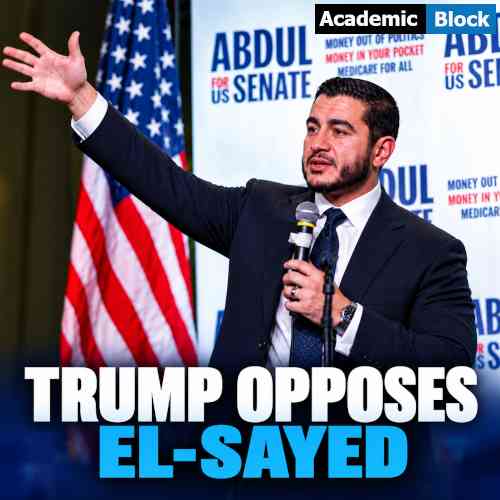
Trump Invokes 9/11 to Urge Michigan Voters to Oppose El-Sayed
President Donald Trump invoked the September 11, 2001, terrorist attacks at a campaign rally in Port Huron, Michigan, urging voters to oppose Democratic Senate candidate Abdul El-Sayed. Trump compared efforts to block El-Sayed’s Senate bid with the resistance aboard United Airlines Flight 93, where passengers fought back against the hijackers. He also cited Todd Beamer, a Michigan native who died on the flight, and called El-Sayed a “jihadist” while alleging links to the Muslim Brotherhood. Trump urged supporters to prevent El-Sayed from entering the Senate and suggested he could face extraordinary security restrictions if elected.
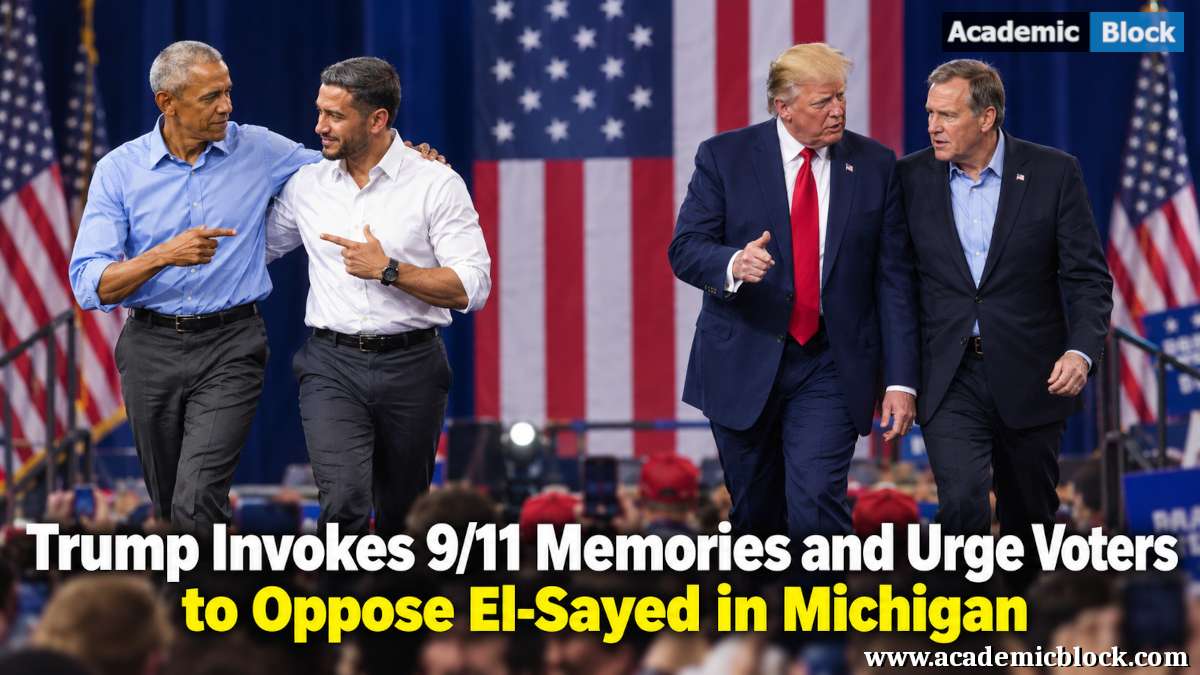
Trump’s remarks have brought national security, religious identity, and political rhetoric into focus ahead of Michigan’s November 3 Senate election. The controversy also highlights the challenges candidates face when allegations about their beliefs and associations become part of an election campaign. If elected, El-Sayed would become the first Muslim to serve in the U.S. Senate, giving the closely watched race broader significance for American political representation.
El-Sayed Rejects Extremism Claims and Challenges Trump’s Double Standard
Democratic Senate candidate Abdul El-Sayed has rejected President Donald Trump’s accusations and challenged what he called a double standard. Speaking at a campaign event in Grand Rapids, Michigan, on Sunday night, El-Sayed described questions about his loyalty to the United States as shameful. He also suggested that Trump’s repeated focus on his name reflected a broader prejudice against his Muslim identity. El-Sayed argued that the accusations raised concerns about how his religion could shape the debate over his candidacy ahead of Michigan’s November 3 Senate election.
El-Sayed also questioned Trump’s criticism by pointing to Saudi investments in Jared Kushner’s private equity firm, Affinity Partners, and Qatar’s gift of a Boeing 747 jet to Trump. Former President Barack Obama also campaigned for Democrats in Michigan before Trump’s rally, arguing that attempts to portray El-Sayed as less American would not succeed. The competing arguments have intensified the Michigan Senate race, which could help determine control of Congress and placed questions of national identity, political consistency, and religious discrimination at the center of the campaign.
Michigan Senate Race Could Shift the Balance of Power in Congress
The Michigan Senate race could play a crucial role in determining which party controls the U.S. Senate. Republican Mike Rogers, backed by President Donald Trump, is seeking to win the seat held by retiring Democratic Sen. Gary Peters. Rogers lost Michigan’s 2024 Senate election to Democrat Elissa Slotkin. However, Republicans view the open seat as an opportunity to strengthen their position in Congress and gain greater influence over the legislative agenda.
Recent polling has shown a tight contest between Rogers and Democratic candidate Abdul El-Sayed. One poll placed El-Sayed at 50% support and Rogers at 49% among likely voters, highlighting the race’s narrow margin. Both parties are working to mobilize voters as the November 3 election approaches. The outcome could shape the balance of power in Washington, influence the passage of legislation, and affect the Senate’s confirmation of presidential nominees.
Web Resources On Trump Invokes 9/11 in Attack on El-Sayed
1. AP News : Trump escalates anti-Muslim attacks against El-Sayed in Michigan, drawing Arab American rebuke.
2. Reuters : Trump invokes 9/11 in urging Michigan voters to oppose Muslim Senate candidate El-Sayed.
3. Fox10 News : Trump escalates rhetoric against El-Sayed as he tries to undermine Democrat in Michigan Senate race.