

Forget AI, Europe Bets on Quantum Computing to Lead the Next Tech Revolution
While AI dominates the global technology race, Europe is turning to quantum computing to strengthen its position against the United States and China. According to MLex, the European Commission plans to present its proposed Quantum Act on November 18. The initiative builds on the EU’s Quantum Europe Strategy, adopted in July 2025, which aims to make Europe a global leader in quantum technology by 2030.
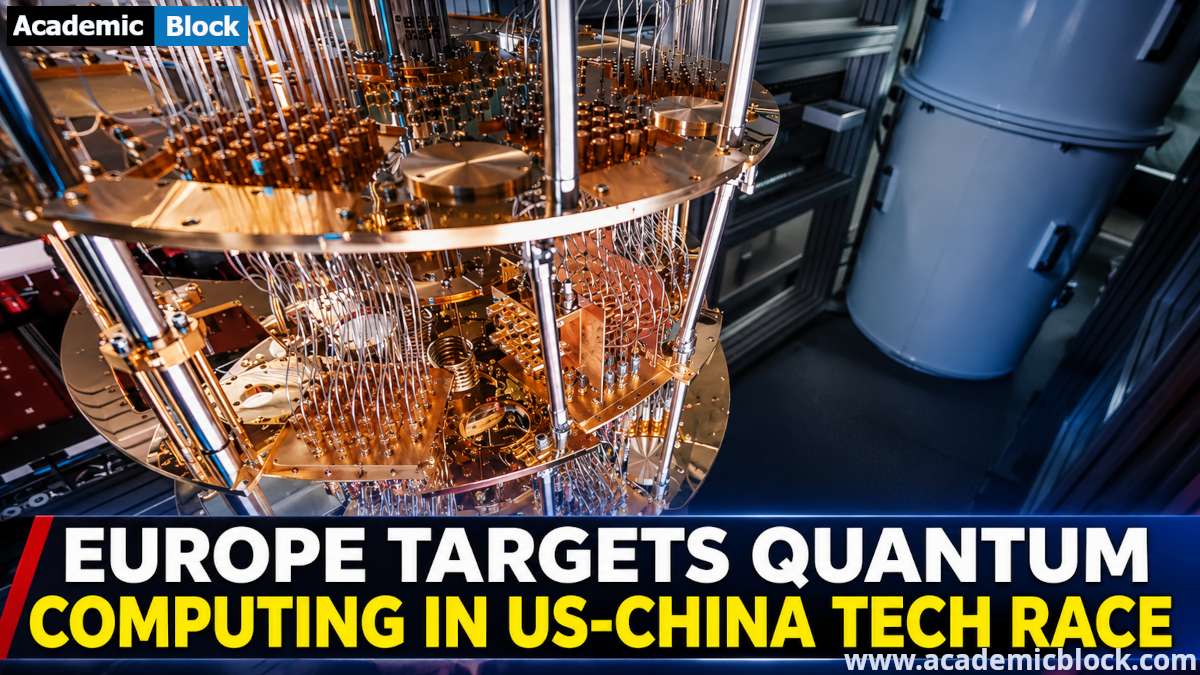
Europe wants to avoid repeating its experience in the AI race. Despite its strong research institutions and scientific expertise, the bloc has struggled to turn discoveries into commercially successful products. It also seeks to connect researchers, startups and established companies, helping Europe develop and manufacture quantum technologies at scale.
EU’s Quantum Act Seeks to Turn Research Into Global Tech Leadership
Europe has established a strong presence in the global quantum technology industry. However, its scientific achievements have not yet translated into comparable commercial success. A 2025 European Commission study found that the EU hosts around 32% of the world’s quantum technology companies. Yet, European firms account for only 6% of global quantum-related patent activity. Funding remains another major challenge. European quantum companies attract just 5% of global private investment, while their US counterparts receive more than 50%. In response, the EU and its member states have committed more than €11 billion to quantum technology over five years. The European Commission has also invested more than €2 billion in the sector between 2012 and 2024.
The proposed Quantum Act aims to close this gap by improving coordination across the bloc. It seeks to connect research institutions, startups and industrial companies while strengthening three key areas, scientific research, manufacturing capacity and supply-chain resilience. In addition, the EU plans to establish six quantum chip pilot lines to help companies develop prototypes, test designs and advance manufacturing. Each facility could receive between €40 million and €50 million in joint funding from the EU and national governments. The strategy also includes a dedicated quantum design facility. Together, these measures aim to help European companies move beyond research and compete in the global quantum technology market.
Quantum Computing Emerges as the Next Global Technology Battleground
Quantum computing uses quantum bits, known as qubits, instead of the conventional bits found in traditional computers. It relies on principles such as superposition and entanglement. These principles allow quantum systems to handle certain complex calculations in ways that classical computers cannot easily match. The technology could open new possibilities in drug discovery, advanced materials, energy research and defense. However, it also raises serious cybersecurity concerns.
The United States and China are also investing heavily in quantum technology. Meanwhile, the EU wants to reduce its dependence on foreign suppliers and strengthen its technological independence. A leaked draft of the proposed Quantum Act could reserve certain public contracts for EU-controlled companies and suppliers covered by reciprocal agreements. It could also require quantum-resistant encryption in public procurement for critical sectors. However, these provisions may change before the European Commission presents its proposal. Ultimately, its position in the quantum race will depend on whether it can turn scientific expertise into a competitive industrial ecosystem.
Web Resources On Europe’s Quantum Race Against US and China
1. POLITICO : Forget AI, Europe has a plan to win the next tech revolution.
2. BBC : Quantum computing: A tech race Europe could win?
3. European Commission : Quantum Europe Strategy.
4. Euro News : Video. EU can win tech battles if it integrates more – European patent chief.