
US-Cuba Relations Explained: Cold War History, Sanctions and Stalled Talks
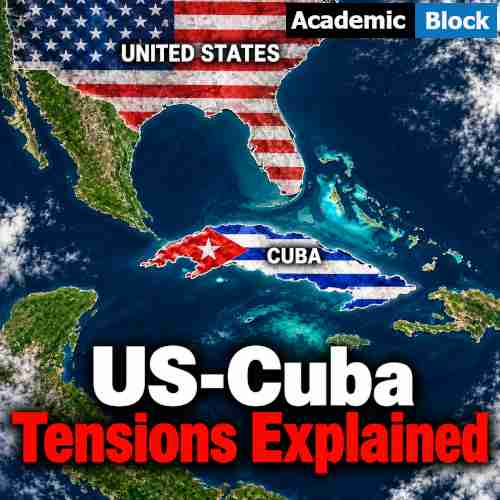
Separated by just 90 miles of water, the United States and Cuba are once again facing a tense stand off. President Donald Trump has openly expressed his desire to change Cuba’s government, while a series of measures in 2026 have increased pressure on the island’s struggling economy. Havana, however, rejects Washington’s claim that it poses a threat to American security. It has also drawn a firm line against negotiating changes to its political system. The result is a relationship caught between escalating pressure and limited diplomatic contact. Fuel shortages, widespread blackouts and economic restrictions continue to affect daily life in Cuba, even as diplomats on both sides maintain a narrow channel of communication.
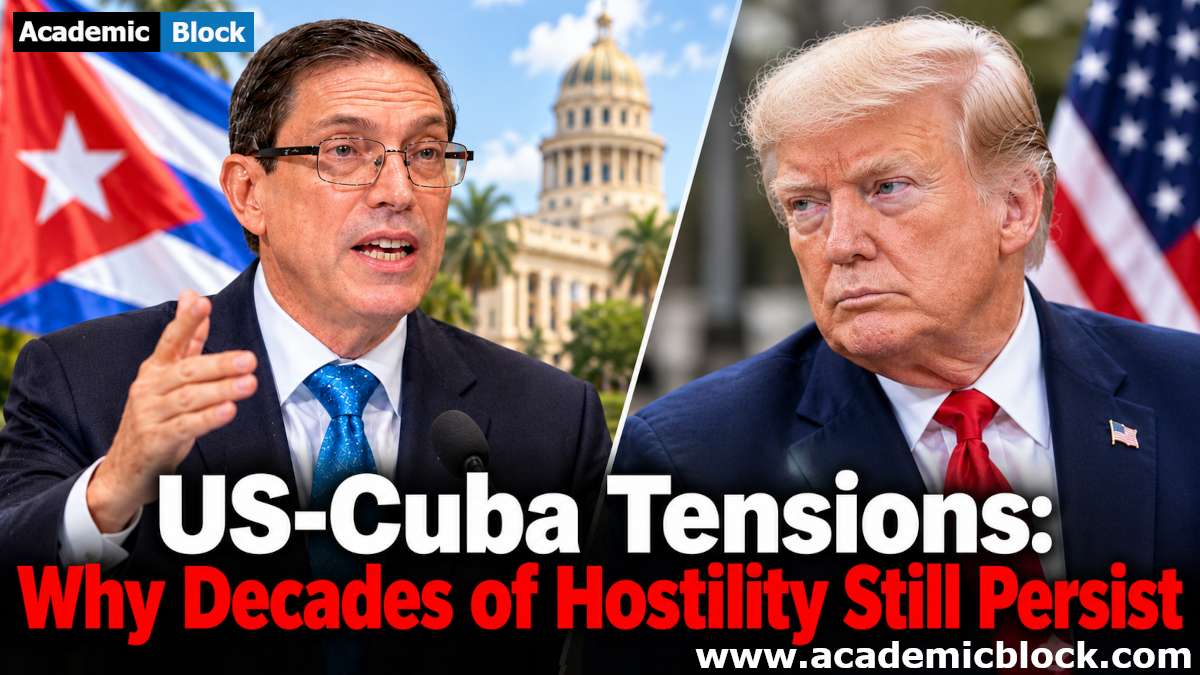
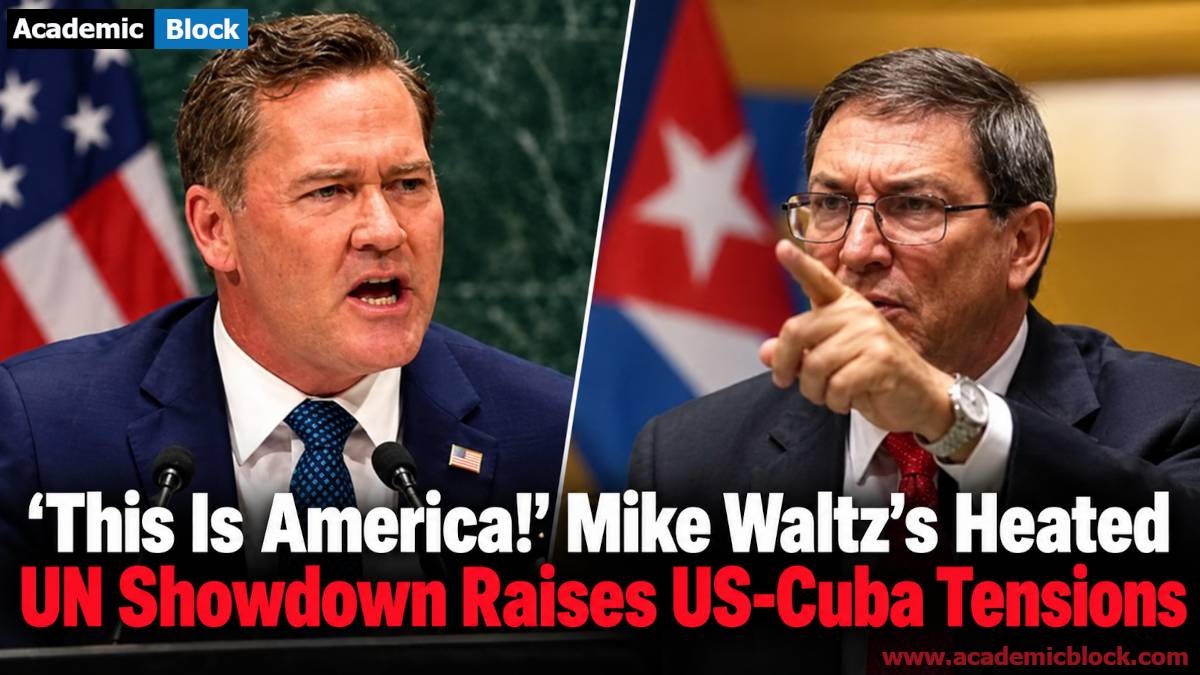
The latest tensions have also drawn international attention. On October 28, the UN General Assembly voted 130 to 17, with 25 abstentions, to call on Washington to end its economic embargo against Cuba. It marked the 34th time the issue had come before the assembly. Although the resolution is non-binding and only the US Congress can lift the embargo, the vote offers an indication of international opinion. Support for the resolution has declined from 165 votes in favour and seven against a year earlier. It also remains well below the record 191-0 result in 2016, when President Barack Obama’s efforts to improve relations prompted Washington to abstain. The debate also exposed the deep diplomatic divisions between the two governments, as US Ambassador Mike Waltz and Cuban Foreign Minister Bruno Rodríguez Parrilla clashed during the assembly’s proceedings a day earlier. To understand how the countries reached this latest confrontation, it is necessary to revisit the revolution that first divided them.
From Castro’s Revolution to the Missile Crisis: How the US-Cuba Rift Began
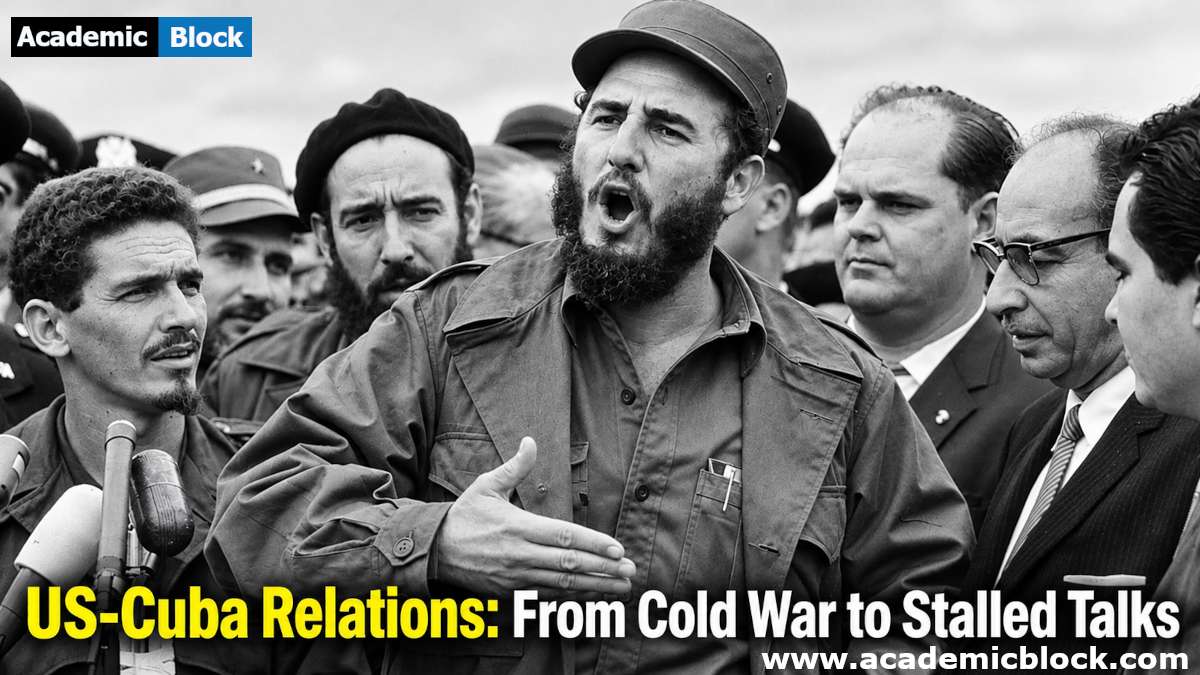
The divide dates back to 1959, when Fidel Castro’s revolutionaries overthrew Cuban President Fulgencio Batista. Washington initially recognised the new government, but relations deteriorated as Cuba nationalised American-owned businesses and property. Havana embraced socialism and moved closer to the Soviet Union, prompting Washington to introduce economic restrictions in 1960. Diplomatic relations were severed in January 1961. Three months later, a CIA-backed force of Cuban exiles invaded Cuba at the Bay of Pigs in an attempt to overthrow Castro. The failed operation pushed Havana closer to Moscow and further intensified its hostility towards Washington. The confrontation reached its most dangerous point in October 1962. American surveillance uncovered Soviet nuclear missiles stationed in Cuba, prompting President John F. Kennedy to order a naval quarantine of the island. The crisis lasted 13 tense days before Soviet leader Nikita Khrushchev agreed to withdraw the weapons. Washington, in return, pledged not to invade Cuba and secretly agreed to remove its own missiles from Turkey.
The economic embargo, which Kennedy had formalised in February 1962, became the foundation of American policy towards Cuba. Over subsequent decades, travel restrictions and disputes over human rights added further strain. However, diplomatic contact never disappeared completely. In 1977, both countries opened diplomatic interest sections in their respective capitals. A more significant breakthrough came in December 2014, when Obama and Cuban President Raúl Castro announced plans to restore relations. Diplomatic ties were formally re-established in July 2015, embassies reopened, and Obama visited Havana in March 2016. However, the rapprochement proved fragile. The first Trump administration reversed several elements of the opening, while policy changes under President Joe Biden and during Trump’s second term have demonstrated how quickly Washington’s approach can shift.
Oil Cuts and Executive Order 14404: How Washington Tightened Pressure on Cuba in 2026
The latest escalation began in early January, when US forces seized Venezuelan President Nicolás Maduro. Cuba subsequently lost its largest oil supplier almost overnight, adding to the island’s existing energy difficulties. On January 29, Trump signed Executive Order 14380, declaring a national emergency over what the administration described as an unusual and extraordinary threat from Cuba. The order also opened the door to tariffs on countries supplying oil to the island, either directly or indirectly. Although the administration did not identify specific countries or tariff rates, the measure threatened to deepen pressure on an economy already struggling with fuel shortages and power cuts. However, the tariff plan was short-lived. After the Supreme Court struck down tariffs imposed under the International Emergency Economic Powers Act, the administration revoked the Cuba-related tariff measure in February. The national emergency remained in place, later providing the legal basis for additional sanctions.
Those measures arrived on May 1 through Executive Order 14404. The order established a new sanctions programme targeting individuals and entities linked to repression in Cuba and threats to US national security. One of its most significant provisions extends the potential consequences beyond American borders. It authorises penalties against foreign companies and banks conducting significant business with sanctioned Cuban targets. The programme covers sectors including energy, defence, mining, financial services and security. On May 7, the State Department identified GAESA, a military-run conglomerate estimated to control at least 40% of Cuba’s economy, among the first targets, and the Treasury Department issued a licence preserving existing authorisations under the long-standing Cuban Assets Control Regulations. Additional designations followed on May 18. In late September, Washington tightened restrictions further by limiting travel by Americans and restricting the Cuban private sector’s access to US banking. Havana has argued that these measures contradict Washington’s stated support for expanding private enterprise on the island.
Calls, Meetings and WhatsApp Messages: What Remains of US-Cuba Dialogue?
Despite the growing pressure, Washington and Havana have not completely abandoned communication. Lianys Torres Rivera, Cuba’s chargé d’affaires in Washington, confirmed on October 5 that contacts between the two governments continue through meetings, phone calls and WhatsApp messages. However, she made clear that these exchanges have not developed into formal negotiations or produced an agreed agenda. The diplomatic atmosphere has nevertheless become increasingly confrontational. On October 27, US Ambassador Mike Waltz and Cuban Foreign Minister Bruno Rodríguez Parrilla clashed during the annual UN debate on the American embargo. The exchange included accusations from both delegations, with Waltz telling Rodríguez to back away as tensions escalated inside the assembly hall. Within a day, Washington removed a Cuban diplomat from the country following allegations of an assault involving an American diplomat. Havana disputed Washington’s account of the incident. The confrontation offered another public illustration of the mistrust shaping relations between the two governments.
The diplomatic exchanges have also highlighted differences over the prospects for negotiations. At the United Nations in September, Trump suggested that Secretary of State Marco Rubio was deeply involved in discussions with Havana. However, the contacts have yet to produce a formal negotiating process. On September 1, Torres Rivera had described the dialogue as completely stalled. Foreign Minister Bruno Rodríguez had also said in late June that discussions launched earlier in the year had run aground. Trump has since predicted that a deal could be reached and said military action should not be necessary. Cuba, meanwhile, has announced that it is strengthening its defences and remains unwilling to negotiate changes to its political system. These positions highlight the central obstacle facing both governments: Washington continues to pursue greater pressure for political change, while Havana rejects negotiations that could compromise its sovereignty.
Ultimately, the 2026 stand-off shows how Washington and Havana are pursuing sanctions and diplomacy simultaneously, without finding common ground. The United States is increasing economic pressure while seeking political change, whereas Cuba views those measures as a challenge to its sovereignty. With neither government showing a willingness to abandon its core position, ordinary Cubans continue to face the consequences through fuel shortages and power cuts. The declining majority at the United Nations also suggests that international opposition to the embargo remains substantial, although it is no longer as overwhelming as a year earlier. The months ahead will matter beyond Cuba itself, with implications for regional stability and American influence across Latin America. They will also test whether decades of economic pressure can achieve the political changes Washington continues to seek.
Web Resources on US-Cuba relations
1. Morgan Lewis : New Executive Order Threatens Sanctions Against Non-US Persons Doing Business with Cuba.
2. The American Presidency Project : Proclamation 3447—Embargo on All Trade with Cuba.
3. AcademicBlock : ‘This Is America!’ Mike Waltz’s UN Clash With Cuban Officials Puts US-Cuba Tensions in Focus.
4. UN News : US abstains for first time in annual UN vote on ending embargo against Cuba.
5. Office of the Historian : US State Department history of relations with Cuba.
6. JFK Library : Cuban Missile Crisis.