
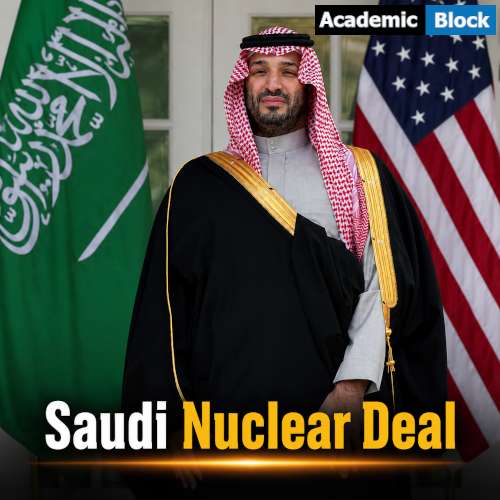
Trump Approves Saudi Arabia Nuclear Deal Without Key Safeguards
President Donald Trump has approved a 30-year civil nuclear cooperation agreement with Saudi Arabia, marking a significant step in U.S.-Saudi strategic relations. The proposed 123 Agreement, created under Section 123 of the U.S. Atomic Energy Act of 1954, is required before American companies can export nuclear technology or equipment to another country. The agreement to Congress U.S. Energy Secretary Chris Wright and Saudi Energy Minister Prince Abdulaziz bin Salman are expected to sign the final document after supporting a preliminary version in Riyadh last year.
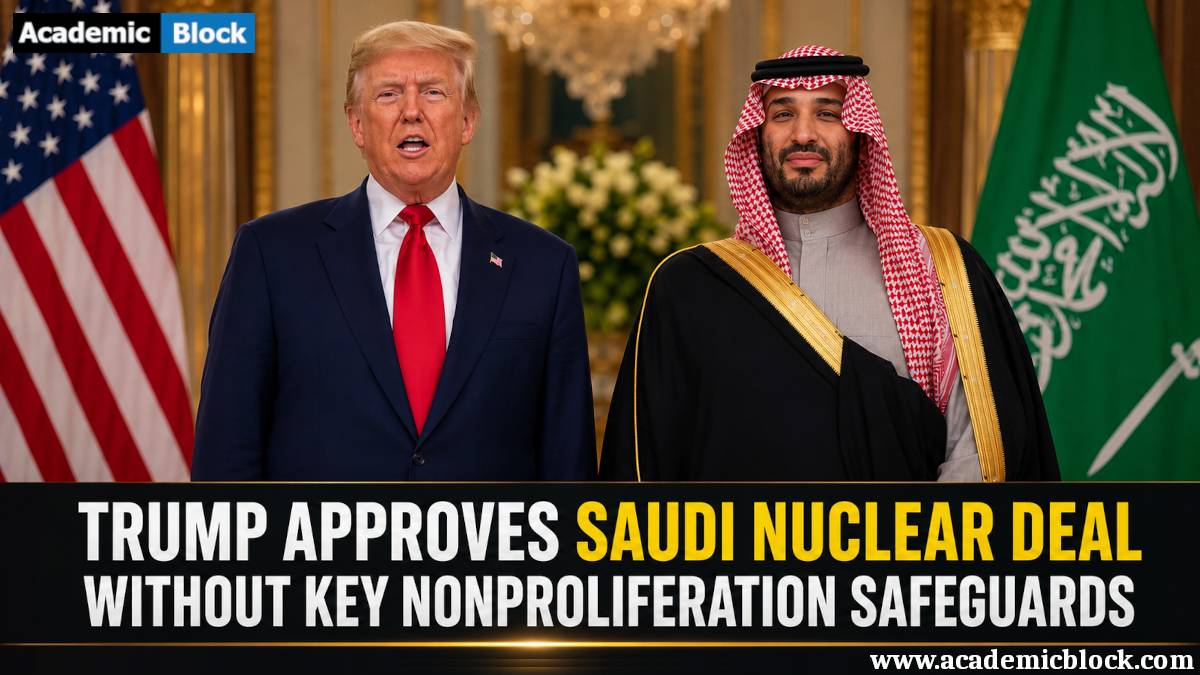
However, the agreement has also drawn attention because it reflects a broader shift in U.S. Middle East policy. Israel has not issued a new official response to the deal, although successive Israeli governments have consistently opposed allowing Saudi Arabia to enrich uranium, arguing that it could increase nuclear proliferation risks across the region. In addition, the agreement differs from the Biden administration’s earlier approach. While President Joe Biden explored linking U.S.-Saudi nuclear cooperation to Saudi Arabia’s normalization of relations with Israel, the Trump administration has separated those issues. The current agreement moves forward without making Saudi recognition of Israel a formal condition, highlighting a different diplomatic strategy.
Missing International Safeguards Fuel Nuclear Oversight Concerns
The agreement has attracted significant attention because it does not include two safeguards that have featured in several previous U.S. nuclear cooperation agreements. Saudi Arabia has rejected the “Gold Standard,” which bars uranium enrichment and spent fuel reprocessing. It has also declined to adopt the International Atomic Energy Agency (IAEA) Additional Protocol, which gives inspectors broader authority to verify that civilian nuclear programs remain peaceful. Instead, the proposal relies on a separate U.S.-Saudi verification arrangement rather than the expanded inspection framework used by the UN nuclear watchdog.
The Trump administration says bilateral safeguards are sufficient to reduce proliferation risks. However, many arms control experts disagree. Kelsey Davenport of the Arms Control Association has warned that the agreement could weaken global nonproliferation standards and set a precedent for future U.S. nuclear partnerships. Analysts also note that the draft allows “additional safeguards and verification measures” for sensitive activities, leaving open the possibility of domestic uranium enrichment. They argue that this flexibility, combined with Saudi Arabia’s refusal to accept the Gold Standard, has made the agreement one of the most closely watched nuclear policy decisions in recent years.
Congressional Review Will Decide the Deal’s Future
The agreement will now move to the U.S. Congress for a 90-day review period, during which lawmakers can examine its legal, security, and nonproliferation provisions. If Congress does not object within the review period, the agreement will automatically take effect. Blocking it would require a joint resolution approved by both the House of Representatives and the Senate. President Trump could then veto that resolution, meaning Congress would need a two-thirds majority in both chambers to override the veto. Several lawmakers, including Senator Ed Markey, have urged the administration to add stronger inspection requirements and a permanent ban on uranium enrichment.
The congressional debate comes at a sensitive moment for global security. The expiration of the last U.S.-Russia strategic arms treaty, China’s expanding nuclear arsenal, and continued tensions over Iran’s nuclear program have all increased scrutiny of the agreement. Supporters believe the pact will strengthen U.S. influence in the Middle East, secure major commercial opportunities for American companies, and reduce Saudi Arabia’s dependence on Chinese and Russian nuclear suppliers. Critics, however, argue that Congress now faces the difficult task of balancing strategic interests with long-standing nuclear nonproliferation commitments.
Web Resources on Trump Approves Saudi Arabia Nuclear Deal
1. Reuters.com : Trump to seek Congress approval for Saudi Arabia nuclear energy pact that lacks safeguards.
2. CNN.com : Nuclear deal that would permit uranium enrichment by Saudi Arabia in limbo awaiting Trump admin sign-off.
3. AP News.com : Trump approves nuclear agreement that may allow Saudi Arabia to enrich uranium.
4. India Today.in : Trump approves nuclear deal with Saudi Arabia without key global safeguards