
Social Media Fueled Spain’s Europe Wide Political Storm
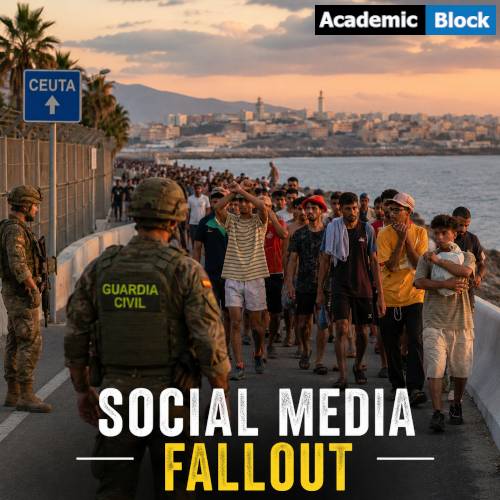
Spain’s migrant crisis has rapidly evolved from a humanitarian emergency into one of Europe’s most divisive political issues. In late July, tens of thousands of migrants crossed or attempted to cross from Morocco into the Spanish enclave of Ceuta, overwhelming a city of about 85,000 residents. Spanish officials said the dangerous crossings claimed at least 67 lives, although they warned the toll could still rise. The sudden influx placed immense pressure on border authorities, emergency services, and local infrastructure.
Current reporting suggests that no single event caused the crisis. Instead, investigators point to a combination of misleading social media content, economic hardship in Morocco, the misinterpretation of a recent Spanish Supreme Court ruling, and growing migration pressure along the Morocco–Spain border. As Spain strengthened security around Ceuta, European Union leaders remained divided over how to respond. The crisis has since become a defining test of Europe’s migration policy, exposing political divisions while demonstrating how misinformation can rapidly transform a local border emergency into a continent-wide political challenge.
How Social Media Fueled the Ceuta Migrant Surge
Investigators and journalists have found that social media played a major role in accelerating the Ceuta migrant surge. Viral posts on TikTok, Instagram, Facebook, and WhatsApp claimed that “Spain is Open,” encouraging thousands of people to attempt the dangerous journey from Morocco into the Spanish enclave. Many videos showed young migrants swimming toward Ceuta or urging others to follow. Several newly created accounts quickly attracted tens of thousands of views and likes. However, the claims proved false. The recent Spanish Supreme Court ruling only restricted immediate pushbacks for certain sea arrivals. It did not open Spain’s borders or guarantee entry into mainland Europe.
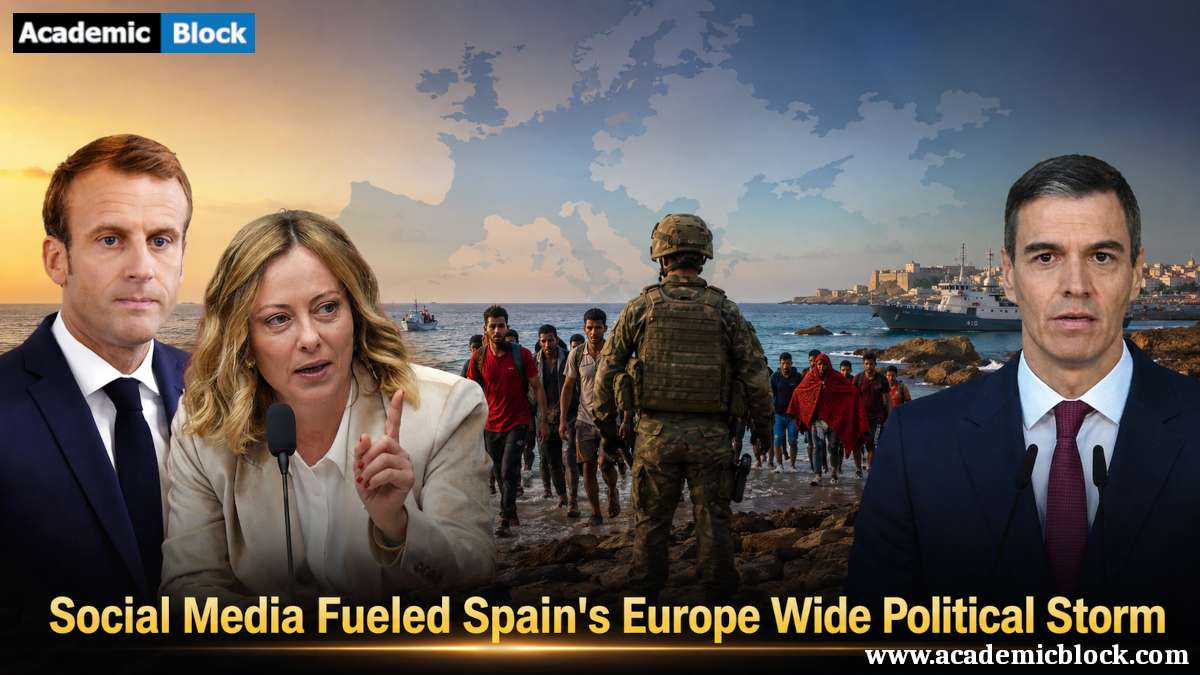
The crisis also demonstrated how social media can influence political debates before verified facts emerge. Italy’s ruling Fratelli d’Italia party circulated images of migrants running through Ceuta to criticize Spain’s migration policy. Prime Minister Giorgia Meloni later announced a temporary suspension of parts of Italy’s Schengen arrangements with Spain, arguing that the migrant surge posed a security risk. Spanish Prime Minister Pedro Sánchez rejected that response, calling it “selfish” and “polarising.” Meanwhile, 22 of the European Union’s 27 member states backed an emergency meeting of EU interior ministers to discuss border security and migration policy.
Online Speculation Brings the US and Israel Into the Ceuta Crisis
The Ceuta migrant crisis also sparked widespread speculation online about the possible involvement of foreign governments. Israel became part of the discussion largely because of its strained diplomatic relationship with Spain rather than any verified role in the migrant surge. Relations between the two countries have remained tense since Spain recognized the State of Palestine, criticized Israel’s military campaign in Gaza, and later urged the European Union to review its cooperation agreement with Israel. Those developments prompted sharp public exchanges between officials from both countries.
The United States also became part of the online debate after President Donald Trump described the crisis as a “catastrophe” and an “invasion,” arguing that it exposed Europe’s failure to protect its borders. His remarks fueled discussion on social media, where users also pointed to policy differences between Washington and Madrid over several international issues, particularly the Middle East. In addition, conspiracy theories circulated on X, Facebook, and Telegram claiming that the migrant surge formed part of a wider international plan. However, none of those allegations has been supported by official findings or credible evidence. The Ceuta crisis illustrates how misinformation, migration pressure and domestic politics can reinforce one another, transforming a local border emergency into a wider European political challenge.
Web Referance on Social Media Fuels Spain’s Political Storm
1. BBC.com : How Spain’s migrant crisis created a political storm, whipped up by social media.
2. The Business Standard : How Spain’s migrant crisis became a political storm, fuelled by social media.
3. Academic Block.com : Spain Sends Troops as Thousands Enter Ceuta From Morocco.