
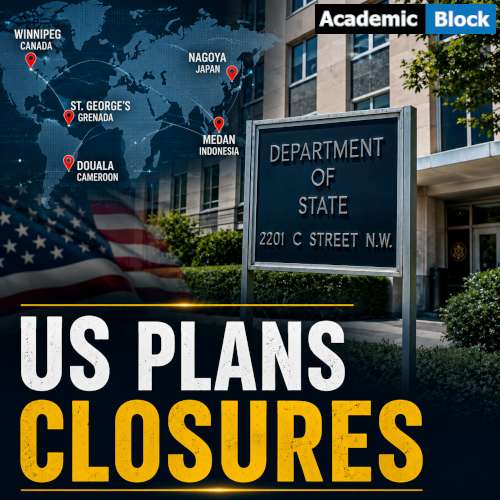
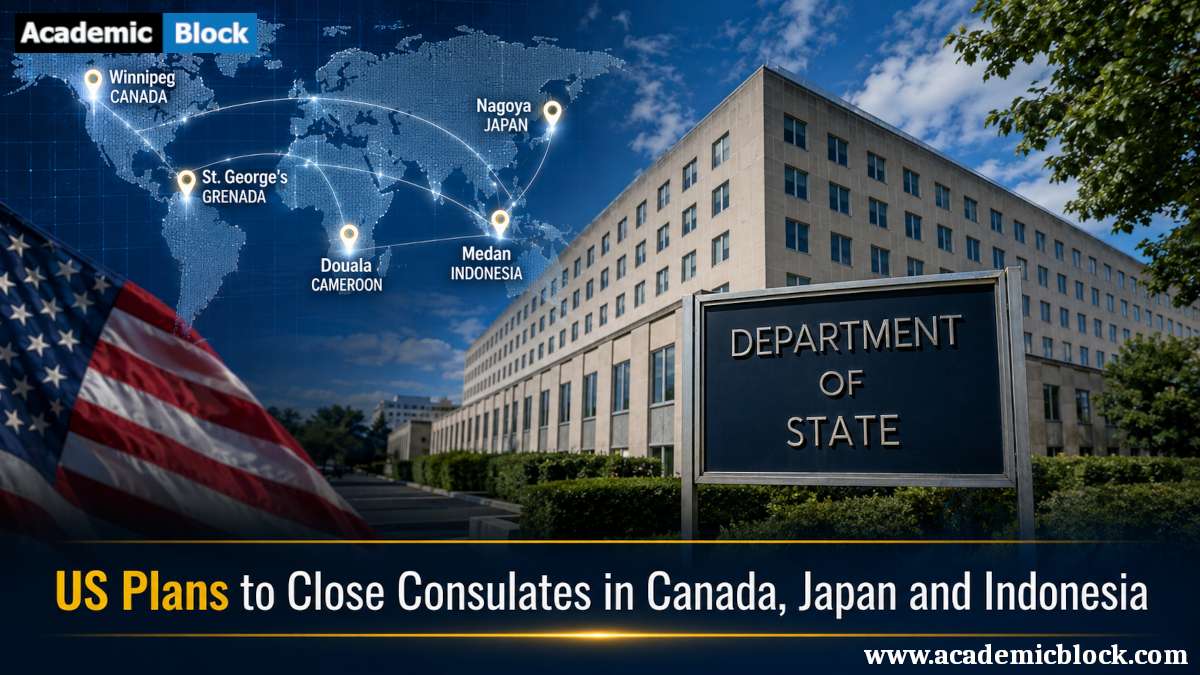
US Plans to Close Consulates in Canada, Japan and Indonesia
The U.S. State Department has notified Congress of plans to close five overseas diplomatic missions, according to people familiar with the matter. The proposal includes the U.S. Embassy in St. George’s, Grenada, the U.S. Consulates in Winnipeg, Canada; Nagoya, Japan; and Medan, Indonesia, and the U.S. Embassy Branch Office in Douala, Cameroon. The notification was sent to select congressional committees late last week but has not been made public.
The proposed closures represent a rare effort by Washington to reduce its overseas diplomatic network outside the context of a war or major geopolitical crisis. The plan forms part of the Trump administration’s broader effort to reduce government spending and reshape the federal bureaucracy under its “America First” agenda. The proposal has now moved into the congressional review process, where it is expected to receive close scrutiny.
Congress Reviews Proposal to Close Five Overseas Diplomatic Missions
The proposal covers five diplomatic facilities that perform different functions across the U.S. global network. It includes the embassy in St. George’s, the consulates in Winnipeg, Nagoya, and Medan, and the Embassy Branch Office in Douala. Embassies manage official diplomatic relations from a country’s capital. However, consulates and branch offices operate outside the capital. They provide visa services, assist American citizens, strengthen commercial ties, and promote U.S. interests at the regional level.
According to people familiar with the matter, the notification was delivered to several congressional committees late last week. Smaller diplomatic posts often receive closer scrutiny during budget reviews because they primarily serve regional needs. Although no final decision has been announced, the proposal has already prompted debate over the future size of the U.S. diplomatic network and its long-term strategic role overseas.
Trump Administration Defends Cuts as Critics Warn of Strategic Risks
Secretary of State Marco Rubio has defended the proposed mission closures, saying the State Department must become more efficient and better aligned with the administration’s fiscal priorities. The White House Office of Management and Budget (OMB) reportedly supported a broader proposal that targeted as many as 30 overseas diplomatic posts. Although the State Department underwent a major restructuring last year that eliminated dozens of bureaus and hundreds of positions, no overseas diplomatic missions were closed during that process.
However, Democrats and several former foreign policy and national security officials argue that reducing America’s diplomatic presence, together with the earlier dismantling of USAID (United States Agency for International Development), could weaken U.S. influence abroad and create opportunities for strategic rivals such as China and Russia. China already maintains diplomatic missions in St. George’s, Nagoya, and Medan, although it has no active diplomatic missions in Douala or Winnipeg. During former President Joe Biden’s administration, the United States opened several new diplomatic missions across the Pacific to strengthen regional partnerships and counter China’s growing influence. As a result,The proposal has expanded the debate beyond budget savings to the future of U.S. diplomacy and America’s long-term strategic influence overseas.
Web Resources on US Plans to Close Consulates in Canada, Japan and Indonesia
1. Reuters.com : US State Department to close consulates in Canada, Japan and Indonesia.
2. Japan Times.co : U.S. to close consulates in Canada, Japan and Indonesia.
3. South China Morning Post : US State Department to close consulates in Canada, Japan and Indonesia.
4. First Post.com : Trump to shut US missions in Canada, Japan, Caribbean amid retreat from global diplomacy.