
UK, France, Germany, and Italy interfere in the Israel Plans on E1 Settlement
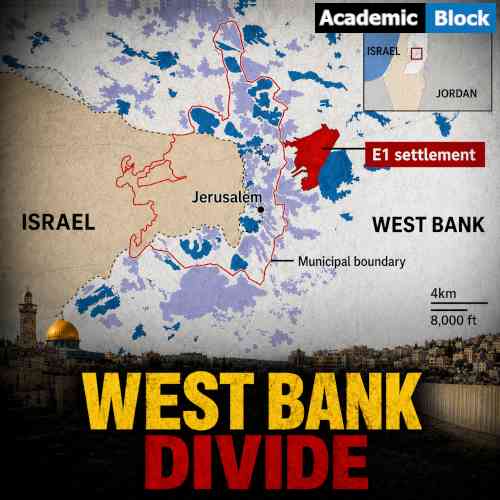
The UK, France, Germany, Italy and Canada have criticized Israel’s decision to advance tenders for 1,234 housing units in the E1 settlement area of the occupied West Bank. These countries called the move “unacceptable” and urged Israel to withdraw the plans immediately. The Netherlands and Norway has also joined the joint statement issued on Thursday. The tender forms part of a wider plan for about 3,400 homes, approved last year. E1 covers roughly 12 square kilometres east of Jerusalem, between East Jerusalem and the Israeli settlement of Maale Adumim.
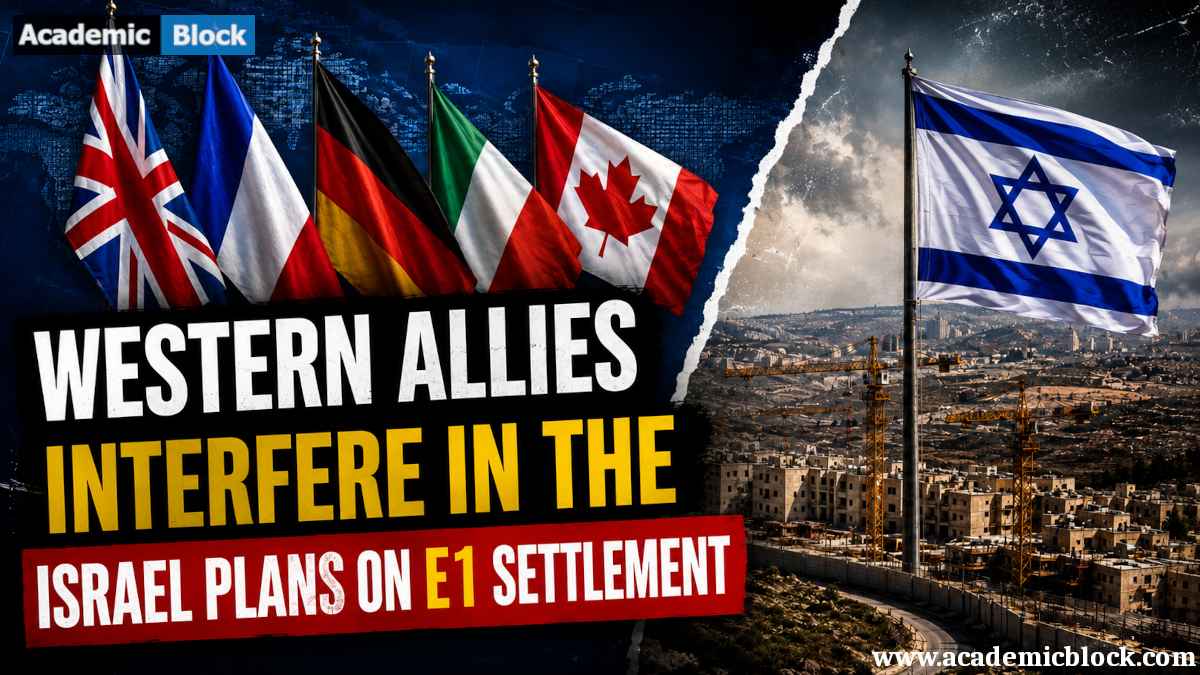
The seven countries have also urged international construction and infrastructure companies not to bid for the E1 settlement project. They warned that companies taking part could face potential legal and reputational risks. The governments said their position reflects broader concerns over the future of the West Bank and the prospects for a two-state solution.
E1 Project Draws Legal and Political Pressure
The International Court of Justice has said Israel’s settlement policy in the occupied Palestinian territory violates international law and called for an end to new settlement activity. The United Nations has also raised concerns over E1, with the secretary-general describing the plan as an “existential threat” to the prospects of a contiguous Palestinian state. The bidding deadline is 19 October, only days before Israel’s 27 October general election. Critics fear that contracts awarded before the vote could make it harder for a future government to reverse the project, adding further political sensitivity to the dispute.
Israel has defended its settlement policy and says it will protect its rights, interests and people. Foreign Minister Gideon Sa’ar described the UK’s earlier position as “deeply unfortunate” for relations between the two countries. Finance Minister Bezalel Smotrich has strongly supported settlement expansion. Israel points to its security and strategic interests, while Palestinians and many international organisations argue that the project could undermine the prospects for a viable Palestinian state.The dispute has therefore become part of a wider international and political struggle over the future of the West Bank.
E1’s Strategic Role and Impact on the Two-State Solution
For Israel, E1 has strategic and political importance because it lies between East Jerusalem and Maale Adumim. Supporters say development could strengthen the territorial link between Maale Adumim and areas around Jerusalem. Critics, however, warn that a large settlement could disrupt connections between the northern and southern parts of the West Bank. They also argue that it could make access between Palestinian areas and East Jerusalem more difficult. The governments backing the criticism have also cited violence against Palestinians and restrictions on the Palestinian economy.
The dispute has made E1 more than a housing project. Palestinians and many international organisations fear that construction could make it harder to create a contiguous Palestinian state linking Ramallah, East Jerusalem and Bethlehem. East Jerusalem remains particularly sensitive because Palestinians see it as the capital of a future Palestinian state. Israel points to its security and strategic interests, while its critics argue that further development could weaken the prospects for a viable Palestinian state. The dispute now centres on whether development in E1 could reshape the West Bank’s geography and further complicate efforts to reach a negotiated two-state solution.
Is the criticism of Israel based on Europe’s Muslim Vote Bank Politics
The growth of Muslim communities in Europe has become an increasingly important factor in the political debate over Israel and Palestine, particularly in countries such as the UK, France, Germany and Italy. European Muslim populations have grown substantially over recent decades, Muslim voters and related civil-society groups have increasingly made the Palestinian issue a significant foreign-policy concern. European Muslims are generally more sympathetic toward Palestinians, Gaza war has also increased political engagement among the Muslim communities. It would be interesting to study the Europe’s changing attitude toward Israel with rise in its Muslim population.
Table below represents the dramatic rise of European Muslim Population.The shift in broader European public opinion in last two decades is striking. A 2025 YouGov survey covering Britain, France, Germany, Italy, Spain and Denmark found that favourable views of Israel had reached their lowest levels. The evidence therefore supports saying that the growing Muslim population has become a factor contributing to political pressure for a harsher European approach toward Israel, particularly through electoral politics and public mobilisation. It appears European political leaders are clearly getting influenced by continuously increasing muslim vote share. This appeasement politics has resulted in allowing large scale immigration from countries like Syria, Somalia and Pakistan, criticizing Israel and US policies. Only time will tell, how this vote bank politics and changing demography will affect the Europe’s destiny, and it’s attitude towards the Israel.
Web Resources On Western Powers Rebuke Israel Over E1 Settlement Plans
1. BBC.com : UK, France, Germany, Italy and Canada condemn Israel’s West Bank settlement project.
2. Euro News.com : European leaders demand Israel halt controversial E1 settlement project in West Bank.
3. CNN.com : Israel moves forward with internationally condemned settlement plan that could ‘bury’ two-state solution.
4. First Post.com : France, Italy, UK and Germany condemn Israel’s settlement project in the West Bank.
5. France24.com : France, Germany, UK and Italy slam Israel’s ‘E1’ West Bank settler project.
6. Pew Research.org : Religious Composition by Country, 2010-2020.
7. Pew Research.org : Measuring attitudes toward Muslims and Jews in Western Europe.