
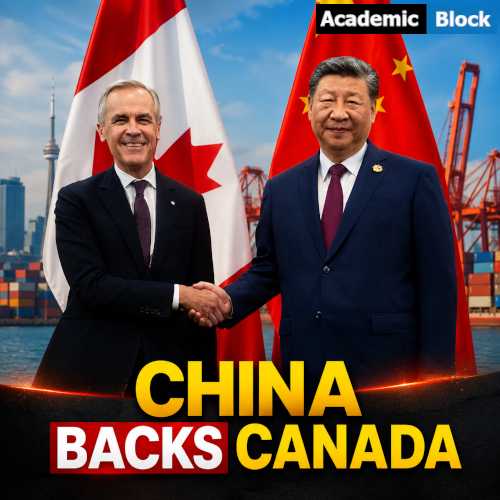
China Media Praises Canada’s ‘Chinese-Style’ Response to US Tariffs
Canada has answered Washington’s latest tariffs with a dollar-for-dollar response, winning praise from China’s state-run Global Times. Prime Minister Mark Carney announced the retaliatory measures on Saturday, hours after new US tariffs on Canadian goods took effect. The announcement followed the collapse of US-Canada trade talks on Friday night. Washington has imposed 50% tariffs on nearly $20 billion worth of Canadian products, while Canada’s matching duties will begin on September 8. The Global Times has described Ottawa’s move as a “Chinese-styled counterattack”, saying Canada had responded firmly to unilateral pressure. It cited US Trade Representative Jamieson Greer, who said China and Canada are the two economies that have retaliated against recent US tariff measures.
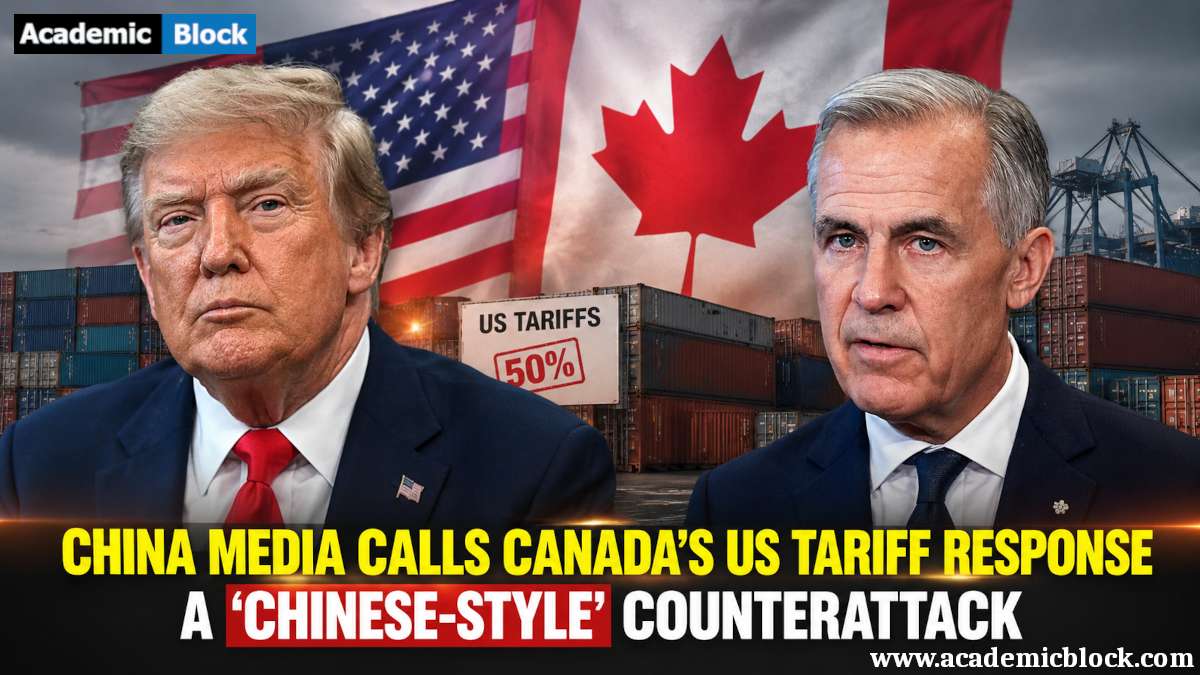
The Chinese newspaper argued that Canada’s response shows even a close US ally can reject trade pressure rather than accept it without resistance. Its editorial also warned that being a US ally does not guarantee protection from tariffs, pointing to the possibility of similar pressure on the European Union, Japan and South Korea.
Canada Targets Key US Industries With Dollar-for-Dollar Tariffs
Canada will impose retaliatory tariffs on several major US industries from September 8. The measures will cover steel, dairy, household appliances, agricultural equipment, pulp and paper, and electronics. Prime Minister Mark Carney has said Canada will match Washington’s tariffs “dollar for dollar,” putting similar pressure on American exporters. The US duties, meanwhile, affect Canadian products including wine, furniture, dairy goods, cement, clothing, fishing rods and hockey equipment.
The escalating dispute could increase costs for businesses because the US and Canada rely on deeply integrated supply chains. Carney said Canada had not taken the decision lightly and described the standoff as an economic conflict, while stressing that it remains a trade dispute rather than a military confrontation. The next phase will depend on whether Washington and Ottawa return to negotiations or allow the new tariffs to place further strain on their closely linked economies.
Canada’s China Ties Add Pressure to the Trade Dispute
Canada has strengthened parts of its trade relationship with China as its dispute with Washington has intensified. In March, China reopened its market to Canadian exports including canola, peas, lobster and crab. Ottawa has also created an annual quota for 49,000 Chinese electric vehicles, allowing them to enter under a 6.1% most-favored-nation tariff rate. Canada had previously imposed a 100% surtax on Chinese EVs, marking a significant shift in its approach to Chinese vehicle imports. In addition, Canada has extended tariff relief for some Chinese steel products as part of its broader effort to diversify trade.
China is Canada’s second-largest merchandise trading partner, making the relationship economically important. However, the closer ties have raised concerns among some US officials and trade critics as Washington seeks to reduce China’s role in North American supply chains. US officials have focused on Chinese steel, aluminum and transshipment risks. Transshipment occurs when goods travel through a third country before reaching their final market. Canada’s closer trade ties with China could become a new fault line in the US-Canada dispute, as Beijing gains a larger role in Ottawa’s efforts to diversify its markets and reduce reliance on Washington. Meanwhile, the Global Times has portrayed Canada’s response to US tariffs as a challenge to US protectionism, adding another point of tension to the wider trade dispute.
Table below represents Why Canada Matters to China
Web Resources On Canada’s ‘Chinese-Style’ Response to US Tariffs
1. Global Times : Canada launches a ‘Chinese-styled counterattack’, a heavy blow.
2. Fox Business : A powerful country on the other side of the world is quietly shaping Trump’s latest trade fight.
3. Straits Times : China media hails Canada’s ‘Chinese-style’ tariff retaliation.