
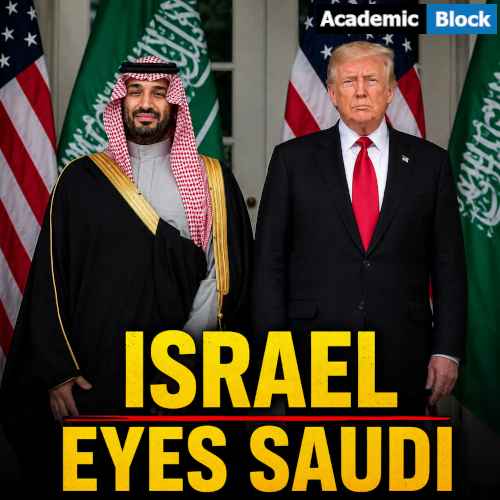
Trump Sends Saudi Nuclear Deal to Congress, Demands Israel Recognition
President Donald Trump has sent a proposed Saudi nuclear deal to Congress for review, opening a formal process for the 30-year civilian nuclear agreement. The pact would allow US companies to export civilian nuclear technology to Saudi Arabia. However, the Trump administration has maintained that the agreement will move forward only after Riyadh normalizes diplomatic relations with Israel and joins the Abraham Accords. This condition gives the deal a major diplomatic dimension beyond nuclear energy.
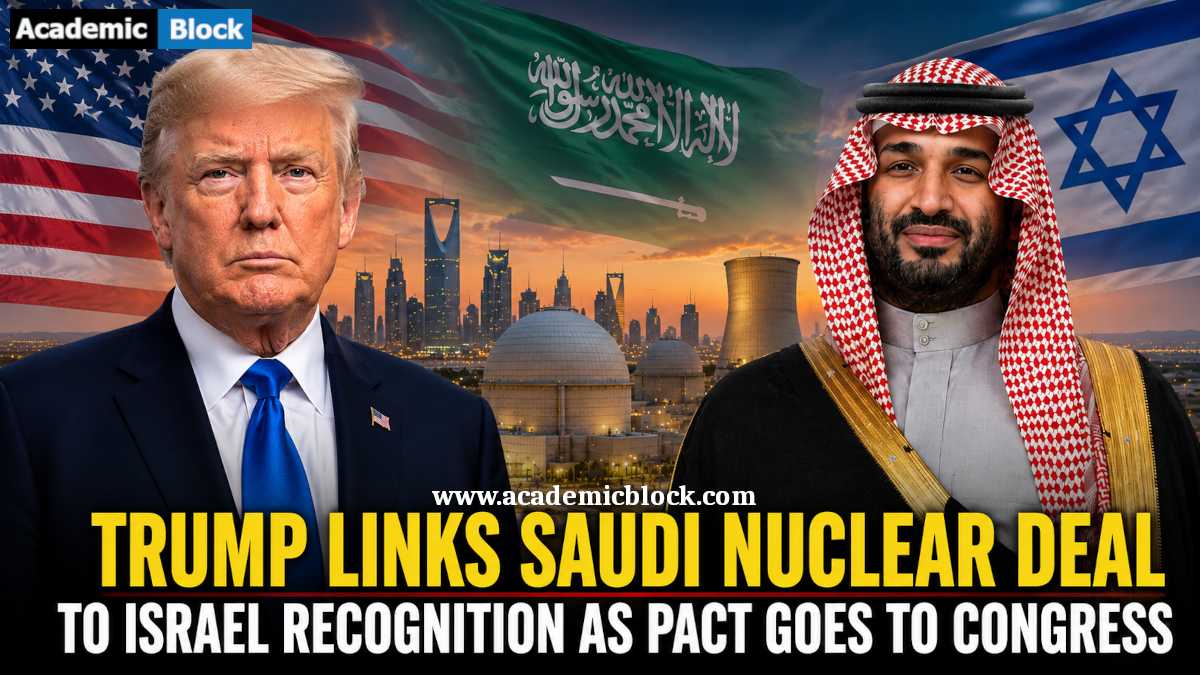
The agreement, reached in July, includes plans for AP1000 nuclear reactors in Saudi Arabia. The project could be worth tens of billions of dollars and would give Westinghouse a major role in the kingdom’s emerging nuclear sector. Congress now has 90 session days to review the agreement. Lawmakers can seek to block the pact, although Trump can veto a congressional rejection. As a result, the Saudi nuclear deal has become both a major energy project and an important test of Washington’s broader Middle East strategy.
Trump’s Saudi Nuclear Deal Becomes a Bigger Fight Over Israel, Iran and US Influence
Trump has kept Saudi-Israel normalization at the heart of the nuclear agreement. Saudi Arabia has not joined the Abraham Accords, which established diplomatic ties between Israel and the United Arab Emirates, Bahrain and Morocco. Riyadh, however, has demanded a credible and irreversible path toward an independent Palestinian state before recognizing Israel. Washington wants to use the deal to advance Saudi-Israel normalization.
The deal has also raised concerns about Iran and nuclear proliferation. Iran’s nuclear programme has become an important factor in Saudi Arabia’s security calculations. Riyadh does not want to face a strategic disadvantage if Tehran moves closer to developing a nuclear weapons capability. Saudi leaders have also sought stronger US security guarantees, advanced weapons and economic cooperation. However, some Democratic lawmakers and nonproliferation experts have questioned the absence of an explicit ban on Saudi uranium enrichment and nuclear-waste reprocessing. Both activities can have civilian uses, but they can also create pathways to nuclear weapons material. The Trump administration says the Saudi pact contains the nonproliferation measures required under US law. The debate has therefore placed Saudi Arabia’s nuclear ambitions, Iran’s regional threat and US influence at the center of the agreement.
The US-China-Russia Rivalry Behind Saudi Arabia’s Nuclear Future
The Saudi nuclear deal carries a wider strategic value for Washington. A civilian nuclear programme can create long-term ties through reactor construction, fuel supplies, maintenance, training and technical support. By giving US companies a leading role, the agreement could deepen America’s economic and strategic relationship with Saudi Arabia for decades. The planned AP1000 reactors would also give Westinghouse an important position in the kingdom’s emerging nuclear sector. For Washington, the deal therefore offers more than a commercial opportunity. It can also help preserve US influence in a strategically vital Gulf state.
Saudi Arabia, however, has several options as it develops its nuclear programme. China and Russia have also sought stronger roles in the kingdom and remain influential across the Middle East. Riyadh can use those competing interests to seek better terms while protecting its strategic independence. The congressional review now moves the agreement into a new phase, but the bigger test will extend beyond nuclear technology. Trump must balance Israel normalization, nuclear nonproliferation and Saudi Arabia’s strategic ambitions, while Washington competes with Beijing and Moscow for long-term influence. How that balance develops could shape America’s position in the Gulf for years to come.
Web Resources On Trump Sends Saudi Nuclear Deal to Congress
1. Reuters.com : Trump sends Saudi nuclear deal to Congress but says Riyadh must recognize Israel.
2. Times of Israel : White House presents Saudi nuke deal to Congress, but insists Riyadh recognize Israel.
3. Japan Times.co : Trump sends Saudi nuclear deal to Congress but says Riyadh must recognize Israel