
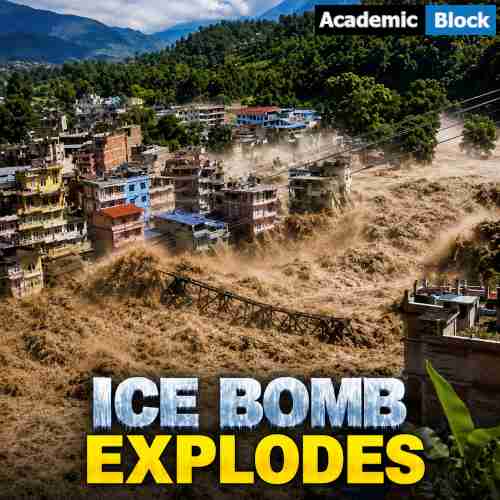
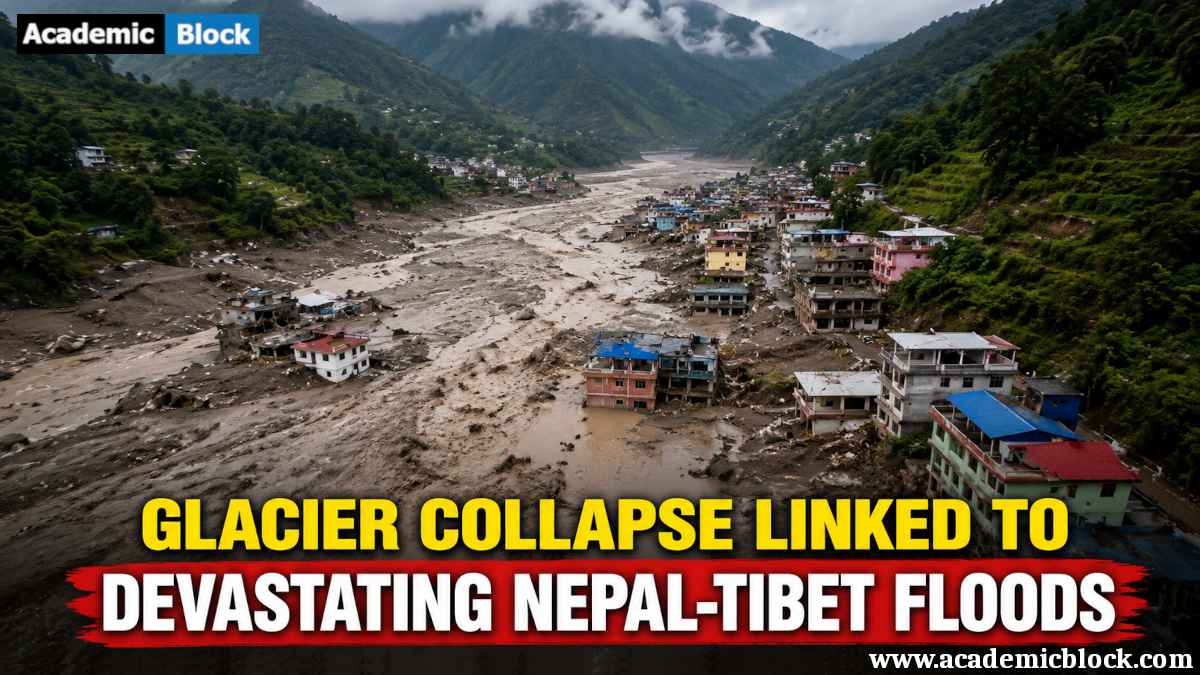
Scientists Link Glacier Collapse to Devastating Nepal-Tibet Floods
Scientists say a glacier collapse likely triggered the devastating flash flood near Nepal’s border with Tibet on August 26. Satellite images reviewed by experts show that the lower section of a glacier broke away at about 5,200 metres and plunged roughly 1,200 metres into the valley. The falling ice gathered rocks and sediment, creating a powerful ice-rock avalanche. The debris then entered the Lhende River system and pushed a massive surge toward the Bhote Koshi and Trishuli rivers. Water levels downstream reportedly rose by as much as nine metres within 30 minutes, highlighting the speed and force of the disaster.
Early reports had suggested that a magnitude 4.4 earthquake caused the event. However, the US Geological Survey (USGS) later said that no tectonic earthquake had occurred. Instead, the seismic signal came from the glacier collapse and the resulting debris flow. Scientists are still investigating why the glacier broke apart. Rapid snowmelt, unusually warm conditions and local construction have emerged as possible contributing factors. However, experts caution that current evidence does not prove that climate change directly caused this specific collapse. The findings nevertheless underline the need for closer monitoring of unstable glaciers and high-altitude valleys across the Himalayan region.
Glacier Collapse Sent Ice, Rock and Water Through Nepal’s River System
The avalanche blocked part of the Lhende River, creating a temporary natural dam that held back water, ice and sediment. When the barrier broke, the stored material rushed downstream through the Bhote Koshi and Trishuli river systems. The resulting flood swept through Nepal’s Rasuwa district, where several hydropower projects operate. It damaged homes, roads, bridges and critical power infrastructure. In addition, thick debris cut off several communities, making access difficult for rescue teams and emergency workers.
The flooding has also created a severe humanitarian crisis. Authorities feared that the death toll could rise beyond the nearly 170 bodies recovered, while almost 1,500 people, including at least 700 foreigners, remained missing in the latest assessment. The affected corridor is an important route for travellers and pilgrims moving between Nepal and Tibet. However, heavy debris and difficult terrain have slowed rescue efforts. Rescue teams have continued searching for missing people and reaching isolated communities.
Warming Himalayas Raise Questions About Future Glacier Risks
The wider Himalayan trend remains concerning. The United Nations said in 2023 that Nepal’s mountains had lost nearly one-third of their ice in just over 30 years because of global warming. Another assessment found that glaciers across the Hindu Kush Himalayas lost ice 65% faster between 2011 and 2020 than during the previous decade. These figures show how quickly the region’s frozen landscape has changed. They also raise concerns about the stability of glaciers and the communities that depend on Himalayan rivers.
The recent disaster has renewed attention on this changing Himalayan environment. Satellite observations indicated that significant snow may have melted before the glacier collapsed. Scientists say rising temperatures can accelerate glacier retreat and weaken mountain permafrost, which helps keep ice and rocks stable on steep slopes. However, researchers have not established a direct climate-change link to this specific collapse. In addition, continued warming could increase risks from unstable glaciers, landslides and sudden floods. The latest event therefore highlights the growing challenge for mountain communities, river valleys and critical infrastructure across the region.
Web Resources On Scientists Link Glacier Collapse to Devastating Nepal-Tibet Floods
1. BBC : Collapsed glacier likely caused devastating Nepal-Tibet floods.
2. Reuters : Death toll mounts, more than 1,000 missing in Nepal and China after Himalayan flood.
3. Guardian : Nearly 1,400 missing, mostly tourists, after Nepal-Tibet flash flood kills at least 270.