
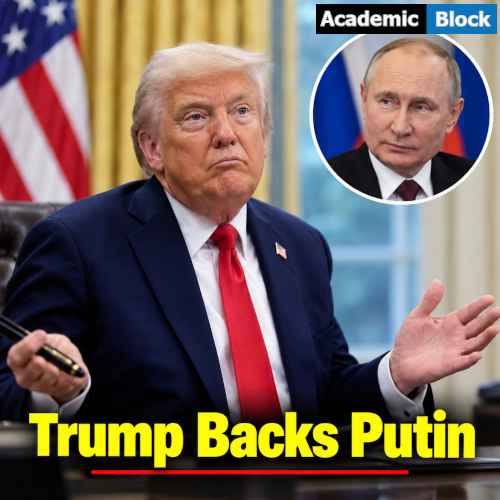
Trump Dismisses Russian Sabotage Claims Against NATO Allies, Backs Putin
U.S. President Donald Trump has downplayed allegations of Russian sabotage against NATO allies. At the White House on September 4, Trump said Vladimir Putin was not seeking to attack NATO territory. His comments came days after Germany accused Russia of orchestrating an attempted drone attack at Leipzig/Halle Airport. Berlin said intelligence and police investigations pointed to Russian state involvement, while Moscow rejected the allegation. Trump also rejected the suggestion that Moscow’s actions represented a direct attack on NATO, saying he knows Putin well and does not believe he wants to target the alliance.
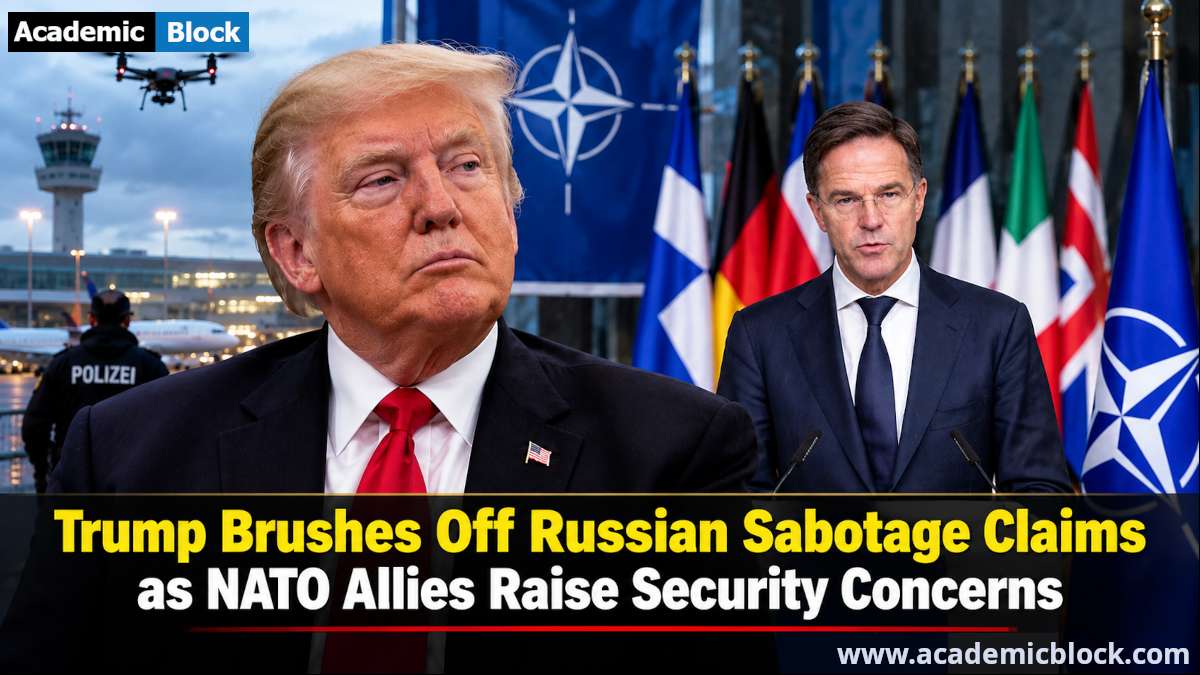
Trump has focused on preventing a direct Russia-NATO confrontation while maintaining communication with Moscow. His approach also reflects his demand for European allies to take greater responsibility for their own defense. At the same time, his comments have raised a crucial question for the alliance, how strongly would the United States respond if Russia tested a NATO member through actions that fall below the level of an open military attack?
Trump’s NATO Strategy: More European Defense, Less U.S. Burden Amid Iran War Divisions
President Donald Trump’s latest comments on Russia and NATO reflect his broader effort to reshape America’s role in the alliance. Trump has repeatedly urged wealthy European NATO members to spend more on defense and rely less on the United States. His strategy aims to reduce the U.S. financial and military burden while pushing Europe to take greater responsibility for regional security. However, Trump also wants to maintain U.S. influence within NATO and keep communication open with Vladimir Putin, particularly over the Ukraine war. He believes continued dialogue can reduce the risk of a direct Russia-NATO confrontation.
The Iran war has added another test for Trump’s NATO strategy by exposing differences among allies over U.S. military priorities. NATO members are not automatically required to join American operations outside the alliance’s collective-defense mission. However, their differing positions have shown the limits of allied support for Washington beyond NATO’s core mandate. These divisions could also shape European defense spending, military planning and strategic decisions. Trump therefore faces a difficult challenge, he must encourage Europe to carry more of NATO’s defense burden while preserving alliance unity and maintaining confidence in America’s long-standing security commitments.
NATO’s Security Dilemma: Deterrence Without Escalation
NATO faces a growing challenge from gray-zone threats, including sabotage, espionage, cyberattacks, drone incidents and damage to critical infrastructure. These actions often stay below the level of an open military attack. However, they can still disrupt essential services and create serious security risks. Unlike a missile strike, such incidents can be difficult to attribute with certainty. That makes a unified NATO response more difficult. The Leipzig/Halle Airport drone incident has highlighted this dilemma. German authorities said intelligence had pointed to Russian state involvement and took diplomatic measures against Moscow. NATO Secretary General Mark Rutte also backed Germany’s response, showing that the alliance has treated such incidents as a serious security concern.
Donald Trump’s restrained language toward Moscow could help preserve diplomatic channels and reduce the risk of a wider confrontation. However, too much restraint could weaken deterrence if Russia sees it as a lack of resolve. NATO has therefore faced a difficult balancing act, it must deter hostile actions without allowing every gray-zone incident to trigger a broader conflict. In addition, the alliance must make clear that attacks below the threshold of war will still carry consequences. The challenge for NATO is to show strength without turning every provocation into a path toward escalation.
Web Resources On Trump Dismisses Russian Sabotage Claims
1. POLITICO: Trump brushes off accusations of Russian sabotage against NATO allies.
2. Reuters: Trump says Putin will not attack NATO territory, downplays Ratcliffe trip.
3. Yahoo News: Trump defends Putin after Russia blamed for German airport drone attack.