BRICS 2026 in India and the Rise of a New World Order
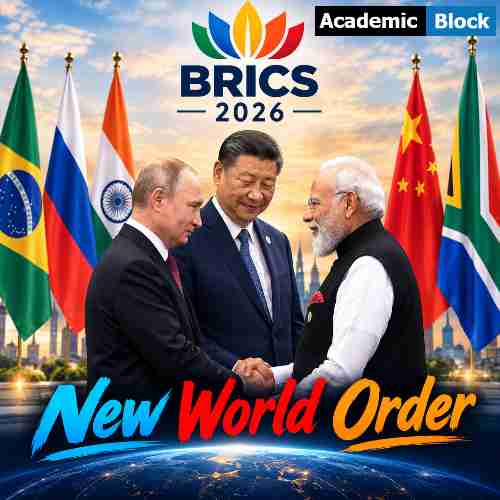
New Delhi has become the stage for one of the most consequential gatherings of emerging powers in recent years. The 18th BRICS Summit, held in India on September 12–13, 2026, has brought together an expanded group of countries at a moment when the global political and economic system is undergoing a profound transformation. India assumed the BRICS chairship on January 1, 2026, and placed resilience, innovation, cooperation and sustainability at the centre of its agenda. The summit has also coincided with the 20th anniversary of BRICS, giving the gathering a significance that extends beyond the immediate issues discussed by its leaders.
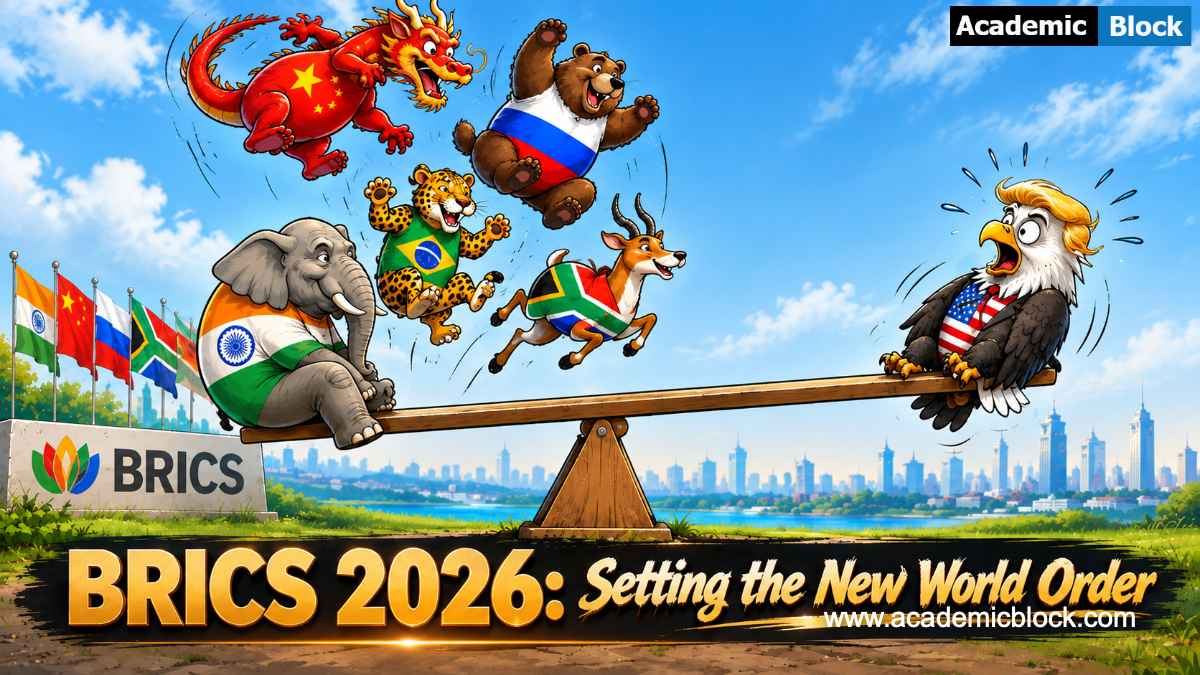
The question surrounding BRICS is no longer simply whether this group can challenge the influence of the established Western powers. A larger question is: If the world is moving toward a more genuinely multipolar system where new powers will shape international affairs?
The New Delhi summit does not, by itself, answer that question. However, it has demonstrated that the international system has already become more complicated than the largely Western-led order that dominated the decades following the Cold War.
BRICS Reflects a Changing World
BRICS began as a grouping of Brazil, Russia, India and China, with South Africa joining later. Its expansion has substantially changed the character of the organization. The expanded grouping now includes major economies and energy-producing countries from Asia, Africa and the Middle East. India’s official BRICS material identifies 11 members: Brazil, China, Egypt, Ethiopia, India, Indonesia, Iran, Russia, Saudi Arabia and the United Arab Emirates, along with South Africa.
This expansion matters because the organization is no longer simply a forum for four or five large emerging economies. It has become a much broader platform linking countries with different political systems, economic structures and foreign-policy priorities.
That diversity is both its strength and its weakness. The members do not always agree with one another. India and China have unresolved strategic differences. Iran and the United Arab Emirates have had sharply different positions on regional security. Russia’s confrontation with Western countries has also created divisions over the role of BRICS in international politics.
The New Delhi BRICS Declaration and the Push for a More Representative Order
The summit concluded with the adoption of the New Delhi Declaration. The document addresses a wide range of issues, including international governance, conflicts, terrorism, trade, energy, climate change and technological cooperation. It also calls for greater multilateralism and reforms that would make global institutions more representative and responsive to present-day realities.
This is important because the debate over the future international order is not only about military power. It is also about who gets to make the rules. The United Nations Security Council, International Monetary Fund, World Bank and other major institutions were created in a very different geopolitical era. The economic weight of Asia and other parts of the developing world has grown dramatically since then.
BRICS members have therefore argued that the institutions of global governance should reflect this change. The argument is not new. However, the growing size of BRICS has given it greater political weight.
The Dollar Question Has Become More Complicated
The role of the US dollar has been another major issue in discussions surrounding BRICS. For years, some observers have interpreted the group’s financial cooperation as a possible attempt to reduce dependence on the dollar. However, the reality is more cautious. India made clear after the 2026 summit that there is no BRICS common currency proposal. Instead, members are examining ways to increase the use of national currencies in bilateral and multilateral trade and to improve payment and settlement mechanisms.
That distinction is important. Creating a common currency would require an extraordinary level of economic and monetary coordination among countries with very different economies and central-bank policies. Increasing the use of national currencies is a much more practical objective. If such systems expand, they could gradually reduce the need for the dollar in some forms of trade. That would not mean the end of dollar dominance. The US currency remains deeply embedded in global finance, trade and investment.
However, even a gradual diversification of international payments could contribute to a more fragmented and multipolar financial system.
A Summit Marked by Consensus and Caution
Prime Minister Narendra Modi has chaired the two-day meeting at Bharat Mandapam. Leaders from the 11-member grouping have attended, including Chinese President Xi Jinping and Russian President Vladimir Putin. The theme has focused on resilience, innovation, cooperation and sustainability.
Negotiators have worked through the night to bridge differences, especially over language on tensions in West Asia. Iran and the United Arab Emirates have held divergent views. Yet Modi has secured consensus. The New Delhi Declaration has been adopted unanimously. It has expressed serious concern over attacks on civilian infrastructure and nuclear facilities. It has also called for maximum restraint without naming specific countries.
The declaration has backed broader reform of the United Nations Security Council. It has reiterated support for a greater role for India and Brazil. China and Russia have already held permanent seats, and the text has recalled earlier commitments from past summits.