
Hegseth Proposes US-ASEAN Defense Framework Amid China Tensions
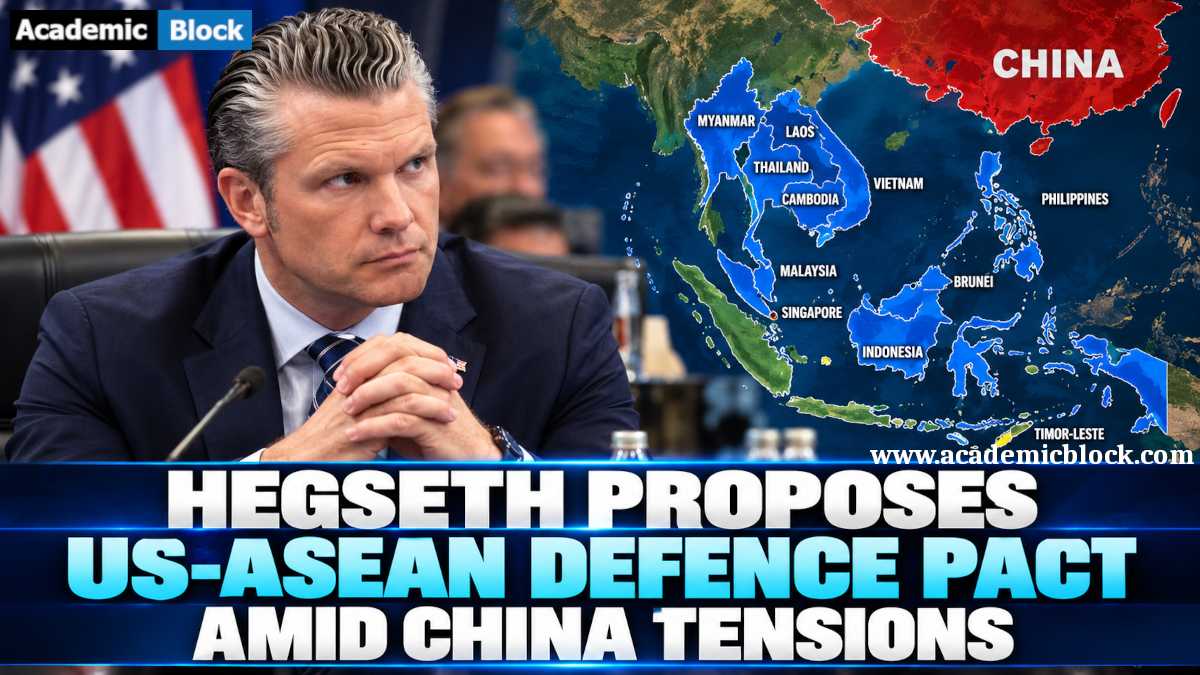
U.S. Defense Secretary Pete Hegseth has proposed a new defense cooperation framework between Washington and the Association of Southeast Asian Nations (ASEAN). He announced the initiative during regional defense meetings in Cebu, the Philippines, on October 28, 2026.
The initiative comes as the ongoing Iran war raises questions about Washington’s ability to sustain its military commitments across multiple regions. Against this backdrop, the proposal underscores the importance of maintaining a strong U.S. presence in Southeast Asia as regional powers face rising geopolitical tensions and evolving security challenges.
US-ASEAN Framework Focuses on Maritime Security and Naval Cooperation
U.S. Defense Secretary Pete Hegseth has called for stronger maritime surveillance, closer coordination among regional navies and greater military interoperability under the proposed US-ASEAN defense framework. He also emphasized joint training, shared military planning and practical cooperation to help Southeast Asian partners strengthen their defense capabilities and prevent conflict.
Hegseth said the United States was ready to begin developing the framework with Singapore as it prepares to assume the chairmanship of the ASEAN Defense Ministers’ Meeting-Plus (ADMM-Plus) in 2027. The forum brings ASEAN’s 11 members together with eight dialogue partners, including the United States, China, Japan and Australia. As maritime tensions persist, the proposed framework could strengthen naval coordination, although its specific terms and commitments remain to be worked out.
China Tensions and Iran War Complicate US Indo-Pacific Strategy
The South China Sea remains a major source of tension between China and Southeast Asian countries. Beijing claims almost the entire waterway, while the Philippines, Vietnam and Malaysia claim parts of it. The Philippines, a U.S. treaty ally, has repeatedly clashed with Chinese forces over disputed waters. In addition, Manila reported that China’s military and coast guard presence in contested areas nearly doubled in September. The Philippine military also monitored China’s Liaoning aircraft carrier group near the southern Philippines as it moved toward the Celebes Sea.
Meanwhile, the Iran war has disrupted global shipping and oil markets, placing additional pressure on U.S. military resources. These disruptions have raised energy security concerns across Southeast Asia and prompted questions about Washington’s ability to maintain its Indo-Pacific commitments while addressing conflicts elsewhere. However, ASEAN members have different diplomatic and security priorities, and they lack a unified approach to China.
Why Does the US Want Stronger Defense Ties With ASEAN?
The United States wants to strengthen defense cooperation with ASEAN to maintain its influence in Asia as China expands its military and strategic reach. The South China Sea remains a major flashpoint, with China and several Southeast Asian countries claiming overlapping maritime areas. Therefore, Washington aims to improve regional maritime security and help its partners respond to potential threats.
In addition, Southeast Asia sits along vital shipping routes that carry energy supplies and goods to global markets. Ultimately, the proposed framework aims to reassure Southeast Asian partners of Washington’s commitment to regional security while countering China’s growing influence in the Indo-Pacific.
Web Resources On Hegseth Proposes US-ASEAN Defense Pact
1. Reuters : Hegseth reassures Southeast Asia of US commitment, pledges stronger defence ties.
2. The Hill : Hegseth seeks to assuage Southeast Asian partners on trip to Philippines.
3. South China Morning Post : Hegseth pitches US-Asean defence framework but will it be a hard sell?
4. Channel News Asia : Hegseth proposes ‘ambitious’ US-ASEAN defence framework at Philippine summit.