
Abdul El-Sayed’s Repeated Clashes With Reporters Draw Fresh Scrutiny
Michigan senator-elect Abdul El-Sayed is facing renewed scrutiny over his treatment of journalists following a heated confrontation with a Sky News correspondent. The exchange occurred on November 3, shortly before El-Sayed won Michigan’s 2026 Senate election.
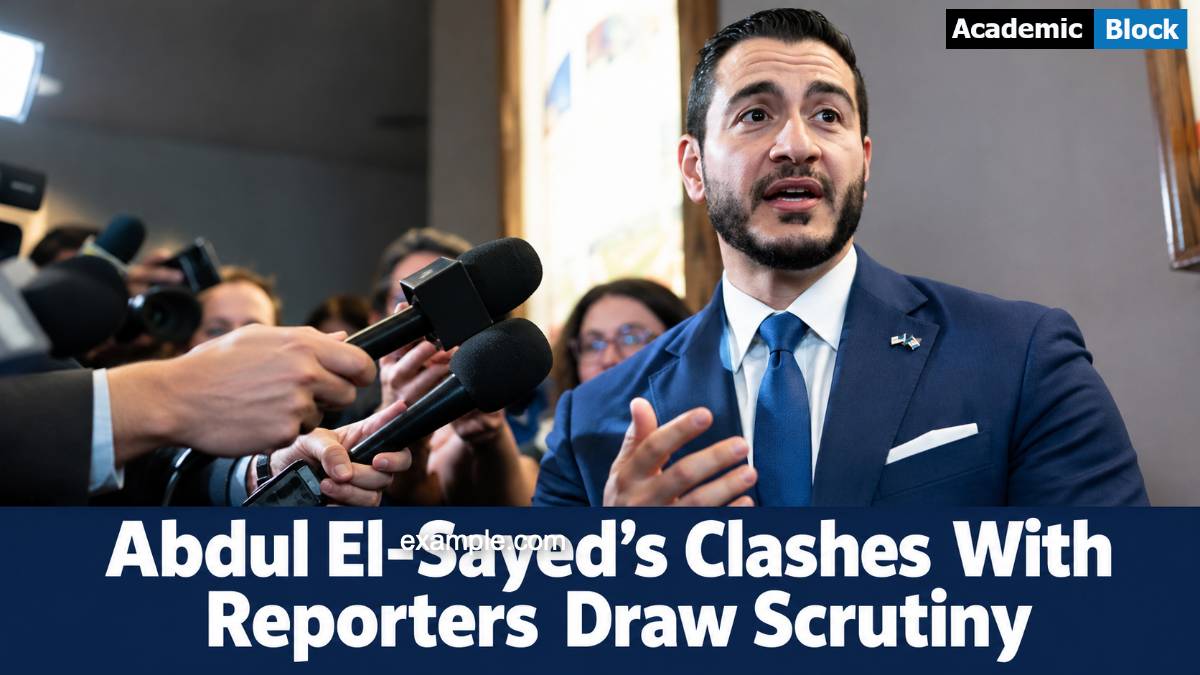
Reporters had questioned him about his political positions, alleged family links to the Muslim Brotherhood and views on foreign policy. El-Sayed pushed back against several of those questions, sometimes accusing journalists of relying on weak evidence or pursuing sensational coverage. The latest confrontation has intensified debate over how political candidates should respond to difficult questions and maintain professional relations with the press.
Sky News Confrontation and Earlier Disputes Bring El-Sayed’s Media Relations Under Scrutiny
During the Sky News confrontation, Michigan senator-elect Abdul El-Sayed questioned why correspondent James Matthews should interview him when the British journalist could not vote in Michigan. He also criticized the network’s American audience, placed his hands on Matthews’ shoulders, asked him to stop following him and warned him against getting in his way. The exchange quickly spread across social media and attracted criticism from political commentators and media figures. Matthews defended his reporting, saying the election had international significance. He also maintained that El-Sayed questioned him before giving him an opportunity to ask anything. Sky News backed Matthews, saying he was doing his job for the network’s international audience.
The confrontation has also revived attention to El-Sayed’s earlier disputes with the media. During an interview about allegations involving the Muslim Brotherhood, he and Fox News anchor Bret Baier repeatedly interrupted each other. In September, El-Sayed criticized comedian and television host Bill Maher during an interview with Chuck Todd. He also said he wanted to challenge Maher on his show. Meanwhile, Heritage Foundation media fellow Tim Young criticized El-Sayed’s responses to difficult questions. However, communications trainer Jocelin Martinez offered a more favorable assessment of his direct communication style. These contrasting views have added to the scrutiny of El-Sayed’s media relations, particularly his approach to uncomfortable questions and his willingness to engage with journalists.
Professional Boundaries Matter When Politicians Face Difficult Questions
Journalists have a responsibility to ask questions that serve the public interest. Political leaders, in turn, have the right to challenge those questions or decline to answer. However, both sides must respect professional boundaries. Insulting reporters, threatening them or repeatedly interrupting them can damage a serious discussion. A politician can explain why a question is unfair or misleading. However, personal attacks rarely address the issue itself. In addition, threats against journalists over their reporting can raise serious concerns about press freedom and their safety.
Physical behavior also plays an important role in interactions between politicians and journalists. Pushing a reporter, deliberately blocking their path or using unwanted physical contact to intimidate them can create a hostile environment. A journalist’s nationality also does not determine whether their questions deserve attention. Ultimately, political leaders must be willing to face tough questions with respect, because accountability and press freedom are essential to a healthy democracy.
Web Resources on Abdul El-Sayed’s Clashes With Reporters Draw Scrutiny
1. FOX NEWS : Abdul El-Sayed’s pattern of hostile exchanges with reporters draws scrutiny after viral moment.
2. NEW YORK POST : Abdul El-Sayed’s pattern of heated exchanges with reporters draws further scrutiny after latest meltdown.