
EU Considers Tougher China Trade Measures as Export Imbalance Grows
European Union leaders met in Brussels on October 15, 2026, to discuss China’s growing exports and their impact on European industry. The discussions focus on protecting local manufacturers while addressing EU’s widening trade deficit with the world’s second-largest economy, China. Leaders are considering stronger trade measures beyond a preliminary agreement limiting Chinese hybrid car imports, since most industry groups blame those shipments for factory closures. However, they must also protect European businesses without damaging vital economic ties with Beijing, while building new trade tools.
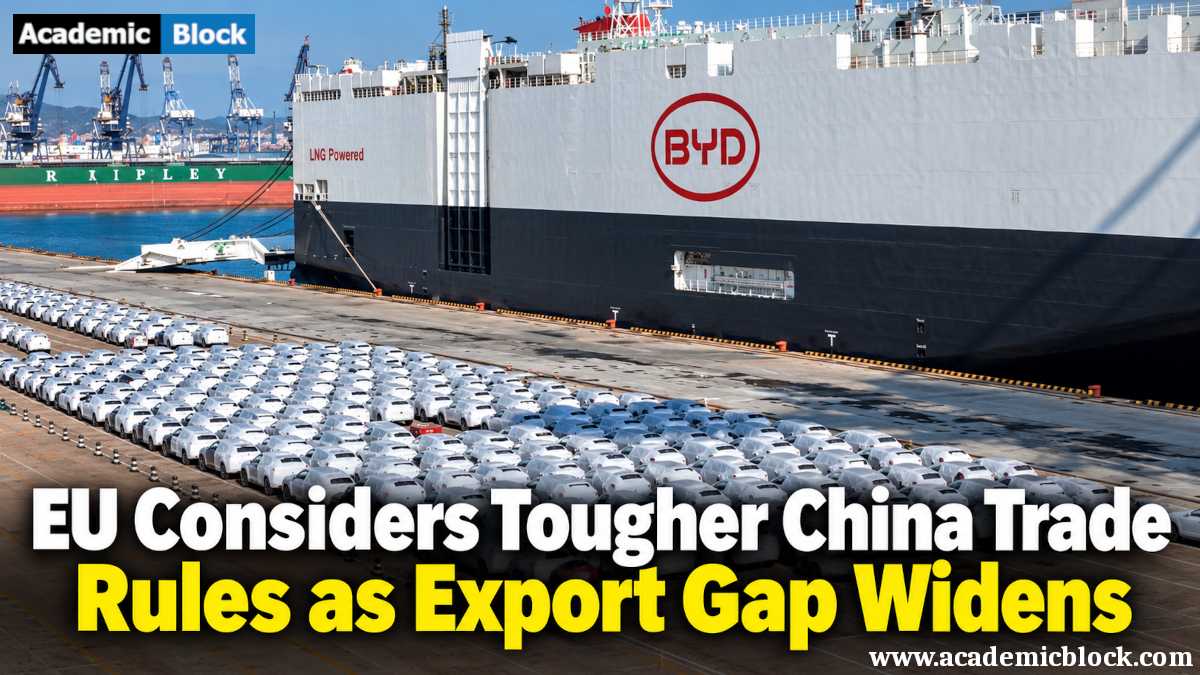
Political pressure has added urgency to the debate, as concerns about industrial decline keeps fueling public frustration. In June, EU leaders gave the European Commission until October to secure concrete progress with China. A preliminary vehicle agreement followed last week, proposing an annual cap of 350,000 Chinese hybrid car imports. The limit would increase by 6% each year over four years, while Brussels expects the arrangement to reduce shipments substantially. Yet the larger problem remains, as the goods deficit with China had reached €360 billion ($400.4 billion) in 2025. That is roughly €1 billion a day, and it is on course to rise further this year.
EU Targets Chemicals, Steel and Machinery as China Trade Tensions Grow
European officials view the hybrid car agreement as an initial step, not a solution to the wider trade imbalance. Economy Commissioner Valdis Dombrovskis has called for concrete action rather than prolonged discussions with Beijing. Chemicals, furniture, machinery, steel and wind turbine components are among the sectors drawing attention. Brussels also wants European companies to gain better access to the Chinese market. In addition, the EU is preparing to examine concerns involving polyethylene terephthalate, or PET, a plastic widely used in packaging.
Beijing rejects claims that its trade practices are creating an unfair imbalance and has warned against protectionism. However, Vice Premier of the People’s Republic of China, He Lifeng has indicated a willingness to cooperate in discussions with France. A formal EU-China meeting is planned for March, offering another opportunity to address trade concerns. Meanwhile, China’s EV (Electric Vehicle) industry faces a separate policy change next April. The export VAT rebate for electric cars is set to fall from 13% to 9%, potentially adding pressure on manufacturers already facing intense competition.
Germany Backs Tougher EU China Trade Rules as Export Pressures Mount
German Chancellor Friedrich Merz and French President Emmanuel Macron want stronger powers to restrict companies accused of unfair trade practices. Their proposal could draw on the US Section 301 model, which allows Washington to respond with swift action against certain (unfair) foreign trade practices. Beijing’s commerce ministry has warned that Europe would suffer the consequences of such a kill-switch plan. German officials have also discussed the proposed tool as a possible response if China restricts rare earth exports. The shift marks a notable change for Berlin, which strongly opposed EU tariffs on Chinese electric vehicles two years ago. Germany’s changing position reflects the growing pressure on its export-driven economy. China has fallen from Germany’s second-largest export market in 2021 to its ninth-largest. German car exports to China dropped 66% between 2022 and 2025, while imports of Chinese-made cars into Germany jumped 121 percent in the first seven months of 2026.
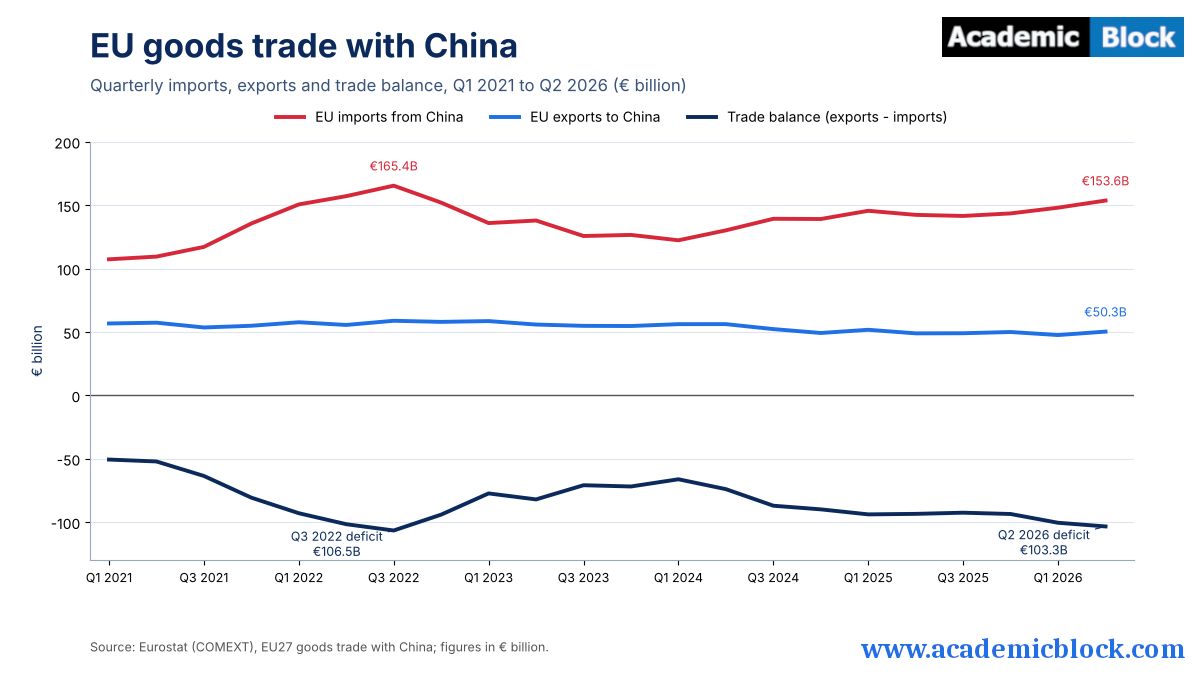
The country’s machinery industry has also warned about the risks of unfair competition and industrial decline. Meanwhile, the EU retains considerable economic leverage because China exports more goods to the bloc than to the United States. Chinese exports to the EU reached $254 billion in the first half of the year, compared with $172 billion to the US. Ultimately, the EU’s challenge is to turn growing concern over China’s trade advantage into a coordinated response. The hybrid car agreement offers a starting point, but the imbalance extends far beyond vehicles to several other sectors. Germany’s stronger support for trade protections could help Brussels pursue a firmer strategy. However, new measures could invite retaliation and complicate relations with Beijing. The decisions ahead will influence European jobs, industrial competitiveness and supply chains for years to come.
Web resources on EU trade defense measures against China
1. Reuters : Pressured at home, EU leaders weigh China trade steps.
2. South China Morning Post : EU leaders to ‘urgently’ call for new trade weapons to tackle China shock.
3. Reuters : EU leaders to tackle China exports, energy prices, budget at summit.
4. DW.com : Why Germany is backing tougher EU trade defenses against China.