
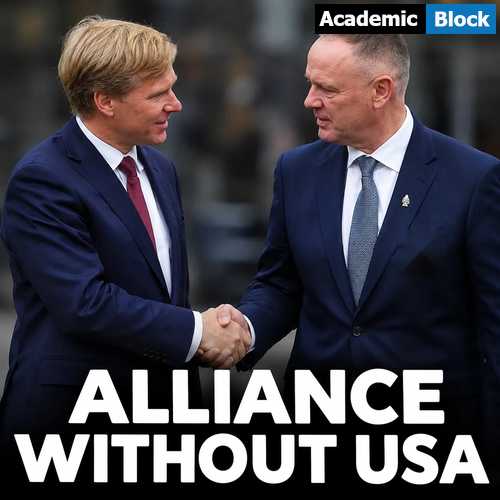
Europe’s Middle Powers Build New Alliances Amid US Security Uncertainty
European countries and Canada are expanding their defense partnerships as questions grow over America’s long-term security commitments. They are forming smaller coalitions to strengthen their military capabilities and address shared threats. The shift also reflects Canadian Prime Minister Mark Carney’s call for middle powers to work together amid a changing global order. Rather than relying entirely on Washington, these countries want greater control over their own security priorities.
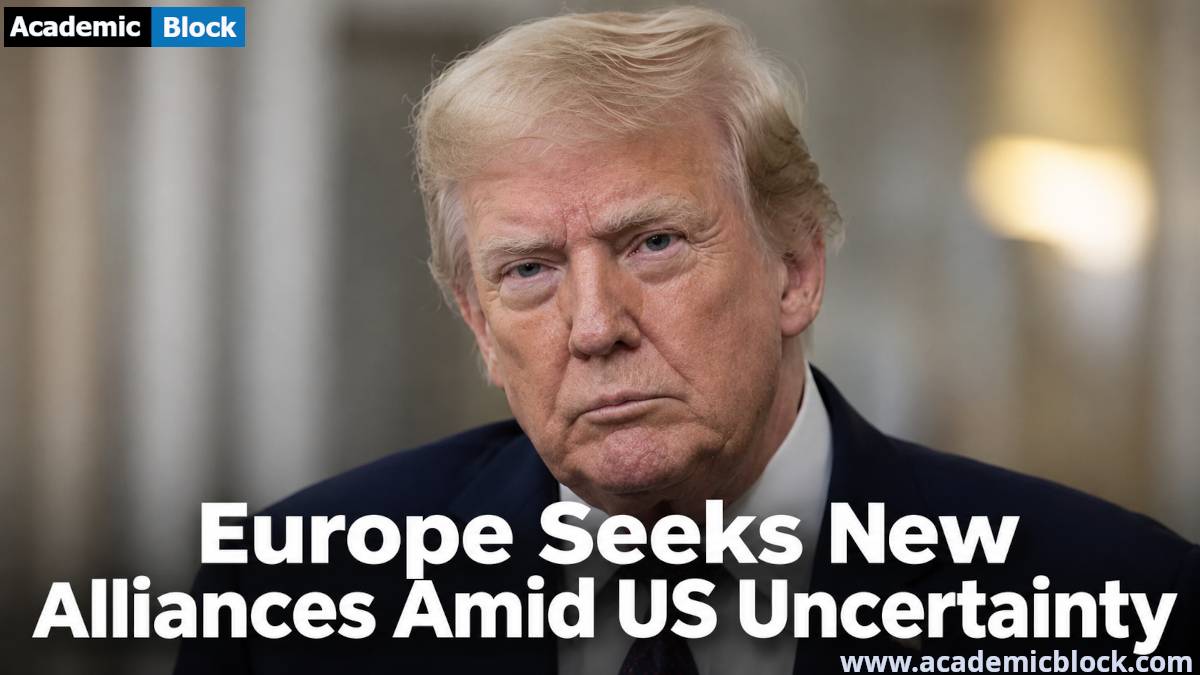
The effort gained momentum at the Halifax International Security Forum in Nova Scotia, held from November 20 to 22. Political leaders and security officials discussed Arctic security, military technology and cooperation among democracies.
Europe and Canada Expand Defense Cooperation Through New Military Partnerships
Canada is strengthening its defense ties with European allies through several new initiatives. At the Halifax International Security Forum, Defense Minister David McGuinty hosted the first meeting of the Maritime Security Partnership. Representatives from Germany, Iceland, Denmark and Norway discussed practical cooperation across the North Atlantic and Arctic regions. Their plans include a shared logistics network to support maritime security and anti-submarine operations. Separately, a German-led initiative is focusing on Arctic security. Five Nordic countries are also developing joint defense plans to deter a possible Russian invasion. These plans include improving road networks and coordinating troop movements to support faster military deployments.
Canada has also signed a naval defense cooperation agreement with Germany and Norway. The agreement covers the development, procurement and maintenance of naval equipment. In addition, Ottawa announced a contribution of more than C$100 million to the NATO Innovation Fund. Canada has also secured observer status in the Global Combat Air Programme (GCAP), led by Britain, Italy and Japan. The program aims to develop a sixth-generation fighter aircraft designed to operate alongside existing systems, including the F-35. Defense Minister David McGuinty also said Ottawa had signed 22 trade and defense agreements over the previous 18 months. These developments highlight Canada’s expanding role in European defense cooperation, particularly in Arctic security, naval capabilities and advanced military technology.
Trump’s Policies Raise Security Concerns Among European Allies
Washington’s changing security priorities have raised concerns among European allies. The Pentagon has launched a six-month review of U.S. troops and military bases across Europe, raising fears of possible reductions. However, the review does not confirm major withdrawals. U.S. officials say Washington wants European allies to take greater responsibility for their defense. Uncertainty over American military support for Ukraine and trade disputes with President Donald Trump have further strained relations. The EU’s Partners for Multilateralism initiative includes Canada, Brazil, India, Australia and Kenya. Dutch Procurement Minister Derk Boswijk has also proposed a “Coalition of the Doing” with Sweden, Norway and Denmark. It would focus on digital technology, artificial intelligence in battlefield systems and rare earth mining.
However, a European official said Sweden was unaware of the proposal. In Washington, Republican Senator Mike Rounds welcomed greater European defense responsibility, while Democratic Senator Chris Coons criticized Trump’s approach toward traditional allies. Despite these differences, Europe and Canada are not seeking to replace NATO or end ties with the United States. Instead, they want stronger defense capabilities and more reliable partnerships while preserving existing alliances.
Web Resources On Europe’s Middle Powers Build New Defense Alliances
1. Politico : Europe’s middle powers mobilize without Trump.
2. CEIAS : Beyond great-power rivalry, Why middle powers matter more than ever.