

How the Shift in Focus from Oil to Electricity is Affecting State Politics
Political leaders once watched gasoline prices with intense care. Those costs have long shaped elections and policy choices around the world. However, a clear shift has taken place. Monthly electric bills have now gained greater influence over voter mood and government action.
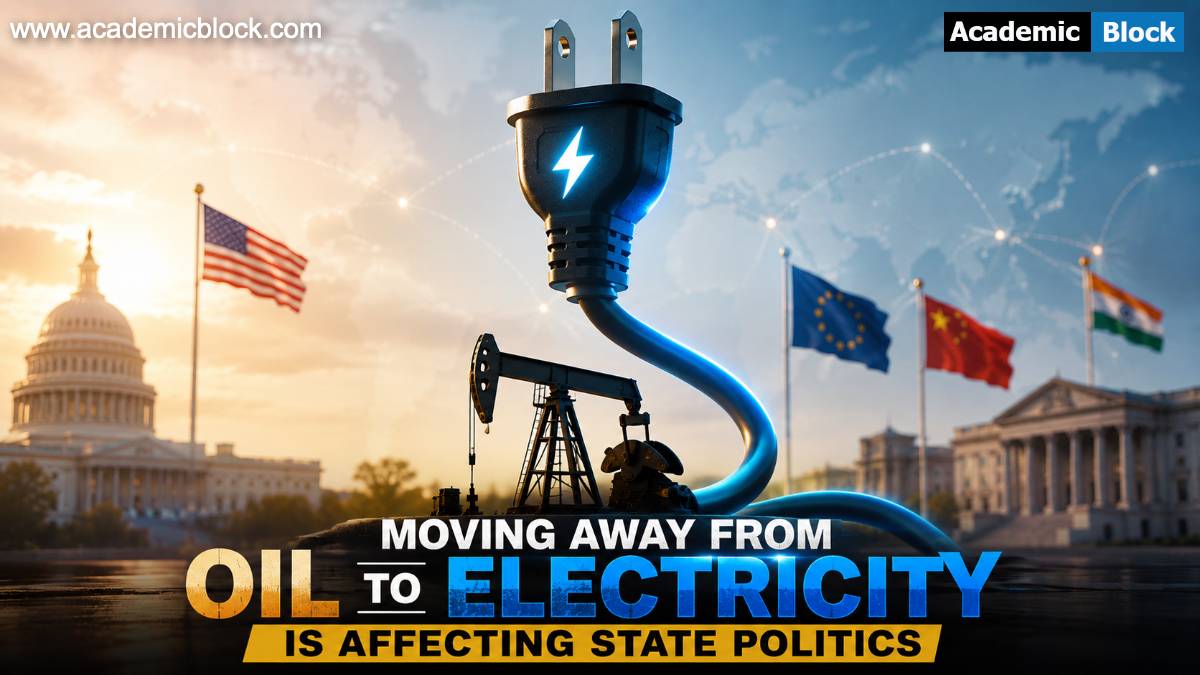
This change has forced officials in North America and Europe to confront rising power prices with new urgency. The world has used more electricity than ever before. That surge has already begun to reshape political priorities on both sides of the Atlantic.
A Growing Focus on Power Bills
In the United Kingdom, Prime Minister Andy Burnham has eliminated a tax on electricity. He took that step shortly after he entered 10 Downing Street. In France, Marine Le Pen has called for deep cuts to power levies. She has also urged an exit from Europe’s shared electricity market. American governors have moved as well. Pennsylvania Democrat Josh Shapiro and Texas Republican Greg Abbott have imposed new limits on data centers. Both leaders had once welcomed those facilities. Voter anger over their potential effect on household bills has forced the change. Arizona Democrats have noticed the same concern among voters. Oscar De Los Santos, who leads the party’s effort to win control of the state House, has said people now talk far more about electricity costs than in past cycles. He has linked much of that frustration to artificial intelligence data centers.
Demand Drivers and Market Signals
Global electricity demand has grown at twice the pace of total energy demand. Power use from electric vehicles rose 38 percent in 2025. Data center demand climbed 17 percent in the same period. Buildings remained the single largest source of growth. Rising incomes and extreme heat have pushed more households to install air conditioners and heat pumps.
International Energy Agency Executive Director Fatih Birol has described the coming decades as the Age of Electricity. He has noted that people once measured energy costs by the price of a barrel of oil. Soon they will look instead at the cost per kilowatt-hour.
Oil still holds a dominant place in global markets. As of 2023, oil products accounted for about 40 percent of final energy consumption. That share remains nearly twice the level for electricity. Yet analysts have observed early signs of change. Oil prices did not climb as sharply as many had expected after the United States and Israel struck Iran earlier this year. Growing electric vehicle use has reduced some demand for crude. Benchmark prices have recently stayed between $85 and $95 a barrel.
Gerald Butts of Eurasia Group has said oil is no longer as essential or geographically constrained as it once was. Jason Bordoff of Columbia University’s Center for Global Energy Policy has added that greater sensitivity to electricity prices is only beginning.
Political Responses Across the Atlantic
In the United States, rising power bills have become a central issue ahead of the November midterms. Progressive candidates who have pledged limits on data center construction have scored primary wins in several states. President Donald Trump has promoted a plan that would require technology companies to generate or pay for the power their facilities use.
Republicans have acknowledged the political risk. Former Republican National Committee spokesman Doug Heye has pointed to the unusual alignment of voices on the left and the right around this issue. Abbott’s sudden shift in Texas has drawn particular attention.
Europe has faced a different set of pressures. High electricity prices have weighed on industry, especially in Germany. European Commission President Ursula von der Leyen has said the continent’s power prices remain structurally too high. The Commission has advanced plans to roughly double electricity’s role in the economy by 2040. Von der Leyen has framed that effort as a way to end exposure to fossil fuel price shocks.
Far-right parties have seized on the issue. Germany’s Alternative for Germany has performed strongly in state elections after focusing on household power costs. In France, stories of businesses struggling with large electric bills have fueled support for figures such as Le Pen.
British officials have also acted. Energy Minister Michael Shanks has said the affordability crisis now drives much of the government’s agenda. Burnham’s early tax cut was intended to give households some relief while longer-term grid investments move forward.
A Gradual but Lasting Transition
Electricity has traditionally ranked below oil in political importance. Governments once tailored major decisions around fuel prices at the pump. French President Emmanuel Macron abandoned a fuel tax after protests in 2018. Former President Joe Biden ordered a large release from the Strategic Petroleum Reserve when gasoline prices topped $4 a gallon.
Oil still commands attention. Trump has continued to seek deals that could ease fuel costs. Burnham has shown openness to more North Sea drilling. Yet the balance has begun to tilt. Scott Segal of the lobbying firm Bracewell has observed that the gasoline pump once gave voters a clear target for anger. The electric bill requires more complicated judgments.
Experts expect the transition to unfold over decades. Oil will remain central for years. However, the growing political weight of electricity prices is already visible. Leaders who once focused almost exclusively on the price of crude now spend increasing time on the cost of electrons. That shift has already begun to rewrite the energy politics of the United States and Europe.
Web Resources on shifting from oil to electricity
1. IEA: Electricity Mid-Year Update 2026.
2. IEA: Where does the world get its energy?
3. EIA: Official Energy Statistics from the U.S. Government