
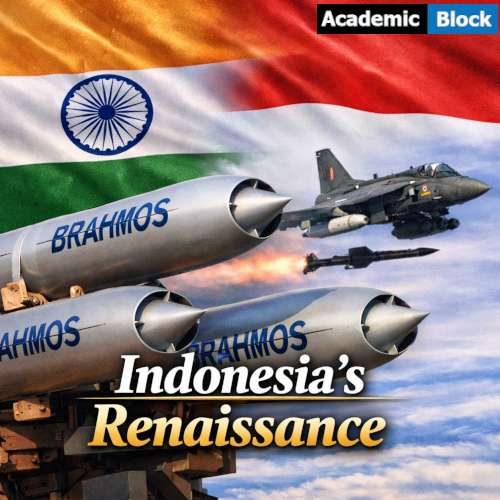
Indonesia’s Major Strategic Rise After a Mega Defense Deal with India
Indonesia has taken a significant step toward strengthening its military capabilities after signing a landmark defense agreement with India. The agreement, announced during Indian Prime Minister Narendra Modi’s visit to Jakarta, includes the acquisition of the BrahMos supersonic cruise missile system and the Astra air-to-air missile, marking one of the most important defense partnerships between the two Indo-Pacific democracies in recent years.
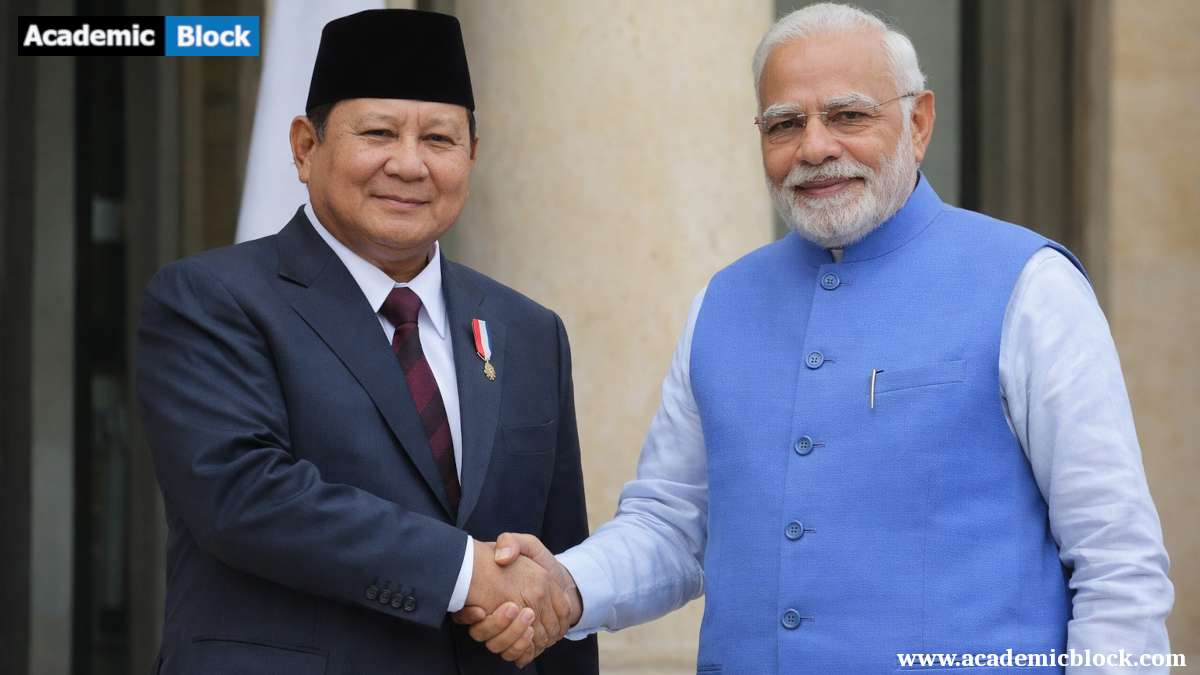
The deal extends beyond the sale of military equipment. It also reflects a broader strategic alignment between India and Indonesia on maritime security, defense industrial cooperation, and regional stability. For Indonesia, the agreement represents a notable enhancement of its deterrence capabilities. For India, it highlights the country’s growing role as a defense exporter and a strategic partner in Southeast Asia.
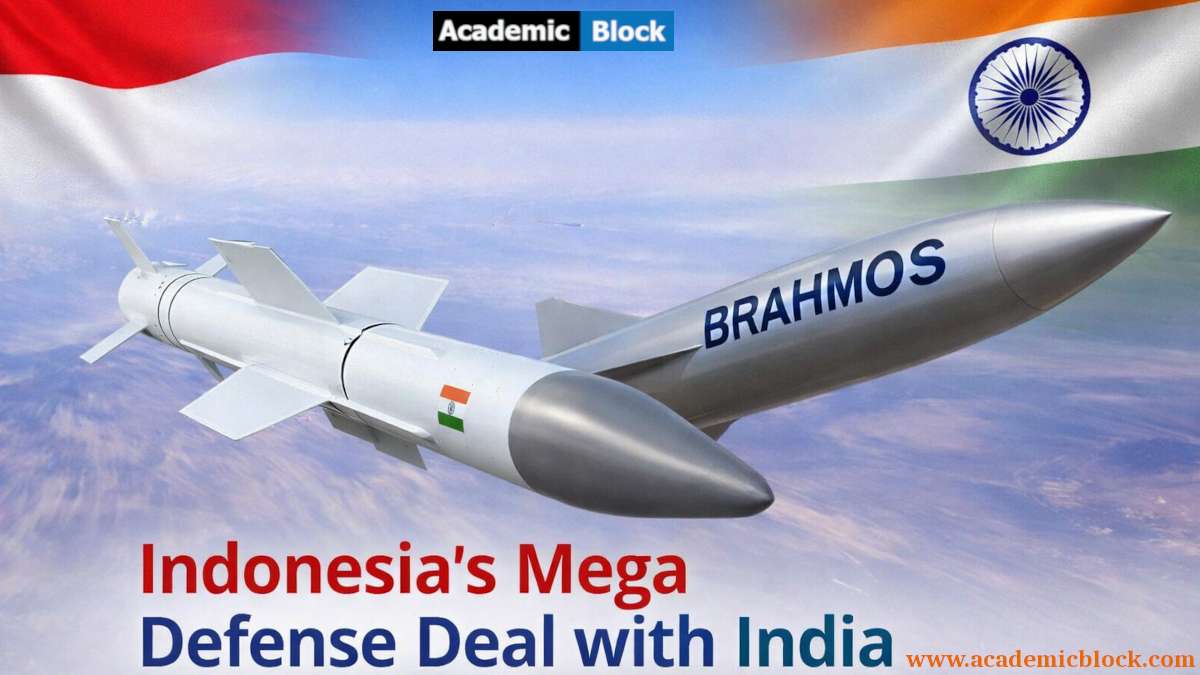
Indonesia’s Mega Defense Deal
The agreement was signed during bilateral talks between Prime Minister Narendra Modi and Indonesian President Prabowo Subianto in Jakarta. Officials confirmed that India will supply the BrahMos cruise missile system and the Astra air-to-air missile to Indonesia. Although the governments did not disclose the financial value of the final contract, reliable sources have placed this deal near an estimated amount of US$650 million to US$700 million. With further negotiation Indonesia may choose additional BrahMos system pushing this deal well over 1.0B USD.
The China Factor and Subianto’s Response
The defense agreement with India also carries broader geopolitical significance. Although Indonesia has consistently maintained a non-aligned foreign policy, it has become increasingly concerned about security developments in the South China Sea, particularly around the North Natuna Sea, where Indonesia’s exclusive economic zone overlaps with China’s expansive maritime claims. While Jakarta does not consider itself a claimant in the wider South China Sea disputes, it has repeatedly rejected Beijing’s “nine-dash line” claim, stating that it has no basis under international law.
In recent years, Indonesian authorities have reported multiple incidents involving Chinese Coast Guard vessels and Chinese fishing boats operating near the Natuna Islands. These harassments have prompted Jakarta to increase military patrols, strengthen infrastructure on the islands, and expand its maritime surveillance capabilities. The Current Indonesian government has also conducted regular military exercises in the region to reinforce its sovereignty and deter unauthorized activities.
Against this backdrop, Subianto’s decision to acquire the BrahMos cruise missile system significantly enhances Indonesia’s ability to defend its maritime approaches. The missile’s high speed, precision, and anti-ship capabilities provide a credible deterrent against potential hostile naval operations. With the purchase of BrahMos, Jakarta can now draw a redline around its exclusive economic zone which no one can dare to cross without its permission.
BrahMos: A Powerful Addition to Indonesia’s Arsenal
The BrahMos missile is widely regarded as the world’s fastest operational supersonic cruise missile. Developed jointly by India and Russia through BrahMos Aerospace, it earned its fame recently by crippling several of the Pakistan’s air bases with impunity. The missile’s high speed significantly reduces the reaction time available to defending forces, making its interception nearly impossible. It is designed to strike both naval vessels and high-value land targets with high accuracy.
Astra Missile to Strengthens Indonesia’s Air Force
The agreement also includes the Astra air-to-air missile, India’s indigenous beyond-visual-range (BVR) missile. The Astra missile will improve Indonesia’s air combat capability, particularly for aircraft already compatible with the system. It gives Indonesian fighter pilots greater engagement distances while enhancing air defense against modern aerial threats.
Beyond Weapons: Expanding Strategic Cooperation
The defense agreement formed part of a wider package of bilateral initiatives. India and Indonesia also agreed to:
- Strengthen cooperation on critical mineral supply chains.
- Expand collaboration in steel manufacturing through a joint venture.
- Increase agricultural cooperation.
- Improve maritime security coordination.
- Accelerate discussions on a preferential trade agreement.
- Enhance defense industrial cooperation and technology partnerships.
These measures indicate that the relationship is evolving into a broader economic and strategic partnership rather than remaining limited to defense procurement.
Web Resources on Indonesia’s Mega Defense Deal with India
1. Asia.Nikkei.com : Indonesia and India sign deals on supersonic, air-to-air missiles.
2. Naval News.com : Indonesia Signs BrahMos Missile Deal with India.
3. Reuters.com : Indonesia to buy BrahMos missiles, Indian govt official says.
4. Kathmandu Post.com : Indonesia, India sign BrahMos missile deal.