
Israel’s Political Future: Eisenkot Gets First Chance to Form New Government
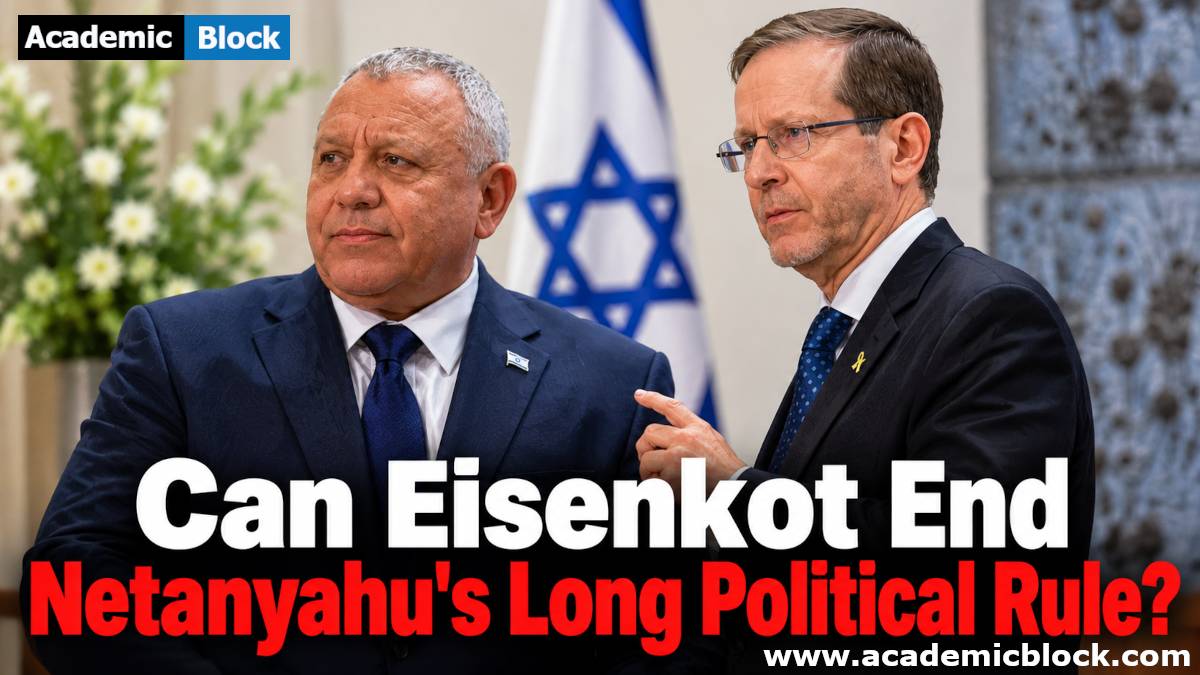
President Isaac Herzog has given Gadi Eisenkot the first chance to form Israel’s next government. The formal ceremony took place on Sunday evening at the presidential residence in Jerusalem. Eisenkot, a former army chief, led the main opposition challenge to Prime Minister Benjamin Netanyahu. The decision follows the October 27 election, which left neither bloc with a clear majority. However, the mandate does not guarantee that Eisenkot will become prime minister.
Herzog said most members of the Knesset had backed Eisenkot for the task. Eisenkot has promised leadership that the public can trust and that represents every part of society. Israel is still dealing with the aftermath of the October 7, 2023 attacks led by Hamas. The country also faces the multifront wars that followed those attacks. Netanyahu, the longest-serving prime minister in Israel’s history, now faces a real threat to his hold on power.
Arab-Led Parties and Haredi Demands Shape the Coalition Math
Arab-led parties made historic gains in the election, winning 19 seats on the back of strong turnout. That result has turned them into possible kingmakers in the coming talks. Without their seats, Eisenkot’s bloc would hold fewer seats than Netanyahu’s reduced coalition. However, an Arab party has joined a governing coalition only once, when Ra’am did so in 2021. Ra’am says it will back Eisenkot, but it cannot give him a majority alone.
The Joint List has offered to support Eisenkot from outside the coalition, which would break with decades of precedent. Eisenkot has set four conditions for partners, including recognition of Israel as a Jewish and democratic state. Partners must also back national service for all citizens and call Hamas a terrorist group. Yisrael Beytenu has already ruled out sitting with Arab-led parties, so Eisenkot is weighing other routes. He could seek a deal with Netanyahu or with ultra-Orthodox parties, but those parties want draft exemptions kept.
Caretaker Rule, a Speaker Fight and a Ticking Clock
Eisenkot has 28 days to build a coalition, and Herzog can add a two-week extension. If he fails, Netanyahu could receive the mandate, and a second failure would send voters back to the polls next spring. Meanwhile, Netanyahu and his cabinet remain in office as a caretaker government with limited powers. The new Knesset is sworn in on Tuesday, and the opposition wants to replace Speaker Amir Ohana, a close Netanyahu ally. Ohana could delay the swearing-in of a new government by up to a week, which gives Netanyahu time to work on weak points in any deal.
Ultimately, Eisenkot’s mandate shows that Netanyahu’s long grip on power can be challenged, but it does not prove that it will end. The outcome now depends on whether rival parties will compromise on Arab participation, military service and the control of the Knesset. A failed attempt could leave Netanyahu in a caretaker role and push Israel toward another election. A successful one would test whether a divided country can build a stable government while its wars remain unresolved.
Web resources on Israel new government formation
1. AP News : Israel’s president gives Eisenkot the first chance to form the next government.
2. NY Times : Eisenkot Tasked With Forming Next Israeli Government.
3. PBS News : Israel’s president formally gives Eisenkot the first chance to form the next government.
4. The Guardian : New Knesset speaker could be key to ousting Netanyahu as Israel’s PM.