
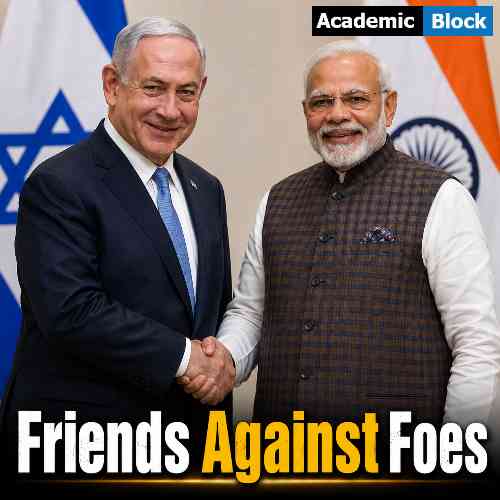
Israel-India Partnership Deepens as Middle East Tensions Escalate
As fighting and diplomatic tensions continue to reshape the Middle East, India and Israel are moving to reinforce a relationship that has become increasingly important to both countries. Prime Minister Narendra Modi and Israeli Prime Minister Benjamin Netanyahu spoke by telephone on August 6, 2026, reviewing the progress of their Special Strategic Partnership and discussing developments in West Asia. The two leaders also agreed to remain in contact.
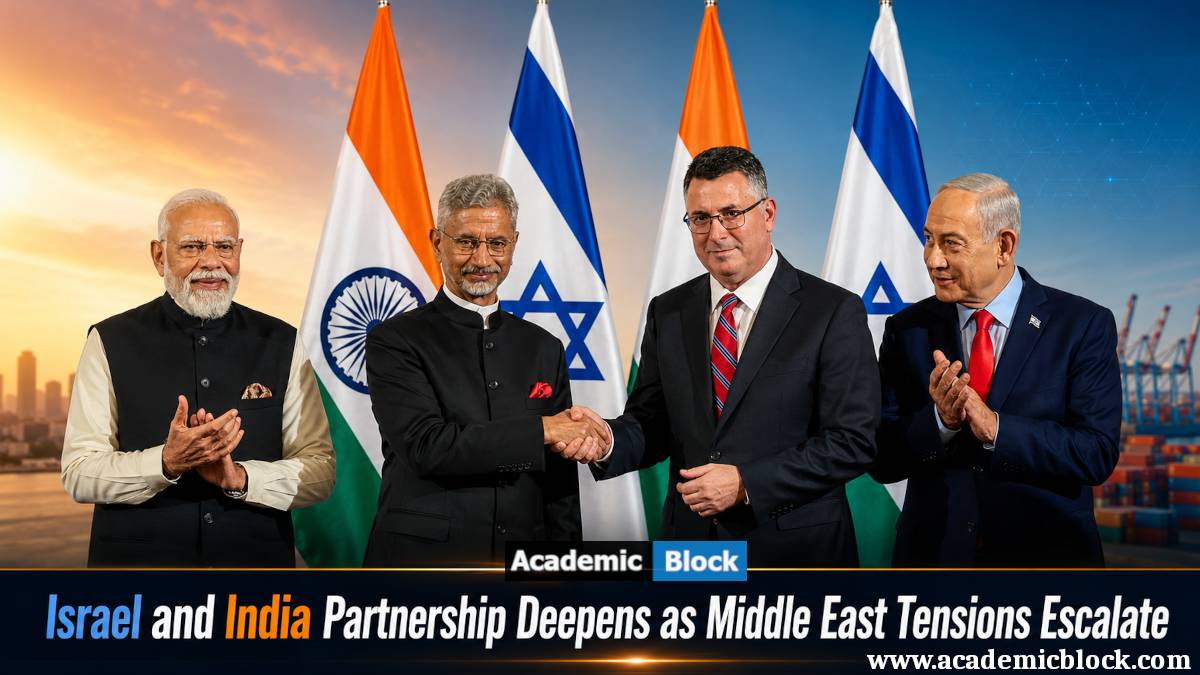
Israel’s Defense Ministry has described India as a key strategic partner. At the same time, both countries are expanding collaboration in artificial intelligence, cybersecurity, agriculture, water management and other advanced technologies. These growing links have given the relationship greater economic and diplomatic weight. However, rising regional tensions have also created new challenges for New Delhi. Threats to energy supplies and maritime trade could affect India’s wider interests. As a result, the India-Israel partnership has become an increasingly important part of India’s security and foreign policy calculations.
India and Israel Strengthen Defense, Technology and Trade Cooperation
The conversation came at a particularly sensitive moment. The conflict involving Israel, the United States and Iran has continued to affect security across the region, while disruptions around major maritime routes have added an economic dimension to the crisis. On August 12, Iran said there had been no progress in efforts to revive an interim arrangement with Washington, leaving uncertainty over the possibility of another escalation.
For India, the stakes extend beyond diplomacy. The country has deep economic, energy and people-to-people links with the wider Middle East. It therefore has an interest in maintaining relations with Israel while also protecting its broader regional interests.
Israel’s Relations With Islamic Countries
Since last few decades a dangerous misinformation media campaign has been promoted by muslim right wing groups to defame Israel in Islamic countries. This has not only created a negative perception among large muslim population, but has also created wide support for antisemitism, and brewed hatred towards the Israel. In countries like Pakistan and Turkey, politicians sometimes rekindle anti-Israel sentiment to gain votes and broader public support. These carefully crafted hate campaigns, restricts the space available with politicians in other Islamic countries to mend ties with Israel. In many such countries, level of antisemitism is so high, that it would be suicidal for the political leaders to even seen as not anti-Israel.
Though, under US pressure, the United Arab Emirates and Bahrain has established diplomatic relations with Israel under the 2020 Abraham Accords, wider acceptance of Israel in Islamic countries seems like a distant dream.
India-Israel Ties are Growing
The relationship received a major political boost under Modi. In February 2026, Modi visited Israel and became the first Indian prime minister to address the Knesset. During that visit, he described the relationship in terms of friendship, respect and partnership, while also expressing India’s solidarity with Israel following the October 2023 Hamas attack.
Hours after the October 7, 2023, attacks, Prime Minister Narendra Modi said India stood ‘in solidarity with Israel at this difficult hour,’ while expressing condolences to the victims and their families. Modi posted on X “Deeply shocked by the news of terrorist attacks in Israel. Our thoughts and prayers are with the innocent victims and their families. We stand in solidarity with Israel at this difficult hour.”
The Iran Factor Complicates India’s Position
The deep relationship with Israel also creates difficult choices for New Delhi. India has maintained important relations with Iran, including cooperation around the Chabahar port, which provides India with an alternative route toward Afghanistan and Central Asia. At the same time, India has developed close relations with Israel and the United States.
The widening conflict therefore puts India in a delicate position. New Delhi has strong reasons to prevent the conflict from spreading. A prolonged confrontation could threaten shipping routes, raise energy costs and complicate India’s commercial connections with the Gulf. For India, that is not simply a foreign-policy problem. It can become an economic problem as well.
Why the Partnership Matters More than Ever
Recent turmoil in the Middle East has exposed one major weakness in Israel’s defense infrastructure. Even though Israel possess advance technologies, it lacks the capability to replenish its defense inventory quickly in case of a major conflict. This is were its trust worthy partnership with India comes in picture. India with its large manufacturing base, transport capabilities, and safe boundaries becomes a real friend. Unlike Europe, India has stood with Israel firmly, though not too openly.
The Importance of friendship with India is highlighted in Prime Minister Netanyahu’s recent statement, “We have some other friends, like a small country called India. You know, it has 1.4 billion people, and boy, do we have tremendous support there. You know, I have this Facebook thing, and I’m just flooded by the overwhelming support there.”
Web Resources on Israel-India Partnership Deepens
1. Academic Block : Netanyahu Decides Challenging Trump Is the Lesser Evil on Gaza.
2. Academic Block : First Test for Pakistan Turkey and Saudi Defense Pact.