
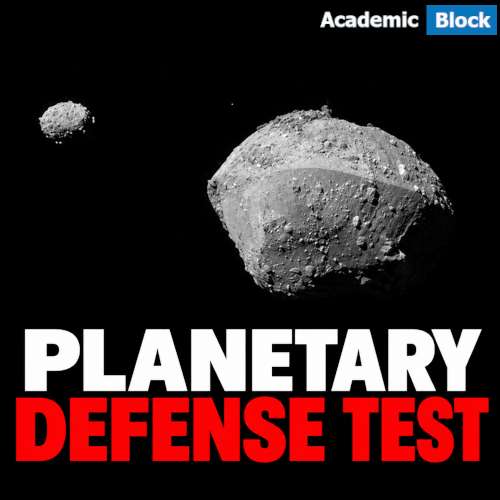
NASA’s DART Mission Reveals Stadium-Sized Crater From Humanity’s First Planetary Defense Test
The asteroid NASA deliberately struck in 2022 now carries a crater roughly the size of a sports stadium. The European Space Agency’s Hera spacecraft captured the first close-up images of the damage. These pictures were unveiled on Wednesday at the dinosaur hall of Berlin’s Museum für Naturkunde. The setting was chosen on purpose, as a reminder of the impact that wiped out the dinosaurs. The images also show that Dimorphos has one face flattened and is now tumbling chaotically.
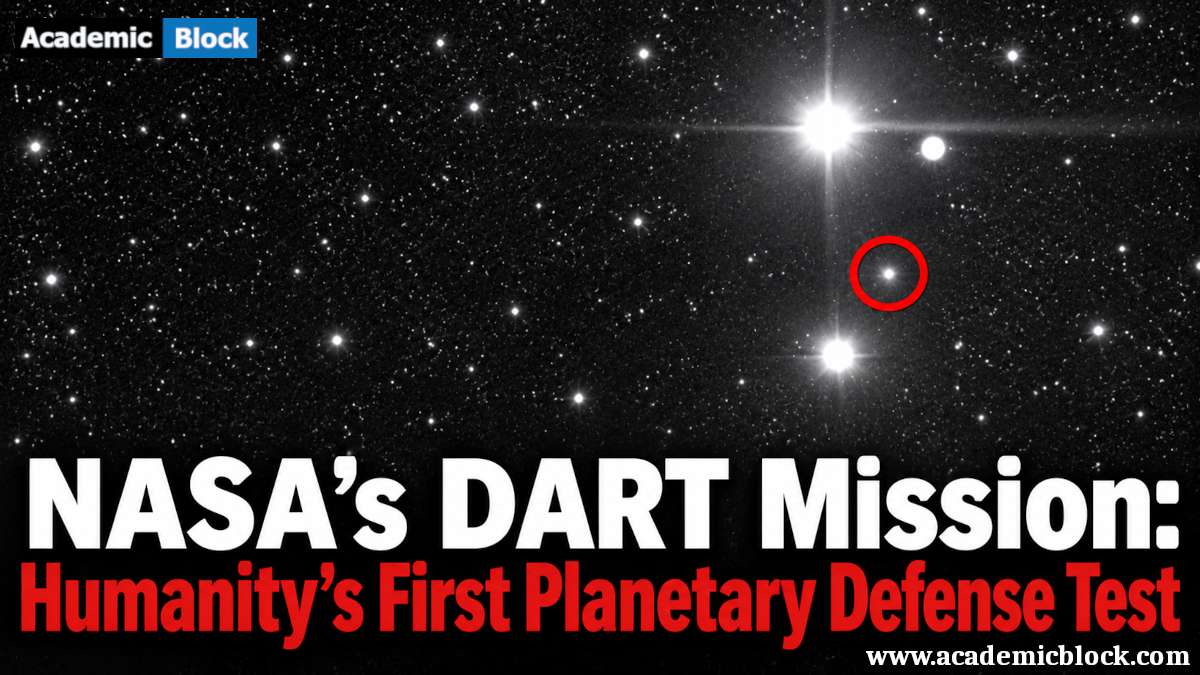
NASA’s Double Asteroid Redirection Test, or DART, rammed into Dimorphos on September 26, 2022. The spacecraft hit at roughly 14,000 miles per hour in the first real test of planetary defense. Dimorphos, which is about 151 meters (495 feet) wide, orbits the larger asteroid Didymos. Neither space rock threatens Earth, and the pair now sits about 120 million miles away. However, Dimorphos is similar in size to asteroids that could devastate an entire city.
How DART’s Impact Flattened Dimorphos and Sent It Tumbling
The crater stretches across nearly the entire face that DART struck, almost matching the asteroid’s width. It looks as though a chunk of Dimorphos was simply sliced away by the collision. Surprisingly, the opposite side shows no major changes, and its boulder fields resemble DART’s 2022 images. Before Hera arrived, scientists debated whether Dimorphos had gained a crater, changed shape or stayed the same. The answer turned out to be a combination of all three.
The collision also changed how Dimorphos moves around its larger companion. Previously, it behaved like Earth’s moon, always keeping the same face pointed toward Didymos. Now, it rolls unpredictably, much like a barrel tumbling down a flight of stairs. In addition, telescopes on Earth had already shown that DART shortened Dimorphos’s orbit by about 33 minutes. Before the impact, the orbit took 11 hours and 55 minutes, and NASA would have counted a 73-second change as a success.
Hundreds of Orbiting Boulders Complicate Hera’s Next Close Approach
Hera’s biggest surprise is the hundreds of previously unknown boulders circling the asteroid pair. More than 100 range from football to washing-machine size, and their origin remains unclear. In December, Hera will move within about 13 kilometers (8 miles) to measure the mass of Dimorphos. Then in January, it will release two shoebox-sized CubeSats, one carrying radar to probe the asteroid’s interior. However, the floating boulders pose a collision risk, so engineers must rethink how the satellites will operate.
Ultimately, Hera’s findings turn DART’s 2022 success into a detailed lesson in how asteroids respond to impacts. Knowing the target’s mass and structure will sharpen the models used to plan future deflection missions. Combined with earlier warnings from NASA’s NEO Surveyor, which launches in 2027, that knowledge could prove vital. Together, these efforts could turn the kinetic impactor from a single experiment into a reliable planetary shield.
Web resources on NASA’s DART Mission and the Dimorphos Crater
1. Reuters : New images reveal crater on asteroid struck by DART spacecraft.
2. BBC : Images of asteroid targeted to test Earth’s defences reveal stadium-sized crater.
3. CNN : New images reveal stadium-size crater left by humanity’s first planetary defense test.
4. The Guardian : Nasa knocked an asteroid off course. New closeup photos shed light on aftermath.