
Pentagon Lays Groundwork for Potential Cuba Invasion
The Pentagon has spent months positioning troops, naval assets, and military equipment that could support a potential operation against Cuba, according to reports. The reported military options range from precision air strikes to operations targeting Cuba’s leadership. Some analysts have compared those scenarios with the earlier U.S. operation that captured former Venezuelan leader Nicolás Maduro.
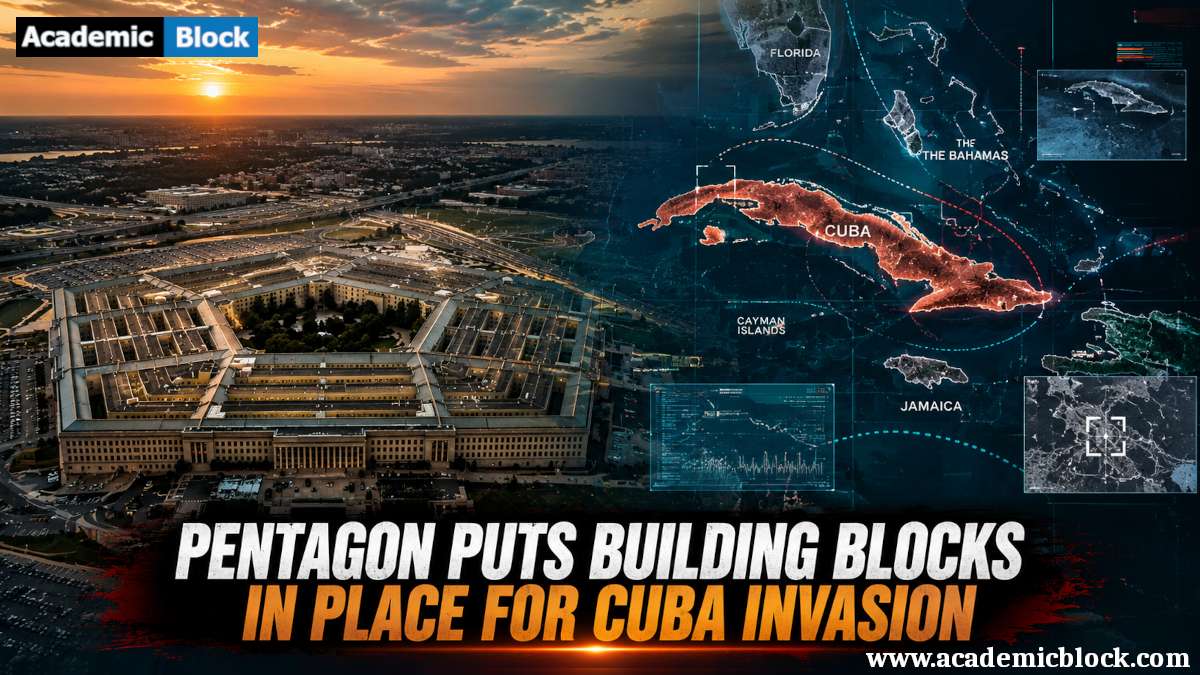
Secretary of State Marco Rubio said Cuba remains a growing national security concern because of its proximity to the United States. Speaking during a Cabinet meeting, Rubio described a failed state just 90 miles from the U.S. coast as a direct security challenge. The preparations have gained attention as the administration continues to increase pressure on Havana after economic sanctions and diplomatic efforts failed to bring political change. Officials have also acknowledged that the expanded U.S. military presence in the region provides Washington with the ability to respond quickly if circumstances change.However, any military action would still require final authorization from President Donald Trump.
Pentagon Reviews 101st Airborne Air Assault Scenario
One of the contingency options reviewed by military planners reportedly involves a large-scale air assault led by the 101st Airborne Division. The operation would involve several thousand U.S. troops and rely on the division’s specialized capability to conduct long-range air assault missions. In late June, the Pentagon held a concept-of-operations briefing, a standard planning exercise used to examine possible military scenarios before any policy decision is considered.
During the briefing, planners assessed troop requirements, mission objectives, logistics, operational timelines, and potential risks. Officials stressed that such reviews are a routine part of Defense Department planning and should not be interpreted as approval for military action. They also noted that the U.S. military continues to dedicate significant aircraft, intelligence assets, and other resources to operations involving Iran, making any immediate operation against Cuba less likely.
Trump Administration Intensifies Pressure on Cuba
While military planners review contingency options, the Trump administration has continued to expand its economic and diplomatic pressure campaign against Havana. Secretary of State Marco Rubio has said the United States still prefers a diplomatic solution and supports a transition to a technocratic Cuban government willing to pursue economic reforms. However, those efforts have stalled, prompting Washington to broaden sanctions against key Cuban entities, including the military-controlled conglomerate GAESA, the Ministry of Tourism, and the state energy company Cupet.
The administration has also strengthened its broader Cuba policy. President Donald Trump restored Cuba’s designation as a State Sponsor of Terrorism in January 2025 and later imposed additional sanctions on senior Cuban officials, including President Miguel Díaz-Canel. In May, CIA Director John Ratcliffe held rare direct talks in Havana before the Justice Department announced charges against former leader Raúl Castro related to the 1996 shootdown of two U.S. aircraft. Meanwhile, U.S. officials are also reviewing reports that Cuba may have acquired attack drones, raising fresh security concerns around the U.S. naval base at Guantanamo Bay, which is located in Cuba. Despite the growing pressure, U.S. officials have announced no decision to authorize military action against Cuba, while Havana has denied planning any attack on the United States.
Web Resources on Pentagon Weighs Cuba Air Assault
1. CBS News.com : Senior defense officials looking at Cuba military options.
2. Miami Herald.com : Pentagon options for potential attack on Cuba include large-scale air assault
3. Politico.com : Pentagon puts building blocks in place for Cuba invasion.
4. Latin America Reports : Pentagon reportedly preparing for action against Cuba.