
Russia’s Fuel Buyers Push Back as Trump Gains New Sanctions Powers
Congress has given President Donald Trump new leverage over Russia’s oil trade through the Lindsey O. Graham Sanctioning Russia Act of 2026. The House passed the bill 262-159 on Wednesday, after the Senate had approved it 86-11 last month. In addition, the measure could expand the reach of US sanctions on Russia by putting major buyers of Russian energy under fresh pressure. Washington aims to reduce Moscow’s oil and gas revenue as the war in Ukraine continues. However, the wider impact could extend beyond Russia as the legislation targets countries and companies linked to its energy trade.
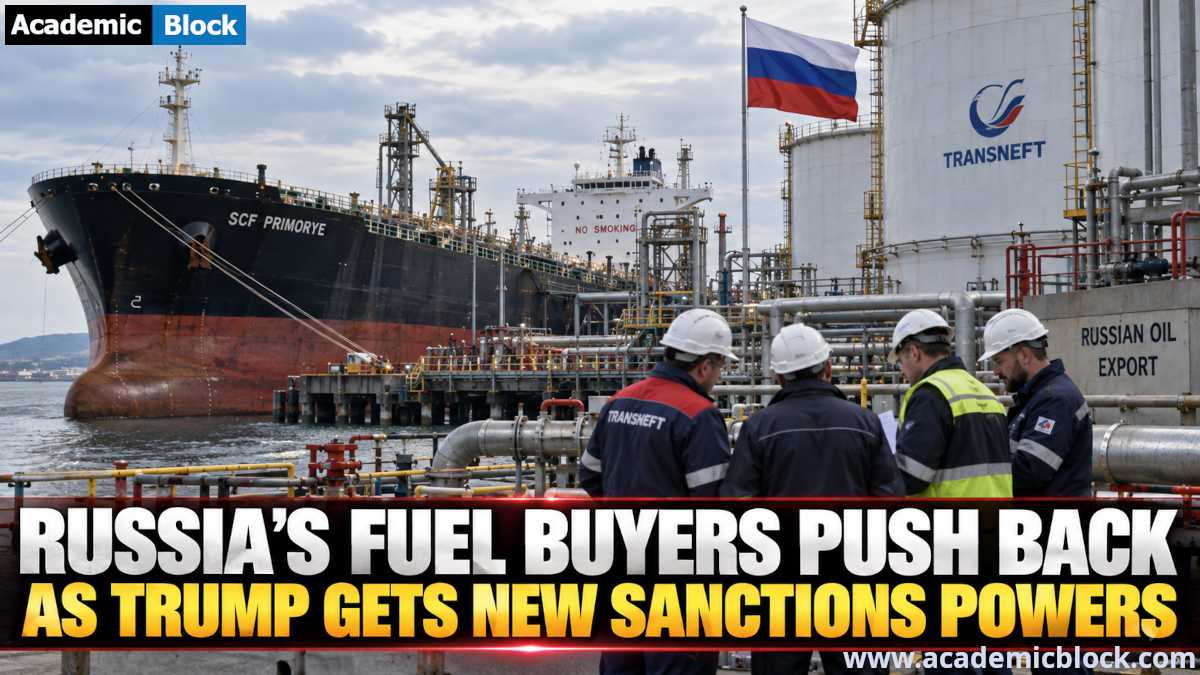
China and India have become the dominant buyers of Russian crude oil, accounting for a combined 87% of Russia’s crude-oil exports, according to CREA data covering December 2022 to July 2026. At the same time, the European Union remains the largest buyer of Russian LNG and pipeline gas. As a result, tougher US sanctions could affect global energy markets and companies that depend on Russian supplies. India has stressed energy security and the protection of its trade interests, while China has opposed unilateral US pressure on Russian energy. The next stage of the policy will therefore test how far Washington can pressure Moscow while limiting wider disruptions to global energy trade.
Russia’s Major Energy Buyers
Source: Centre for Research on Energy and Clean Air (CREA), July 2026. The percentages show each country or region’s share of Russia’s total exports of the respective energy product, based on CREA data covering December 5, 2022, to the end of July 2026. For example, China accounted for 50% of Russia’s crude-oil exports, while the EU accounted for 49% of Russia’s LNG exports and 32% of its pipeline-gas exports.
What’s in the US Russia Sanctions Bill and How Could It Affect Russia, India and China?
The US Congress has approved a sweeping sanctions bill targeting Russia and Iran. The measure focuses on Russia’s oil, gas, financial and defense sectors. The bill also targets Russia’s so-called shadow fleet, which has helped transport Russian oil despite Western restrictions and price caps. In addition, it increases pressure on Russian financial institutions and foreign supply networks linked to Russia’s military sector. Known as the Lindsey O. Graham Sanctioning Russia and Iran Act of 2026, the legislation aims to reduce Moscow’s energy revenue and limit the resources it can use to sustain the war in Ukraine.
The bill also gives President Donald Trump significant new powers over countries that continue to buy Russian energy. In certain circumstances, he could impose tariffs of up to 100% on goods from major buyers of Russian oil or natural gas. India and China could face this pressure because both remain major buyers of Russian crude. The legislation also includes potential relief for some countries that buy a limited share of Russia’s gas exports and take steps to reduce those purchases. The measure therefore creates a new link between Russia sanctions, global energy trade and the economic choices of major Russian fuel buyers.
US Sanctions Bill Puts Pressure on EU Amid Objections from Russia, India and China
Russia has opposed the new US Russia sanctions bill, warning that further economic pressure could make efforts to reach a Ukraine peace settlement more difficult. Kremlin spokesman Dmitry Peskov said Moscow was closely watching the legislation and argued that new sanctions could raise tensions between Russia and the United States. The Kremlin’s response shows how the new sanctions could add another layer of tension to the wider Russia-US dispute.
India and China have also raised objections, but their concerns focus on energy security and trade. India has stressed the need to protect reliable energy supplies and its economic interests, while maintaining diversified sources of crude oil. China has opposed US pressure on countries trading with Russia and rejected unilateral measures that affect other states. The issue is also creating a complicated picture within the European Union. Hungary and Slovakia have remained relatively dependent on Russian energy, while France, Spain, Belgium and the Netherlands still receive limited volumes of Russian LNG. However, these countries have not issued any major separate public response to the new US sanctions bill. The dispute could therefore create wider economic and diplomatic challenges for Russia’s trading partners as pressure on its energy trade increases.
Web Resources On Russia Fuel Buyers Push Back as Trump Gains Sanctions Powers
1. Politico.eu : Russia’s global fuel customers push back against US sanctions bill.
2. Reuters : Russia says new US sanctions, if signed by Trump, would make Ukraine peace deal harder.
3. South China Morning Post : China pushes back against US sanctions bill targeting Russia’s top energy buyers.