
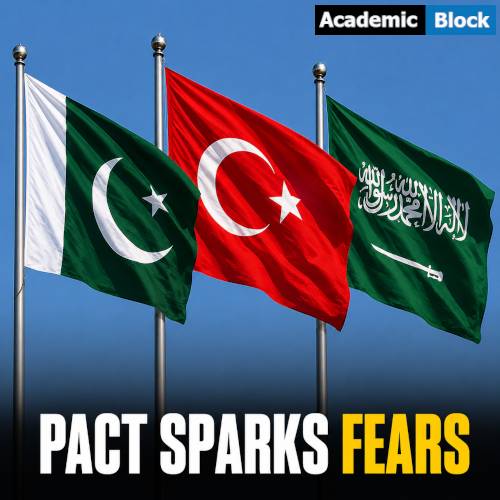
Saudi Arabia, Pakistan and Turkey to Sign Defence Pact in Jeddah
Saudi Arabia, Turkey and Pakistan have signed a joint defence agreement in Jeddah. Saudi Crown Prince Mohammed bin Salman hosted the summit. Turkish President Recep Tayyip Erdoğan and Pakistani Prime Minister Shehbaz Sharif also attended. The signing comes amid heightened regional tensions that have put Gulf security under sharp scrutiny.
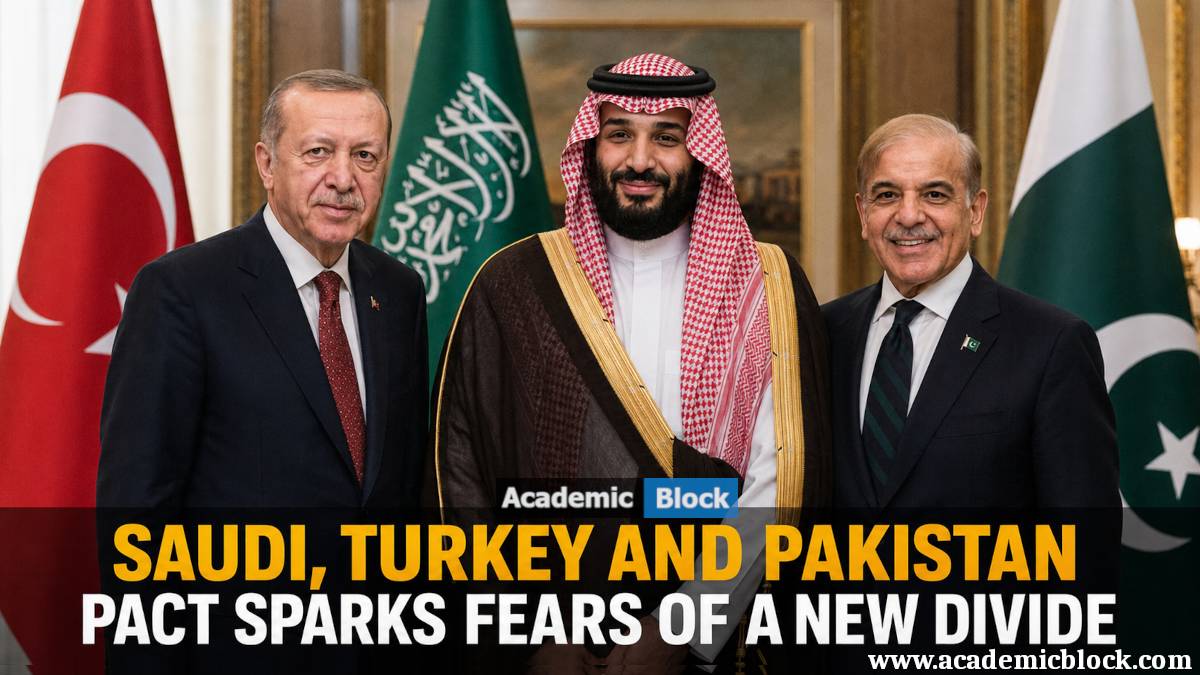
The agreement signals closer strategic coordination between Riyadh, Ankara and Islamabad. Its true weight remains uncertain, and until the full terms emerge, the region may be left guessing whether this alliance eases the turmoil or simply adds another fault line to an already fractured West Asia.
Why Are Saudi Arabia, Turkey and Pakistan Deepening Defence Cooperation?
The pact expands the Strategic Mutual Defence Agreement, which Saudi Arabia and Pakistan signed in 2025. Security sources say it could introduce a NATO-style coordination mechanism, and some media reports have suggested a collective security clause. However, participating governments have not officially confirmed either detail. If implemented, the pact would combine Saudi Arabia’s financial resources, Turkey’s advanced defence technology and Pakistan’s military capabilities. Officials have not confirmed whether Pakistan’s nuclear capability forms part of the agreement, leaving a critical question unanswered at the heart of the deal.
The pact is also expected to strengthen joint military exercises, intelligence sharing, defence-industrial cooperation and technology transfers. Turkish officials insist the agreement is purely defensive, aimed at deterring threats rather than building an offensive alliance. Vague assurances, however, do little to settle doubts about how far this cooperation truly extends. The absence of clear terms raises a harder question: is this a genuine security framework, or simply a hastily assembled pact that could unravel the moment real pressure tests it?
Concerns Over Regional Polarisation and NATO Complications
Critics warn the pact could deepen regional polarisation rather than ease it. A stronger Saudi-Turkey-Pakistan bloc may push rival states, including Iran and India, toward tighter counter-alliances of their own, turning a defensive arrangement into a fresh trigger for confrontation.
Turkey’s NATO membership adds another layer of complexity. Ankara sits inside NATO’s collective defence framework, yet it has now committed to a separate trilateral pact outside that structure. Analysts say this dual alignment could create friction with NATO allies, particularly if Saudi or Pakistani security interests ever conflict with Western positions. The agreement also stops short of binding mutual defence guarantees, limiting its formal weight while leaving ambiguity about how far Turkey would actually go to support its partners in a real crisis. The pact has already triggered close scrutiny from the United States, China and Russia, since it signals a shift toward more autonomous regional security arrangements. A pact built on ambiguity and divided loyalties may offer the appearance of unity while quietly sowing the seeds of discord within NATO itself.
Web Resources on Saudi Arabia Turkey Pakistan defence deal
1. Reuters.com : Saudi Arabia, Turkey and Pakistan to sign joint defence deal amid regional turmoil.
2. France24.com : Saudi Arabia, Pakistan and Turkey set to sign defence pact in Jeddah.
3. Euro News.com : Saudi Arabia, Türkiye and Pakistan forge new defence pact amid US-Iran tensions.
4. NDTV.com : Saudi Arabia, Turkey, Pakistan To Sign Defence Pact Today.
5. US News.com : Saudi Arabia, Turkey and Pakistan to Sign Joint Defence Deal Amid Regional Turmoil.