
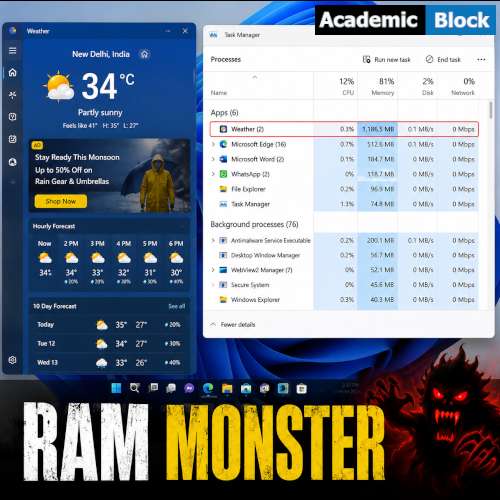
Windows 11 Inbuilt Weather App Use Over 1 GB of RAM
A simple check of the weather should not put a noticeable strain on a modern computer. Yet, recent testing of Windows 11’s built-in Weather app has raised questions about how much system memory Microsoft’s software can consume for a relatively simple task.
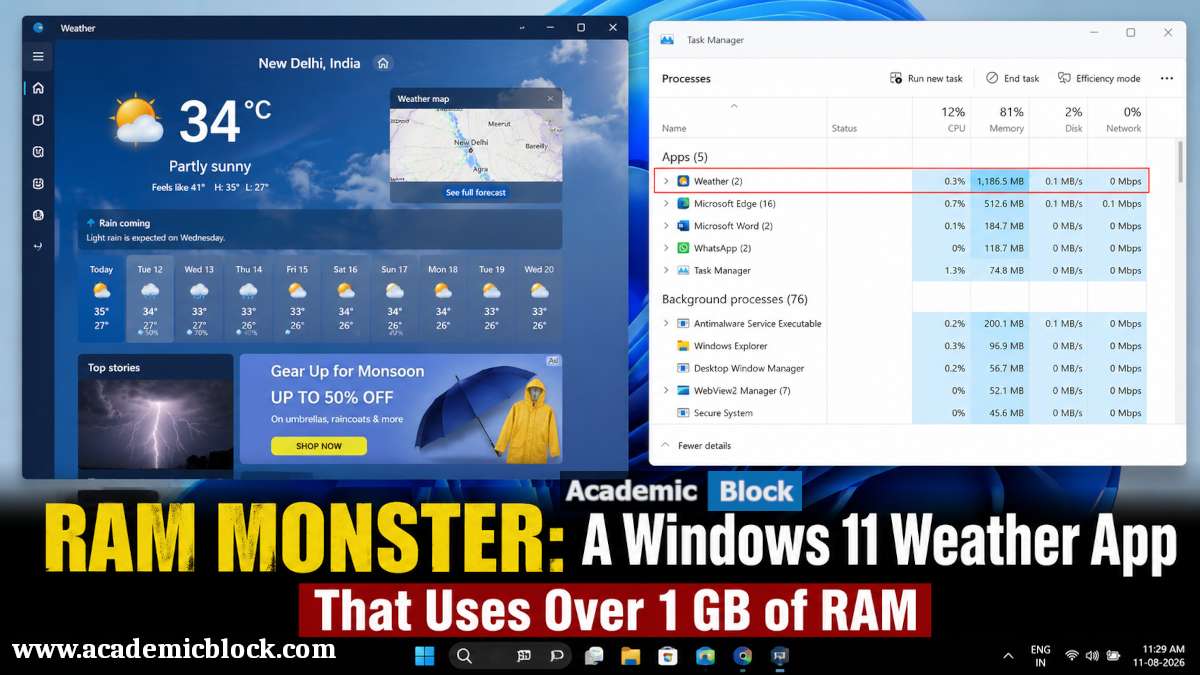
Tests reported this week found that the Weather app can use around 1.2 GB of RAM while displaying weather information. The unusually high memory consumption appears to be linked to the way the application is built. Rather than operating as a traditional native Windows application, it relies heavily on Microsoft’s WebView2 technology, which uses the Chromium browser engine. The finding is particularly significant for computers with 8 GB or 16 GB of memory. On such systems, an application consuming more than a gigabyte can represent a meaningful share of the available resources.
Windows 11 Weather App is Running Like a Browser
The Windows 11 Weather application is effectively a web-based experience packaged as a Windows application. WebView2 allows developers to display web content inside desktop software, but it can also require several browser-related processes to operate. In the reported test, opening the Weather app resulted in nine Chromium-related processes appearing in Windows Task Manager. One renderer process alone was reported to use hundreds of megabytes of memory.
That architecture helps explain why an application designed primarily to show forecasts can have a memory footprint more commonly associated with a much more complicated program. The weather information itself is not necessarily responsible for most of the memory consumption. Instead, much of the overhead comes from the browser technology used to deliver the application.
The App Also Carries Advertising and May Slow Down the System
The memory issue is not the only reason the Weather app has attracted attention. The application is associated with MSN Weather, and its interface includes advertising alongside weather-related information. That means users can encounter promotional content while looking at forecasts, radar information and other weather data. It remain to be seen if this APP violates any privacy laws, but surely it has raised the concerns.
This has created an awkward contrast. A user may open the application simply to find out whether it will rain, only to have Windows load a relatively large web-based environment containing advertisements. For users with limited RAM, (4 to 8GB) in their Laptops, the additional memory consumption may put considerable strain on the system. This may also slow down the system, and may irritate the users.
Microsoft Has Yet to Address the Finding
The discovery raises a simple question for Microsoft: why should checking the weather require more than a gigabyte of memory on some systems? The company has not publicly addressed the specific RAM figures highlighted in these reports. The findings therefore should not be interpreted as confirmation of a memory problem affecting every Windows 11 installation.
Nevertheless, the episode illustrates a growing concern with modern desktop software. Applications that once performed simple tasks with small amounts of system resources are increasingly being built on browser engines and web technologies. A weather application does not need to be complicated. And when the forecast arrives with a browser engine, multiple processes and advertisements in tow, Windows users may reasonably wonder whether the software has become heavier than the task itself.
Web Resources on Win11 Weather App that takes 1GB RAM
1. Tech Powerup.com : Windows 11’s Built-In Weather App Wastes More Than 1 GB of RAM.
2. North East Times.com : Windows 11’s Weather app eats 1.2 GB of RAM and shows ads
3. Windows Report.com : Windows 11 Weather App Is Using More Than 1GB of RAM.