
Canada’s Carney Backs EU Associate Membership Proposal Amid US Tensions
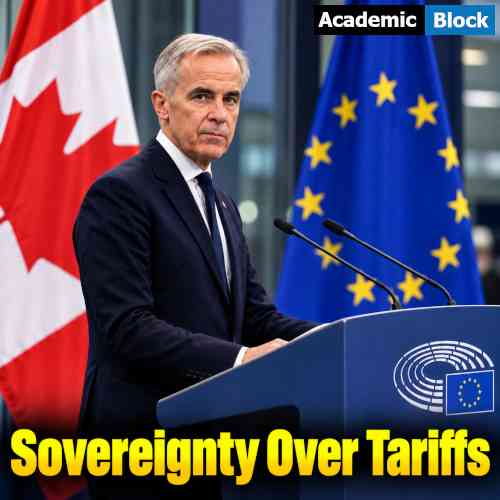
Canadian Prime Minister Mark Carney has backed European Commission President Ursula von der Leyen’s proposal for Canada to become the European Union’s first “associate member”. Speaking to the European Parliament in Strasbourg on September 17, he stressed that Canada was not seeking full EU membership. Instead, the proposed framework would build on existing Canada-EU relations while giving both sides greater strategic and economic flexibility.
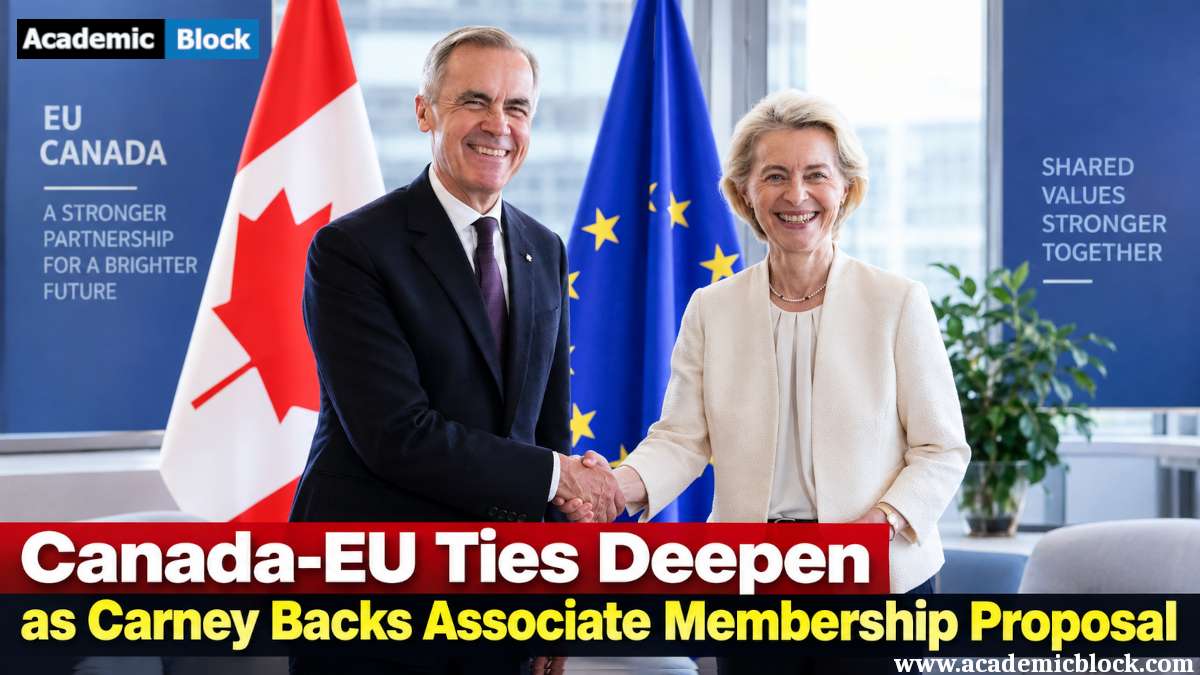
However, the idea has no established legal precedent within the EU, and its exact structure has yet to be defined. Any formal arrangement would also require approval from the EU’s member states. Carney has described the goal as “collective resilience”, rather than creating a rival power bloc or pursuing complete self-sufficiency. In addition, the proposal comes as Canada and Europe face growing economic and geopolitical pressure. The Canada-EU summit in Montreal on October 29 and 30 could provide an important opportunity to discuss these details.
Canada and EU plan deeper cooperation beyond existing trade ties
Canada already has significant economic ties with the European Union through CETA (Comprehensive Economic and Trade Agreement). It has also deepened defense cooperation through the EU’s SAFE programme, becoming its first non-European participant. Under the arrangement, Canadian companies can take part in eligible defense procurement opportunities. However, Prime Minister Mark Carney wants the proposed partnership to extend well beyond existing trade ties. His agenda includes defense production, artificial intelligence, energy, space, financial payments and research.
In addition, he has proposed stronger links between Canadian and European universities and young people, including possible Canadian participation in Erasmus+. Canada and Europe could also expand cooperation on energy supplies and strategic infrastructure, while existing talks on digital trade, critical minerals and economic security provide a foundation for broader cooperation.
Trump threatens tariffs as Canada asserts its right to choose partnerships
The Canada-EU initiative has emerged as trade tensions between Canada and the United States have intensified. US President Donald Trump has criticised the proposal and warned of potentially heavy tariffs if Washington considers closer Canada-EU ties hostile to US interests. The dispute comes after years of close economic integration between the two countries and follows new US trade measures. However, Canadian Prime Minister Mark Carney has rejected the idea that stronger relations with Europe target the United States. He has said Canada has the right to choose its international partnerships and has argued that closer cooperation with Europe can strengthen Canada’s economic and strategic resilience.
The focus remains on negotiations rather than formal membership, as Canada and the EU still need to define how the proposed arrangement would work. Therefore, the coming discussions will be crucial in determining whether the initiative can evolve into a broader and lasting Canada-EU strategic partnership.
Web Resources on Carney Backs Canada-EU Associate Membership
1. Guardian : Canada’s Carney embraces EU associate membership proposal.
2. BBC : Canada welcomes EU proposal to become ‘associate member’.
3. The Hill : Carney, Canada welcomes proposal to become EU associate member.
4. AcademicBlock : Canada’s Big Tax Bet: Canadian PM Carney Unveils “Mega Deduction” to Power the Economy.