
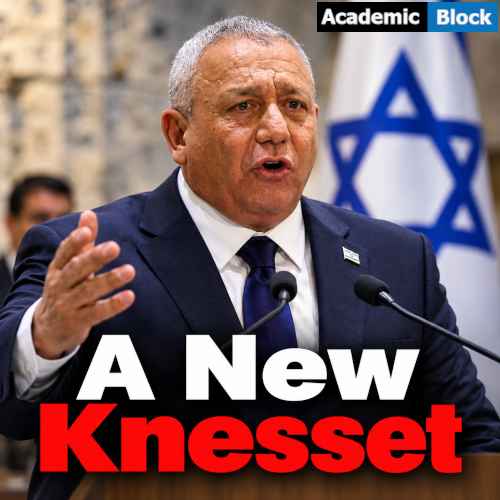
Eisenkot Targets Netanyahu’s Policies as Israel’s New Knesset Opens
Israel’s newly elected Knesset (Parliament) convened in Jerusalem on Tuesday. Gadi Eisenkot, a former military chief, has been asked to form the next government. He promised to reverse many policies of Prime Minister Benjamin Netanyahu. All 120 members of the 26th Knesset took their oath during the opening session. The ceremony came two weeks after the October 27 election failed to produce a clear winner.
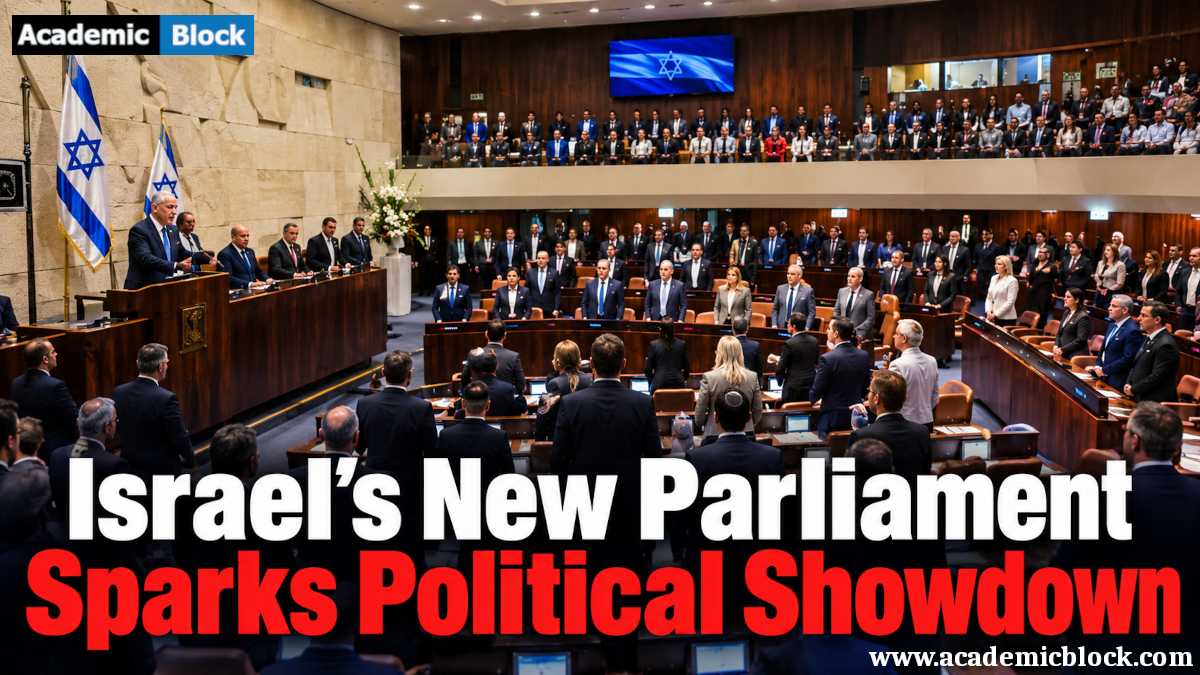
Eisenkot, who leads the centrist Yashar party, now has up to six weeks to assemble a coalition. Success would end the tenure of Israel’s longest-serving prime minister. Until then, Netanyahu and his Cabinet remain in office as a caretaker government. The new lawmakers, however, can already introduce and advance legislation. That unusual overlap has turned the opening session into an early political test.
Eisenkot’s Bloc Files Bills on October 7 Inquiry, Term Limits and Judicial Rollback
Within moments of the ceremony ending, Eisenkot’s bloc submitted a package of bills. One would create an official commission to investigate the failures behind Hamas’s October 7, 2023 attack. Netanyahu has long resisted such an inquiry, which makes the proposal a direct challenge. Another bill would limit how many terms a prime minister can serve. Additional measures aim to roll back the judicial overhaul pushed by Netanyahu’s coalition.
Eisenkot’s allies also moved to change who controls the parliamentary agenda. A majority of lawmakers signed a petition to remove Speaker Amir Ohana, a Likud member and Netanyahu loyalist. Matan Kahana of Eisenkot’s Yashar party is the proposed replacement. The speaker decides which bills reach a vote, so the post carries real weight. Notably, that vote can happen even before any coalition government takes shape. Eisenkot also pledged to serve all Israelis, including those who did not vote for him.
Netanyahu Attacks Arab Parties as Coalition Math Leaves Both Camps Short
Netanyahu used his speech to the new Knesset to warn against relying on Arab parties. He asked his rivals whether they were ready to depend on those seeking Israel’s destruction. He also urged a national unity government instead of a narrow coalition. Opposition lawmakers repeatedly interrupted him, demanding answers on an inquiry into October 7. Eisenkot condemned the speech as divisive and scrapped a planned Wednesday meeting with Likud.
The numbers explain the tension. Netanyahu’s Likud-led bloc won 53 seats, while Eisenkot’s bloc secured 48. The Joint List and Ra’am, the two Arab-led parties, took a record 19 seats. Both main camps fall short of the 61 seats needed for a majority. However, three Jewish opposition parties have refused to partner with Arab lists, and ultra-Orthodox parties have ruled out joining Eisenkot. Eisenkot has not closed the door on talks if those parties recognise Israel as a Jewish state and label Hamas a terrorist group. Ultimately, the opening session shows Israel’s political fight moving from the ballot box to the parliament floor. Eisenkot’s early bills test whether a divided opposition can use its numbers to constrain a caretaker government. If neither leader reaches 61 seats, President Isaac Herzog may turn to Netanyahu, and another election could follow.
Web Resources on Israel’s political developments
1. Reuters : Israel’s parliament sworn in as Eisenkot tries to forge a government.
2. AP News : Eisenkot unveils agenda to reverse Netanyahu’s policies as Israel’s new parliament is sworn in.
3. Academic Block : Israel’s Political Future, Eisenkot Gets First Chance to Form New Government.
4. DW News : Israel: Eisenkot proposes October 7 probe as new Knesset sworn in.
5. France24 : Eisenkot pushes October 7 inquiry as Netanyahu targets Arab parties in tense new parliament.