
US declines to back Saudi Arabia in Yemen after meeting Houthi leaders
US officials held secret talks with Houthi representatives in Oman over the weekend as Houthi forces expanded their control along Yemen’s Red Sea coast. Oman helped arrange the meeting at the US Embassy in Muscat, while neither side made the discussions public. The talks focused on protecting American vessels and commercial shipping in the Red Sea.
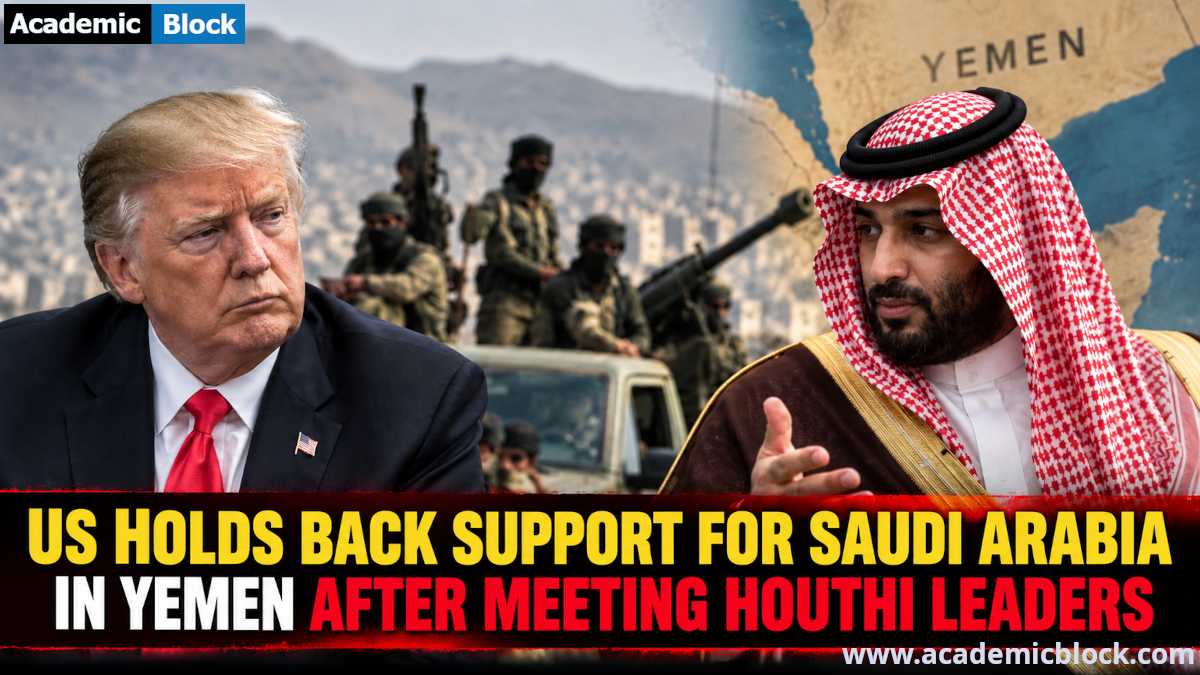
The United States has decided against direct military intervention in support of Saudi Arabia. The talks reflect a cautious US approach that combines communication with the Houthis and continued engagement with Riyadh. The strategy aims to protect American interests, regional security and commercial shipping while avoiding an escalation that could turn the Yemen conflict into another direct US military front.
US-Houthi Talks Focus on American Vessels and Red Sea Security
The Muscat talks focused on the safety of American vessels, international shipping and the 2025 US-Houthi ceasefire. Two sources said Houthi representatives told US officials that they had no intention of attacking American vessels. They also reaffirmed their commitment to the ceasefire. In addition, a Yemeni source said the Houthis had discussed Israeli and commercial shipping, while Saudi Arabia-linked vessels remained an exception.
The talks also highlighted the importance of freedom of navigation in the Red Sea. The United States wants commercial vessels to move through the strategic waterway without attacks or disruption. The Red Sea remains a vital global shipping route, so its security has become a core US concern. The discussions gave Washington a direct channel with the Houthis to address maritime risks while avoiding an immediate military escalation. The talks give Washington a way to protect maritime security and keep communication open with the Houthis, without committing to a direct military role in Yemen.
Why Washington Is Avoiding Direct Military Action in Yemen
The wider Iran war has influenced Washington’s decision to avoid direct military intervention in Yemen. Saudi Crown Prince Mohammed bin Salman had asked President Donald Trump for military action against the advancing Houthis. However, pressure on US missile-interceptor stocks has added to the strain on American military resources. The US has kept its forces focused on Iran and the Strait of Hormuz instead of opening another combat front in Yemen. At the same time, Washington has continued security assistance to Saudi Arabia, including intelligence sharing and targeting support, but has stopped short of direct strikes against the Houthis.
Saudi Arabia’s earlier restrictions on US military access also provide important context. Reports in May said Riyadh had denied US access to Prince Sultan Airbase and Saudi airspace for the proposed “Project Freedom” operation to escort oil tankers through the Strait of Hormuz. Saudi Arabia had also limited the use of its territory for offensive operations during the Iran war. Taken together, the regional conflict, pressure on US military resources and the limits on Saudi-based operations have shaped a cautious US approach.
Web Resources On US declines to back Saudi Arabia in Yemen
1. Guardian : US opts not to back Saudi Arabia in Yemen after meeting Houthi leaders.
2. Jerusalem Post : Trump declines Saudi crown prince’s call for US strikes on Houthis.
3. Times of Israel : Houthis met US officials in Oman, promised not to hit American, Israeli ships.