
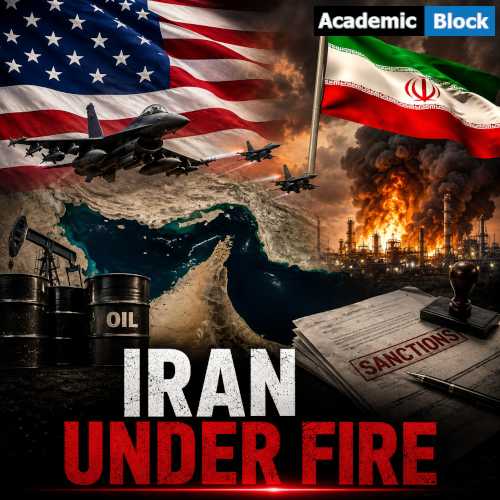
Sanctions are Back, as US Hits Iran Again
The United States has intensified pressure on Iran by combining military action with renewed economic sanctions, marking a decisive shift away from the fragile ceasefire that had eased tensions only weeks ago. After launching airstrikes on more than 80 Iranian military sites, including air defense systems, drone launch facilities, coastal surveillance networks, and anti-ship missile positions, Washington also revoked the temporary waiver that had allowed limited Iranian crude oil exports. At the same time, Iranian state media reported explosions on Kharg Island, Bandar Abbas, Sirik, and Qeshm Island. Kharg Island serves as Iran’s largest oil export terminal, so any disruption there could affect regional energy flows and global oil markets.
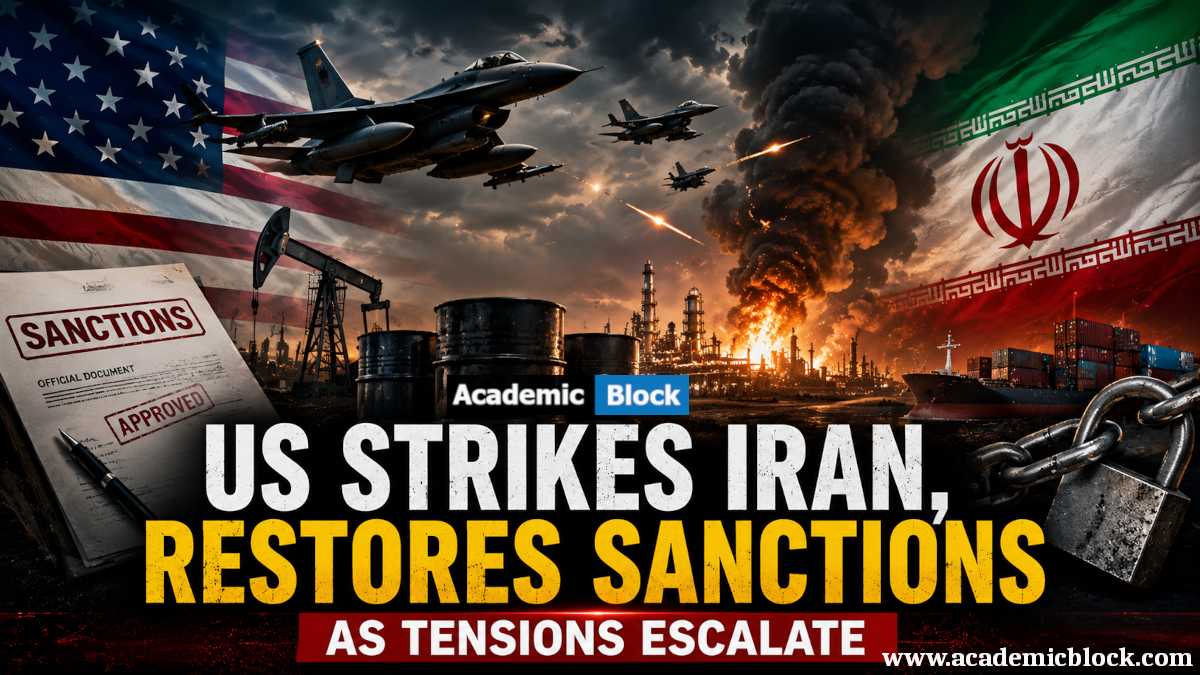
The return of sanctions has created consequences that extend far beyond the battlefield. By tightening restrictions on Iranian oil exports, the United States has sought to reduce Tehran’s export revenue, limit its access to foreign currency, and make it more difficult to finance military activities and regional allies. However, the decision has also sent a strong warning to countries and companies involved in purchasing Iranian crude that sanctions enforcement is becoming more aggressive.
Iran Claims Retaliatory Strikes on US Bases in Bahrain and Kuwait
Iran has accused the United States of violating the fragile ceasefire by revoking sanctions relief and carrying out fresh airstrikes on Iranian territory. Tehran has also rejected allegations that it attacked commercial vessels in the Strait of Hormuz, arguing instead that Washington violated Iran’s sovereignty through military action. Moreover, Iranian officials have described the US operation as an act of aggression and warned that any further strikes would receive a “decisive response”.
Iran has also claimed that the Islamic Revolutionary Guard Corps (IRGC) launched missile and drone strikes against US military facilities in Bahrain and Kuwait. According to Iran’s state broadcaster IRIB, the IRGC Navy and Aerospace Force targeted 85 key US military sites and claimed to have shot down an MQ-9 Reaper drone. However, the United States has not confirmed the Iranian claim.
Ceasefire Under Strain as US-Iran Tensions Raise Regional and Global Concerns
The fragile ceasefire between the United States and Iran has come under renewed pressure as military exchanges and political rhetoric continue to intensify. The issue is also expected to feature prominently at the NATO summit in Ankara, where US President Donald Trump and other alliance leaders are likely to discuss the security of the Strait of Hormuz and the growing risks to global energy supplies. In addition, the latest developments have raised fresh concerns about the stability of one of the world’s most critical maritime trade routes. The ceasefire had originally created a 60-day window for negotiations on a permanent agreement. However, indirect talks in Qatar ended without any significant breakthrough, leaving diplomacy at a standstill. As a result, hopes for a lasting political settlement have weakened considerably.
The renewed confrontation has also begun to affect the global economy. Oil prices have risen as investors react to the possibility of further disruptions in the Strait of Hormuz, a route that carries nearly one-fifth of the world’s seaborne crude oil. Moreover, President Trump has warned that the United States will continue military action if negotiations fail, while Iran has vowed to respond to any new attack.
Web Resources On US Hits Iran Again
1. CNN.com : US hits more than 80 Iran targets, reimposes oil sanctions.
2. Guardian.com : Iran targets Bahrain and Kuwait after wave of fresh US strikes, testing fragile truce.
3. Reuters.com : US launches new strikes on Iran after reinstating oil sanctions over shipping attacks.
4. WSJ.com : U.S. and Iran Exchange Strikes in Latest Threat to Fragile Ceasefire.